How Will Music Be Monetized in 2030?

What will the music business actually look like in 2030?
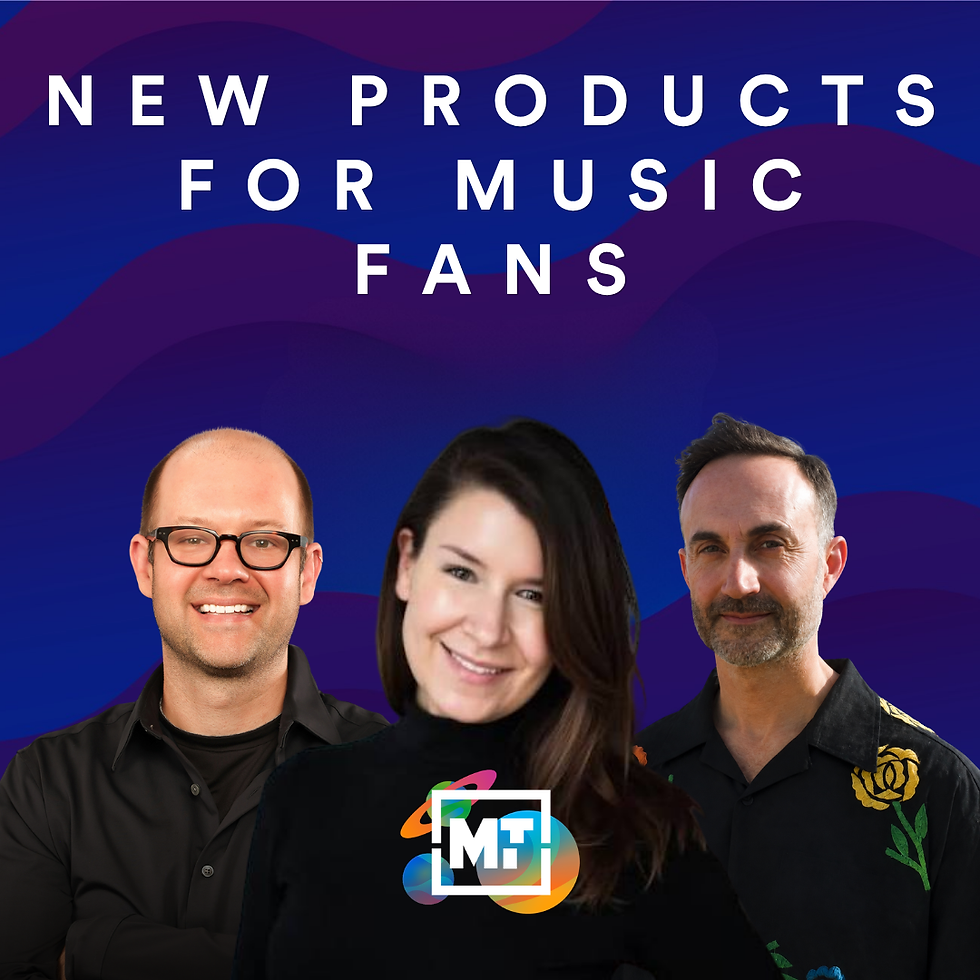
In this special panel from the Grow the TAM summit, Tatiana Cirisano, VP of Music Strategy at MIDiA Research, leads a wide-ranging conversation about the future of music monetization with three industry veterans: Liz Moody, partner and chair of the new media practice at Granderson Des Rochers; Mauhan Zonoozy, founder of Vinyl Bar in Shibuya and former head of innovation at Spotify; and Ty Roberts, CEO of FanTracks and founder of Gracenote.
The panel covers AI licensing and generative music platforms, why one panelist argues artists should be negotiating for equity in AI companies rather than royalties, the rise of direct fan subscription platforms, music's untapped opportunity in gaming and interactive experiences, the vinyl revival and whether physical media nostalgia is a real market or a performative trend, and the future of virtual artist concerts and digital fan engagement.
If you work in music tech, music publishing, artist management, streaming, or the creator economy, this conversation is essential listening for anyone trying to understand where music revenue is heading next.
The news
Suno’s latest legal opponent fought the tobacco industry – and won a quarter of a trillion dollars
The Atlantic created a searchable database of the music used to train AI
Luminate data: US market diversifying away from domestic and Anglophone music
Patreon CEO Jack Conte on supporting artists in the AI slop era
Suno Launches Artist Incubator, Offering Grants and Marketing for Indie Talents
Listen wherever you pod your casts:

Looking for Rock Paper Scanner, the newsletter of music tech news curated by the Rock Paper Scissors PR team? Subscribe here to get it in your inbox every Friday!
Episode Transcript
Machine transcribed
[00:00:00] Shayli: And now I would like to welcome on our very first panel, How Will Music Be Monetized in 2030. Moderating this panel will be Tatiana Cirisano, VP of Music Strategy at MIDiA Research, where she identifies the risks and opportunities in the rapidly changing music market for a client base of leading global entertainment and tech companies.
Prior to this, she was a music business reporter at Billboard, where she penned award-winning industry analysts and covered stories on artists like Alicia Keys and Travis Scott. Welcome, Tatiana and panelists.
[00:00:33] Tatiana: Amazing. Thanks, Shayli. And thank you Dmitri and team for providing our very own Grow the Tam hats, just in time for the sunshine here in New York.
Um, welcome, panelists, and thank you, guys. I'm excited to be able to kick off this summit, um, with a really important question: How will music be monetized in 2030? so, you know, doing this sort of crystal ball exercise, if you know me, is ki- you, you'll know it's kind of one of my favorite things.
I know Dmitri also loves to try and predict the future, so we're not gonna leave anything off the table for this group today. we may talk, and surely we'll talk about AI. We may talk about digital avatars and holograms, fan remixing and participation. we'll surely enter the discussion. And there's also probably gonna be some points around things from the past that are making a comeback, like vinyl, and if that's actually, um, going to be, you know, growth for the future or if that's just a fad right now.
So we have some wonderful panelists. As you can see, um, Liz Moody is partner and chair of the new media practice at Granderson Des Rochers. Am I saying that right? I'm not sure.
[00:01:37] Liz: Des roches.
[00:01:38] Tatiana: Yeah. Des Roches. I'm not, I'm not French. then we have Mauhan Zonoozy. I'm not sure if I'm pronouncing your last name right, but he's the founder of a vinyl bar in Shibuya and was also, ex-Spotify head of innovation, so I'm sure we'll learn more about, um, what his new project is as we chat.
And then finally, we have Ty Roberts, the CEO of FanTracks, here with us. So yes, all-star cast. and I think just as a way to kind of learn a little bit more about you guys, I'm gonna hit you with this first question that's sort of a one-two punch. So first, if you could each introduce yourselves in, you know, maybe one or two sentences.
Don't need a full life story. Um, and then just tell us, let's cut to the chase, what do you think will be the single biggest new source of music revenue by 2030? maybe Liz, we'll start with you.
[00:02:24] Liz: Sure. I'm Liz Moody. I've been working at the intersection of music and tech for, you know, 20-plus years.
These days, I work advising a lot of music tech startups, primarily in the AI space and in the gaming space. Not surprising given that's where there's a lot of focus in- today and in the future, so.
[00:02:44] Tatiana: And what do you think will be-
[00:02:46] Liz: Well-
[00:02:46] Tatiana: ... the biggest source?
[00:02:48] Liz: Naturally, I'm going to say that I think that AI is gonna have a massive impact.
And I, honestly, these two c- these two categories, AI is gonna touch everything we do. So I, I was just thinking, Tatiana, as you were stating the, the various topics we may cover, that I think there's an element of tech and AI, which means 15 different things, that is gonna touch on each of those, so we can get into it more, in more detail.
I also see a lot of opportunity for the music industry as getting into gaming and other interactive spaces like gaming. It's a massive business and it's been slow to grow, but I can see that happening at a faster pace this year. And hopefully by 2030 it will be entirely changed.
[00:03:32] Tatiana: Great. And yeah, we will definitely go deeper into both of those things. So awesome. Thanks for teeing it up. Um, Mauhan, do you wanna go next?
[00:03:40] Mauhan: Sure. Hey, guys. Mauhan Zonoozy. Um, as mentioned, I'm a founder of a company called Vinyl Bar in Shibuya, and we're building, interactive music experiences. We're focused on kind of playful products that blend consumption with more of like a gaming play angle.
Um, so we've been releasing a bunch of apps and focused on building a new kinda great consumer product. Background, yeah, as, as mentioned, most recently was at Spotify heading up innovation, and then have bounced around early and growth stage space in a lot of different capacities since then.
The prompt is biggest new source of music in 2030? Does it have to be new or can I double down on something that's happening?
[00:04:16] Tatiana: I'll let you double down.
[00:04:18] Mauhan: Let's go new. I'll go new. I mean, I think new, to be more s- maybe more specific on, kind of the e- emergent AI model based content, I, I think it's gonna be data and I think it's, that is gonna be like this big plug that music has had like a little bit of, but I don't think in the way of looking at actual music, musicians, artists, and selling and licensing data like a really big scale.
I think that's gonna happen for sure. and my double down is I think the Internet's gonna die and live is gonna get even bigger and bigger, or it's at least gonna have to, 'cause I think a lot of the online stuff is just gonna be farmed out of small, like, AI plants somewhere abroad.
[00:04:57] Tatiana: Mm-hmm.
[00:04:58] Mauhan: And I also, I, I ran home and ran back to the office so that I could have this for you.
[00:05:05] Tatiana: Yes. Hell yeah. We love it. We love to see it. Oh, we have another. Ty, we'll, we'll have to have someone run to your house right now.
[00:05:15] Ty: Yeah, mine's in, mine's, mine's in, my check's in the mail.
[00:05:19] Tatiana: Um, well in lieu of, of a hat, um, we will give you the mic. Uh-
[00:05:24] Ty: Okay, great
[00:05:25] Tatiana: ... and you can introduce yourself next.
[00:05:26] Ty: Yeah, so just quickly my background.
I'm a serial entrepreneur. I founded a company called Gracenote that kind of created a lot of the metadata for music, and that became a big business now. It's owned by Nielsen. I was at Universal Music as a CTO for a little while, and then when I left there I went off to work on the digital frontier with, I worked at Tidal, on Jay's, Jay-Z's platform, and then I've been working recently with artist Yungblud, who's a British artist.
I'm sure you guys have all seen social media of him, and I've been helping him to build his fan platform. And, uh, yeah, I would agree with one of the forepaths which is for if you're an artist, the money is in live right now. It's not really in streaming, okay? for some artists it is in streaming, but you have to be the very top of the pyramid.
And, uh, then I would say that so that, could change. We really need a better model for the product, the core product of music. We need a, we need a product that is worth more and has different levels of people being able to contribute. Like, the, I'm done with the music buffet. I really, I really wanna go to the specialty restaurant and I, I just can't handle any more crab legs at the music buffet, for a flat fee.
Uh, so that's one. The second is, is that I would just say this fan community aspect. Yungblud's gonna probably have some news about this pretty soon, but he's got a, already a great active fan community. The fans are subscribing to essentially what I'll call a private TikTok that he's providing, and that platform he's built, uh, in partnership with a company called Openstage, and so this- ability to basically have an all-encompassing fan environment for them, and they're subscribing to it, and it's not incredibly cheap.
So the reality is, I think that's kind of the future. So we can talk about that and we'll get into immersive Virtual versions of catalog artists coming back to life, that's also gonna be important because the, I'll have to say it, the aging, I hate to say it, the aging artists of the past are passing away.
So if you really wanna experience some of these artists, we're gonna have to do it with AI or with something in the future, and I see a lot of that happening with the technologies coming.
[00:07:28] Tatiana: Super interesting. And this gives us a ton to talk about already, so yeah, we'll, we'll probably go into, um, it's to some extent everything that was mentioned.
Um, I think maybe let's start with AI 'cause that came up in, in everyone's answers and is obviously, uh, the topic du jour all the time for, for many of us. I think everyone at this point, or, or nearly everyone seems to agree that AI will change music. But what they tend to disagree on is exactly how. Um, so I wanna kind of drill down into this.
Everyone said AI will have an impact, that AI licensing will be part of the picture, but let's try and get even more specific and, and kind of debate how we see that playing out. and maybe Liz, you're a good person to start with, kind of passing the baton back to you. is AI licensing ultimately gonna be as big of a, you know, as a, of a line item as, some in the industry are hoping?
Or how do you kind of see that playing out?
[00:08:16] Liz: AI can means, like I was saying, so many different things. I- if we focus for the moment on generative AI platforms, even there I think there's several directions that the licensing is going to take. you see the first step in fan experiences. we-- there was an announcement that Spotify's going to, you know, use some AI technology for it to allow fans to create remixes.
Udio's pivot might be a good example of this, where they're working on launching a fan experience that allows fans to work with their favorite artist music and create covers and remixes and their own music, it w- including the voice of the artist. I do think it's going to be a new licensing, a new stream, a new revenue stream.
one of the important things that will come up, not just a-around AI, is that we really are at a time where there's a new right type. Artists can have a lot more control over how their name, image, likeness, and in particular their voices are being used. the platform I just mentioned is, you know, working on significant controls to, uh, let artists decide when their fans can use their voices and per- permitting artists to opt in appropriately.
It's kind of cool if you think about it that way, when an artist has control over how it's using- how their voice is getting used and it's an incremental new revenue stream, then it becomes a lot less scary. I mean, there's the No Fake Act that has been getting a lot of press this week that's kind of sort of s- just building, like, the legal floor to that, proving that your voice is yours.
No one can use it without permission. But more importantly, I think the business rules that are getting set around that is gonna be quite interesting. That's, you know, that's one just, just one element of the generative AI use case. I think it's gonna be the first right now in 2026. But by the time we get to 2030, there's a lot more that's gonna happen.
And you look at the, you know, the products like Suno and other generative AI platforms that are allowing the mass democratization of, creation. That isn't going to explode until we have better attribution technologies. They're, they exist today, but we can, I can talk about that a little bit later.
And tracking and reporting to allow for the original, artist on whose content was trained to actually get some compensation for that, some down, when there's downstream revenue. So there's a lot of mechanics around the licensing that still needs to get figured out, and I think that's gonna happen in the next few years.
[00:11:01] Tatiana: Yeah. And I just wanna pull out a couple things from what you said before the others come in. One is, I think it's a really important point you made at the end there about if we are going to see, you know, a big revenue opportunity from any of these streams, we need to figure out the, obviously the rights and the underlying infrastructure.
And the infrastructure we even have for our existing, rights and, and revenue are, is not, you know, the best that it could be in the first place. We still have a lot of issues with rights fragmentation and, and all of these things. So I think that's a really important point, so just want to highlight that.
And the other is, it sounds like there's kind of three strands here. It's, if we're talking about generative, it's licensing for consumption, so licensing for, like, training models and then people listening to that music. Licensing for creation, where it's more about, like, remixing tools for fans, like the type Spotify and UMG are talking about.
And then there's also this other side, which is it's not even the music, it's not the recording or the publishing rights. We're talking about name, image, and likeness and what that can do. So there's kind of, like, these three strands. So kind of, yeah, uh, pulling those, themes out, um, Mauhan and T where do you see the most value kind of accruing?
[00:12:08] Ty: The value is not in the getting the royalties for your contribution to music. The value is 100% in the equity of these businesses, and that's the biggest thing that music artists missed out on in the last-
[00:12:21] Tatiana: Mm.
[00:12:21] Ty: So in other words, owning the shares of Spotify was where the money was. Getting pennies on the cents on, you know, your share.
So I think at this negotiating table we're at now in the future, it would be very smart to get both. Get the pennies, get your attribution correct. That's great. But you realize, like, these AI companies are already worth more than the entire music industry. So the reality is-
[00:12:43] Tatiana: Great point.
[00:12:44] Ty: Would, would, would you rather be getting paid for, I'll call it, you know, little thrusters on the SpaceX rocket or actually own a piece of the company?
so the reality is that's the, the problem I see is that we always go for the old model is we're gonna get a attribution and we're gonna figure out the percentage. That's great. We should do that. Absolutely, artists should be paid for that. I want 20% of the company.
[00:13:05] Mauhan: Yeah.
[00:13:06] Ty: How do we get that? So that's, I wouldn't give up until that happens.
And, and record companies did take equity in these other companies, but really tiny. Actually, like, a few percentage points.
[00:13:14] Tatiana: Mm-hmm.
[00:13:14] Ty: And then they're just starting to pay that out now. They're just cashing out some of them in their Spotify shares. So now the AI boom is here. how do we get in there for that, for the incredibly valuable contribution, the unbelievably valuable contribution the artists are making- Yeah
to these platforms? So anyways, that's my, that's my two cents on how to grow the TAM.
[00:13:33] Liz: And how does that money actually get to the artist? It's gonna, that's gonna be-
[00:13:36] Ty: Great formula ...
[00:13:38] Liz: what we have to figure out.
[00:13:38] Ty: Great, great, great challenge.
[00:13:40] Tatiana: Mm-hmm.
[00:13:40] Ty: You know, the problem is you'd have to pay it out based upon the, the, the numbers, the statistics we see, or there has to be a mechanism.
Now, we did do this in the past. You know, we got-
[00:13:50] Liz: Mm-hmm ...
[00:13:50] Ty: blank royalties for blank CDs back in the past a long time ago. When CDRs came about and people were duplicating CDs, they created kind of a tax on CDs, and that was distributed in some way. So it has been done before, but it's really untypical to the way the music industry normally works.
And the problem is music's always been a loss leader. The value's in the company and the equity, not really in our product, because they'd love to sell our product for as little as possible and build as much equity value in their business. That's been the biggest problem. Mm. So, you know, I wish we could share in that in some much better way.
[00:14:23] Tatiana: Great points, and the chat is going off, which is when you know. Um, Mauhan, do you have anything to add to the AI convo?
[00:14:30] Mauhan: What if I just said no?
[00:14:32] Tatiana: I can ask you a different question.
[00:14:33] Mauhan: I'm kidding.
I'm kidding. I think the last thing, I can answer that last, or try to answer that last thing you asked about where the value goes.
How ... Does anyone ... I mean, Chat probably knows better than me. Like, how many tracks are hitting DSPs per day now? Does anyone have that number? Something like insane.
[00:14:47] Ty: A lot.
[00:14:48] Mauhan: It's like hundreds of thousands or something?
[00:14:50] Liz: It was like 750,000 earl- in, a couple months ago that Deezer announced. It's probably gone up since then.
[00:14:57] Mauhan: okay. So w- in a world where that happens, here's my take. I think ... This is gonna sound controversial, I guess, but the song trends to worthless. Um, and I think, Ty, your ... I, I apologize on my former employer's behalf of the buffet crab leg situation. But like, the reality is, like, at that volume, tracks are worthless.
Um, songs are worthless. So, you know, with generative stuff, I, I s- I say this financially, not spiritually. and so value in my opinion always has to accrue towards like a different edge. And for me, I think where it's gonna accrue is, um, in two places. I think, one, the context around it. So it's the context around the song, the artist, the artistry, the, whatever.
And I think that gets ... You know, I'm a big believer in, like, synthetic media and synthetic beings being on the verge. So I think even more so it's gonna go towards like the human context, story, narrative, whatever. The who, what, where. That's like the product, not actually the, the music. And, um, I think looking at K-pop and J-pop and even something like the pop star movements in the US that are a little bit more masked, you could argue that's been happening for a while, where it's the brand, not the con- Like, where, you know, I don't know if most of these artists are making their music anymore.
It happened for a long time. and I think what ... The other point, place I'd put it, which is kind of our bet at our company, is that if Spotify and DSPs sell access and, I guess now sooner they sell generation, I think the gap in the market that we're trying to fill is participation. I think Ty had a really good i- Like, s- touched on it really nicely about this idea of fan clubs and engagement.
I think, Liz also touched on it nicely in gaming. I think the idea is that, you know, where does the investment and participation go? 'cause I don't think that- I'll shut up in a sec, but I don't think that the TAM has grown linearly in music with, like, audience. Um, and so it's more about, like, TAM grows with new containers and new s- you know, spaces or environments or ways of monetizing.
And so, you could say, like, one of the bigger mispriced assets is around engagement, and we talk about these super fans every time. We talk about all this stuff, but I think, like, this, really stupid, dumbed-down way to say it is if you look at gaming, there's more ways to spend money. There's more ways to invest.
There's more ways to get close, whether that's, like, season passes or digital goods or cosmetics or skins or whatever. and music's just been at this, like, 14.99 buffet is the game, and how do we slice it and s- put it in different ways? So I don't know, long-winded way to say I think, like, the number one is value shifts the edges away from the actual song and more to the context, and number two is around participation and engagement and how do we build new containers for that.
I think in a world of AI, that's like you can't keep thinking the music's gonna be the value.
[00:17:36] Tatiana: Mm-hmm. Yeah. No, I think those are all great points, and it's kind of a perfect opportunity, I think, Ty, for you to come in and chat a bit about what you're doing with the Youngblood community because I think that subscriptions, um, as part of this, like, value around the music and the fan participation and things like that, subscriptions are something that it feels like the industry has been talking about for a while but maybe hasn't cracked yet.
Um, why do you think that is and, and sort of how do you think you're doing it differently?
[00:18:03] Ty: Well, the biggest challenge is, is that we're not really got a business model that allows the music distribution platforms to really add other businesses. You know, so basically they haven't added anything.
Actually, in music- Nothing's been added since Lyrics. That's over 10 years ago. So in other words, think of the last feature that's in a music product that benefits... Yes, there are links to tickets or something like that, but actually making it visual, actually adding photographs, actually making a richer product, actually having different tiers, actually having subscriptions here just to the artist.
All these things, we talk about it, but-
[00:18:32] Tatiana: Mm-hmm
[00:18:32] Ty: ... that, none of that's actually happened. And so with Youngblood, he's just doing it himself. He's doing it on a web platform. It's called YBHQ, and basically you can log in there and sign up directly, and you can get on your mobile phone and it gives you kind of like a private feed of his, content, but also he's putting high-value content like concert streams and films and other stuff he's got in there, and basically he's turning it into his own, well, his own Netflix.
You know, his name is Dom, Dominic. Dom is really his name. Domflix, you know? And so the reality is he's made the investment to do this, and he's a content machine. He's got- Mm-hmm ... he's got a small team, but they create tons of stuff, so they have the content to do it. That's a challenge, too, for a lot of artists who are just maybe more in the audio realm.
How do they create audiovisual stuff? How do they do it all? How do they, you know... it's a challenge, but I think there are a lot of artists that could do this. And, anyways, that's kind of what the, the platform is. it really will create, I think, this direct communication channel and There's some challenges 'cause people can take the content that's in there and put it on the outside internet, but the reality is I think it'll, I think it's going pretty well so far.
[00:19:36] Tatiana: Mm-hmm. That's great. And I have one follow-up to that, and then I wanna kick it to Liz. do you see subscriptions joining, uh, of this kind joining streaming platforms in any, in any way by 2030? Or do you see this as something that, for all the reasons you mentioned, will continue to kind of occupy a space outside?
[00:19:54] Ty: Here's the, the chal- challenge. So you think of his platform kind of like a website that he's custom-building, you know, for his, his particular type of content. He's got games in there, he's got tarot cards. So the problem is a generalized platform, you know, like Apple or Spotify, would need to create kind of a general interface, which means that the subscription fan platform would have to be the same for most of all the artists.
And what's really needed is a more customized approach so they can be different, you know? And, and the company Openstage that does this platform also does the Gorillas platform as well as the Youngblood platform, and they're working together on these different things. Gorillas platform's like a game.
Like, you go into Gorillas world and you become a gorilla and you ... It's com- completely different than Youngblood's platform. So, and it's really cool. Like, it's its own thing. And, and of course that's a virtual artist, so it's very different than a real artist. But what I would just say is that's one of the challenges is everything now is just, like, the simplest form.
This is kinda from the Steve Jobs mantra from, you know, I was there the, the, the ... I worked on this iTunes thing at the beginning. Make it simple. The answer is simple's boring. I'm done with the buffet. I want something cool.
[00:21:01] Tatiana: I love that take. I'm writing that down. Simple is boring. Um, and you mentioned, uh, you mentioned gaming.
Mauhan mentioned gaming as well. Um, and I have kind of a similar question for you, Liz, as I asked Ty at the beginning of that thread, which is I think gaming is another thing like subscriptions that the music industry hasn't cracked yet. We've been talking for a long time about gaming being a new frontier.
how do you see that evolving in the years to 2030 and maybe beyond? Like, do you think that it will take more time? What, what have we been missing?
[00:21:30] Liz: I'm gonna comment for a second on what Ty just said, and then I'll talk-
[00:21:33] Tatiana: Yeah, please
[00:21:33] Liz: ... about gaming. Please. 'Cause I totally agree with everything you just said, Ty, as I usually do.
I do think, though, that there will be platforms by 2030, or at least one or two, that allow for these entirely different experiences for artists to reach their fans, so that as a fan I can go to one place and kind of- Find individual artist experiences. Um, we've been talking about fan artist experiences for years, and it finally feels like the, maybe that it's because the technology is there, it's easier for artists to access their fans now.
And I just wanted to comment on that 'cause I, definitely see that as a massive, way that the music industry can grow t- the TAM. The now-
[00:22:14] Ty: You're right. You're right with AI, the, they'll build it literally with a prompt.
[00:22:17] Liz: Yep.
[00:22:18] Ty: Like an artist will go, "I have an idea for an outer space planet where my fans are on it," and it will literally just build it for him.
So the reality is AI's gonna impact this too, lower the cost and the difficulty of doing this.
[00:22:28] Liz: Absolutely. Something,
[00:22:29] Ty: something somebody can do when they're on a bus in their spare time.
[00:22:31] Liz: Moving on to gaming, I'm starting to see a, a lot of changes, not just with sort of generative AI and people creating new worlds like we were just talking about.
But even just making the music listening experience more engaging while you're playing video games. So there's, there's an example. There's a startup I'm working with that uses AI tech to adapt music so that when you're listening to music while you're playing video game, which is an incredibly popular w- thing to do while you're playing games.
Yeah. The music changes based on what you're doing in the, within the game. You've got, you might have your video game going and then you've got an integration with the music, sort of streaming service so you can hear the audio, but then you're also in a world where you can right in the moment buy a lot of the types of products that Mauhan was mentioning.
You know, skins and artist skins and, rewards that keep that ability to buy in the moment is something the music industry has not really figured out yet, and I think it's something that the gaming world is genius at. you'll spend way more money in 10 minutes playing a video game than you might with it on a music subscription for a year.
It's that knee-jerk gut reaction to buy. and I think that's why some of these a la carte, you know, with in-game purchases are so- So successful. I think that's, we're gonna see a lot more of that. It's starting to happen, but I think it's been slow because a lot of the music in gaming was more in console-based games.
Now everybody's online. I see a lot of it working with Roblox, but Fort- and Fortnite, and now it's gonna, you know, it's really expanding to all of the, online games, whether it's via Steam or, or otherwise.
[00:24:22] Tatiana: Mm-hmm. Yeah. We, um, we surveyed, in Q1, we surveyed consumers actually about what audio modification, um, or sort of like participatory features with music they're most interested in, and we had a list of, like, 10.
And actually the one that was the most popular was to do with gaming. It was being able to sort of not only insert music in games, but sort of have it be reactive or play around with it within the game. It was sort of ways of, ways that music itself becomes a game, um, music listening and, and playing around with it.
And I think that's something interesting that we've seen with this sort of participation economy, is that the fans that are modifying music or creating with it, it's a form of entertainment in its own right. It's like playing a game. It's not necessarily something that's, sort of a means to an end, like releasing a track.
Um, so that's been really interesting.
[00:25:13] Mauhan: Wait, what was
[00:25:14] Liz: that? You had a- You just, what you just said is so true. What, is people... I mean, I see this with the younger generation on Roblox, but it applies, I think, it's gonna apply in the future in everything. The m- people wanna create with the music and any kind of content that they're engaging with.
They wanna lean in and make something with it. They're just, they're, they're not necessarily in a space where they just want to be leaning back anymore, and that's why you see some of these, like, fan artist engagement experiences more compelling now, and music in games.
[00:25:45] Tatiana: Mm-hmm.
[00:25:46] Ty: They're, they're also in there.
Like, you know, part of the problem with the music product is we're like a little, we're like an icon stage. Like my little-
[00:25:52] Tatiana: Mm-hmm
[00:25:52] Ty: ... mini icon. That's, I'm not interested in dressing up my icon. But, like, when I'm in Roblox, I'm buying a new outfit, I'm getting myself some cool stuff. I've got some accessories, some sounds, some busts and some moves.
Like, the problem is we never integrated the virtual version of the people into the product so that they wanna decorate themselves, and they show themselves to the other people, the other fans. So, like, that's what gaming has, and we kinda missed the boat on music. We're just, we're still, like, with a icon.
[00:26:18] Tatiana: Totally. I, yeah, agree with everything you guys are saying. Mauhan, did you have a question or a comment?
[00:26:23] Mauhan: No. I was gonna ask you that, that- ... re- report you just mentioned, I was gonna ask you where that came from.
[00:26:28] Tatiana: Oh, yeah. That was- Yeah, so that was, um, we do quarterly surveys around the world, um, nine markets, 1,000 people per market, um, and that was from our Q1 survey.
But I can follow up with that. I can also put it in the chat in a minute. but I wanted to throw it to you anyway because I feel like when we were talking about, the new company you're working on, participation, you mentioned was... Or this idea of, you know, creator as consumer, sort of, was a big part of it.
Um, do you wanna chat about that?
[00:26:52] Mauhan: Sure. I mean, yeah, we're focused on... I, I mean, I think everything we're talking about really, rings true for kinda our mission. I think philosophically, the mission or the vision or the thing that bound us together was always this idea of music being a verb, not a noun, and we say that a lot.
But I think in less poetic terms, we just mean music as a participatory act, and it always has been for me, growing up playing music, and, but I think what we do maybe a little bit differently than others is we believe that act, that verb, that participation is, can be very broadly construed. So it doesn't necessarily mean you know how to play an instrument in the traditional sense or produce in FL Studio or...
You know, for us, it was everything from creating a playlist, to wearing a band T-shirt, to gaming, to however else you can kind of express yourself with music. So I think music, other than just being a creative act, is like a deep-seated form of identity expression. And so that really drove us to figure out what are those new ways to engage and play with music, or play, or, you know, or it's just music as a verb.
And so we've been focused on building, you, you know, our company's called The Vinyl Bar in Shibuya, as I mentioned, and we've been releasing these sort of singles that are new mechanics where you can interact and engage with music in more fun and playful ways. Some really just resemble, you know, games and, like, in a little fun widgets and fidget spinners.
Some are a little bit more robust, like a product called Bop that's really about, you know, taking music apart into li- little visual Lego pieces and being able to, like, move them and compose them in different ways. And so we've always really believed in, like, taking a lot of inspiration from gaming, and I think Dmitri put it in the chat.
I, you know, I did a small talk at Tectonics a l- a little while back where I was... That was, like, my premise, was how, how can music learn from gaming and where it's going? So, I will say that I, my, I don't think it's... You know, I know there's a lot of remix stuff going out, and I think we've toyed in that space.
I think that's, like, more of a superficial interpretation of how you can engage with music, and I think there's gonna be much, hopefully, and we're designing and building a lot of what I think is much cooler and much more fun and maybe less, you know, performative-based ways of playing with music, which I think is kinda the next wave.
It's like, how can I actually... The stuff we do with fans is, like, you wanna be deeper in Yungblud's world. Like, I think Ty said some really cool shit about, like, okay, I wanna, I wanna generate this outer space world or whatever and, like- You know, how can we have that time with the contextualization of the world building that Yungblud's doing?
That's, I think, what fans want. It's like that level of engagement, not just, I wanna make a slowed and reverb. I think that's just, like, tip of the iceberg.
[00:29:19] Tatiana: Yeah.
[00:29:19] Mauhan: I don't know if any of that answers your question, but hope- hope so.
[00:29:22] Tatiana: No, it does.
[00:29:23] Mauhan: Cool.
[00:29:23] Tatiana: No, it does. It's great. It's great. I love it. and you reminded me of something else we were debating the other week, that we also talked about, is this performative, which was sort of like buying vinyl, um, buying iPods, these trends that we're seeing that are sort of-
people doing things from the past, bringing them back again. And I know there's been a lot of headlines about the vinyl revival and sort of, positioning this as something that maybe will be a bigger revenue driver in the future. So I'm curious everyone's thoughts. Feel free to debate freely and openly.
Um,
do you think this is-
[00:29:53] Ty: I, I, I think physical media is just fantastic that it's come back, and it's, shows that people wanna collect, and they are nice, and it's a fun experience. And, but I will tell you it won't stop at vinyl. I have a 26-year-old son who came here recently and went in the basement and he was like, "So Dad, do you need all these CDs?"
You know.
[00:30:11] Mauhan: CDs are back.
[00:30:11] Ty: And I'm like, "I, yeah, I want, I wanna..." I, I'm scared he's gonna sell them, so I'm like, "You're not selling them," like, you know. But the idea is, yes, I think that people are really interested in that. He said, you know, he looked at the booklets and he was like, "These are so cool. Like, who made all these things?"
[00:30:25] Tatiana: Yeah. I miss lyric booklets.
[00:30:28] Ty: Yeah. It was like, you know-
[00:30:29] Liz: It's
not even just the collectibles. I've started listening to my CDs again because the audio quality is... You know, you- we've all forgotten how much better the quality was as well.
[00:30:38] Ty: Yes, yes.
[00:30:38] Liz: And same thing has happened with the younger generation.
They're going back and looking at that.
[00:30:41] Ty: They can totally tell the difference with vinyl. They can absolutely-
[00:30:43] Liz: Yeah.
[00:30:44] Ty: They have good hearing, by the way, young people.
[00:30:45] Liz: Yes.
[00:30:49] Tatiana: Put that hearing to work. yeah, no, I, I think that it's coming from a desire maybe for more tangible shared experiences around music that we haven't really had as much, in the streaming era. So whether that's manifesting in buying CDs or stealing your dad's CDs or whatever it is, I think that, like, driver is the same, and I, and I, I would expect that to continue, but I don't know what it will be met by.
It may not continue to be CDs. It may be something else, I'm not sure.
[00:31:20] Ty: Yeah, he told me he wanted to buy... He's 26. He was like, "Dad, do you know this company Magnabox?" I'm like, "What's that?" He wants to buy a big wood console with a turntable in it, right? So he's like, "Can I buy one of these old ones?" And like, then picks up a turntable and...
So, you know, they want that experience. He wants people to come over to his apartment and, like, put on an album. Like, what a concept.
[00:31:38] Tatiana: Mm-hmm. I was gonna pass it to you, Mauhan, 'cause I know you have maybe a... You're maybe more skeptical of this trend.
[00:31:44] Mauhan: Yeah. I, well, I'm not skept- yeah, I mean, I, I was laughing earlier 'cause I was probably the one stirring up the-
the meeting beforehand. But the-
[00:31:51] Tatiana: Stir the pot. I love it ...
[00:31:53] Mauhan: the- Yeah, I mean, so the f- the stat that everyone throws around, or I don't know if everyone throws around, but I throw around a lot, is that over half of the people who buy vinyls don't have a vinyl player.
[00:32:03] Tatiana: Mm-hmm.
[00:32:04] Mauhan: Um, and I think the nice part about that, I think, is what Ty's mentioning of this idea of, you know, I s- I bring it up to say, like, this is a collectible and it's an expression of identity and you're just buying vinyls 'cause you, like, really love Wet, and you wanna have the Wet vinyl on your counter or whatever.
Which I think is amazing. Like, I think that's dope. for sure, I think where I'm very skeptical is this, like, offline is the new online sentiment because- I just saw on Substack and there's people online telling me they're offline, and I'm just like, I think this is just like a performative few talking about this.
I don't think we're going off, like offline. I think we're shifting our, where we consume maybe into smaller groups and smaller environments, but s- I think it's still gonna live online. Um, and I think that the analog stuff is kind of interesting too, where like the wired AirPods make sense 'cause AirPods are the bane of my existence, but the iPod, the MP3 stuff, yeah, I'm way more skeptical on, disconnected hardware.
I think hardware might come back. I think it's fun because I think that's like, again, an expression of your identity to have a piece of something. But I think this idea of offline manual hardware, I don't buy it. I think this is just people just like, you know, trying to look cool on the internet because they're into vintage stuff.
I don't buy that it's gonna be a hard move.
[00:33:13] Tatiana: Mm-hmm.
[00:33:14] Mauhan: Come at me. Are, are you with me? I'm done.
[00:33:16] Ty: Well, you know, I think people like nostalgia too. Like my son wants a-
[00:33:19] Mauhan: True
[00:33:20] Ty: ... V8 Camaro Z28. Like that's from like when I was in high school. I- So, you know, he does- he doesn't want an electric car. He's like, "I want a Camaro.
I want the loudest thing I can have to scare all the people with electric cars. How do I get that?"
[00:33:32] Liz: I think the thing that, that c- the, your car example and that the vinyl and the CDs do though is they add to a person's identity. You know, I can walk into my... Like when I was growing up, that's how I showed my identity, was by the books I had in my bookcase and the CDs and tapes I had in my, in my room, and then people came over and that's how it started a conversation.
Whereas I agree with you, Mauhan. I'm not sure that I am bought in that the, you know, the hardware is gonna have a massive comeback because it doesn't have that same personalization id- or identity attached to it.
[00:34:08] Shayli:
[00:34:08] Ty: I think, I think audio quality, I mean, I, when I was at Universal, this was my big thing.
I was trying to get high-fidelity audio in the hands of young people, and we did all these tests. We went to universities and they absolutely could hear it. They absolutely kind of like wanted it. But the portability, like wired headphones and the, basically the standards don't exist to deliver high-quality audio wirelessly yet.
And then there's other issues like battery life in those headphones, can't support real bass, and... But these could be solved. It's just the infrastructure we have today, the wireless is, you know, yeah, it's compressed audio, so you can't really hear the difference. I'll tell you, when you put those CDs in your car, you can hear the difference 'cause the car stereo is wired.
So they, they notice it right away. Like, they're like, "Wow, that sounds much better." In fact, you can AB it. You can, like, play CarPlay and then play a CD on a car. And they're like, "I never knew Smashing Pumpkins sounded like that."
[00:34:59] Liz: I- that's, this is another area where I'm seeing some development in the, digital space, like c- companies that are working on, adding not just what Apple's doing with the hearing test, but really going deeper into audio quality and personalized audio quality.
So yeah, you may take a hearing test when you first log on, and then you've got your own personalized experience. Almost, I, I, in talking to the, this company, they told me that over 75% percent of people don't necessarily have hearing loss issues, but you hear differently. You have a hearing differential between each ear.
And, you know, I went and got my hearing checked and it, they said it was fine, but it's, or at least fine for my age. But this new technology allows me to hear much more crisper, and then I can lower the volume because I'm hearing it in different ways because each of my ears hears differently. So that's another thing that, like, sure, it's an AI technology that's allowing for this, but, it's gonna allow people to have more personalized listening experiences in the future too.
[00:35:59] Tatiana: Yeah. Something that, I feel like we're kind of circling around, which I've been thinking about a lot recently, is, like, the convergence between digital and sort of IRL. We've had the last decade a really strong extreme swing from everything being analog and tangible and physical to everything being the complete opposite, and it feels like now we're moving towards a space where there's more of a balance.
so I've just been thinking as you've been s- as you guys have been talking about, like, where that balance is, because I also don't think people are just gonna go completely offline. But I do think we're seeing more of a drive for seeing live music, for example. So this might also be a good place to, to chat about live music.
but yeah. Do, do you guys have any thoughts on sort of where you think that balance will be for people in the future?
[00:36:43] Ty: I would say like in the, you know, Youngblood Fan Club, when you sign up there's a digital thing, right? And we have this whole digital Dom Talk thing. But they send out a glossy beautiful magazine to the f- to people subscribed with them.
And they do that- Right ... because that, that allows them to, connect physically with something artistic, 'cause it's really well produced. So they thought about that, and that feedback on that's been really good. So I g- I think this, like, mixture, like are we all going o- offline? Not really, you know, until we run out of power in the world.
but I do feel like the getting the balance right, getting that high touch physical thing is important, combined with the portability of digital and the instantaneous update of digital and the newness of digital. You know, like the zine that they produced to give the fans was made three months ago, so it's not up to date with everything that's going on, but it is beautiful.
[00:37:30] Tatiana: Mm-hmm. That makes sense. Anyone else have thoughts on that? Or, to throw one final thing in our, in our last, like, 5 to 10 minutes on whether people will be interested in going to, virtual avatar concerts, um, which is something that we haven't touched on yet kinda is in that convergence area I
[00:37:47] Ty: can, I can talk just briefly to that, which is absolutely.
In other words, if you know what's, to some degree, when you go to The Sphere now, it's a virtual avatar concert, 'cause the artist is, like, this big to most people, unless you're in the very lowest level.
[00:38:02] Tatiana: It's a good point. Yeah
[00:38:03] Ty: So you're looking,
you're looking at this giant visualization of their work and their art, and it's pretty fantastic, and particularly, you know, for the last shows of the, uh, Dead & Company, and Dead- the Grateful Dead, th- you know, they were there, their music was fantastic, the visuals were actually amazing.
In the second shows, they're even more amazing. So I do feel like visualizing music, and this is really one of the areas where AI, and a lot of those visuals are created with AI or visual effects, can visualize things. And you're gonna see this in film, you're gonna see this in live performance. I- in fact, you know, most artists today have to travel with full LED backdrops to their shows.
Like, just getting up there with lights is not really happening once you reach a certain level. So visuals, richness, immersiveness, and then all the way to, yes, full avatars, kinda like is, is, is happening. You know, right now the guys who did the ABBA show, they're working on Kiss, they're working on Elvis, they're working on, you know, Tina Turner.
So, you know, these artists are gonna come back in some form. somebody else is working on James Brown. So, you know, we'll see how these all are. The, the quality is just like any movie or TV show, it could vary. Your mileage may vary. But this is gonna happen in the future. And, the AI technology to take historical events and create something to look like...
In other words, George Harrison going into Golden Gate Park in the '60s in the height of the Summer of Love, and sitting down, someone giving him a guitar and playing on whatever, playing some songs for the hippies in the park. There's no film of that, but there will be. And so people will be like, all the, all that stuff is gonna get created.
It's gonna be, some of it's gonna be really realistic, some's gonna be really bad, but, visualization is, in many ways, is here to stay, and that's really one of the things where the gen AI technology's gonna get used heavily. So yeah. You know-
[00:39:51] Tatiana: Yeah
[00:39:51] Ty: ... you already see these things where they bring a photograph to life.
Jim Morrison in the club and spinning around, and you see, you know, like, it's gonna be t- it's gonna be full motion with Jim talking to you. It's, it's, it's absolutely gonna be here.
[00:40:02] Tatiana: Yep. Mauhan, what do you think?
[00:40:04] Mauhan: I don't buy
it.
[00:40:06] Tatiana: I love the debate. Go on.
[00:40:08] Mauhan: Um, I mean, I think the ABBA s- the ABBA thing, like, the go-to stuff is cool.
And so, yeah, I think the Kiss thing would be cool to see. I'm just, I'm not ready to have a VR, is VR happening conversation again. I think I'm still g- like
[00:40:22] Tatiana: Reeling from the last time?
[00:40:23] Mauhan: Yeah. I, I don't think it's, uh, you know, and I think it's kind of interesting 'cause I think, I guess Apple has considered it augmented, but I feel like it only takes them three times to figure out hardware usually.
But s- seems like they rushed on the first one, and they're not, they haven't figured that out either. So I just don't, I don't think the, Yeah, I just don't, I don't even... you know, I'm pretty bearish on VR becoming a thing anytime soon. I think I, I would differentiate that with, like, digital, like the ABBA stuff, this stuff I think is kind of like an interesting different potential out of home environment.
That could be an interesting proposition. I think especially for, you know, late artists or people who are not with us or not be able to perform. I think that's like an interesting different value proposition. and I think there's also a different value proposition of like looking at VTubers and kind of digitally first artists that were never real.
Like there's no other way to see them and experience them. But I think like the VR upsell, I'd, yeah, I don't buy it.
[00:41:18] Ty: I, I agree with you. I don't, I don't think VR is happening at all. This is all gonna be in person or 2D. Just watch it on your screen here. It doesn't matter.
[00:41:25] Mauhan: I think there's something though about live that's just like you're, you're selling the, you're selling the sweat.
You know, you're selling, like, the feeling. And, I mean, most of the time I go to shows with, like, with, if I'm with the team or the artist or the artist, the conversation's usually about how did the merch stand do as well. so I think, like, that's probably where more focus and investment's gonna keep going is, less about butts in seat, more about how do we, like, get more share of wallet during these experiences.
[00:41:50] Tatiana: Mm-hmm.
[00:41:51] Ty: I mean, you realize-
[00:41:52] Tatiana: Yeah
[00:41:52] Ty: ... like, for the festivals now, like Coachella's an example of this, you realize the YouTube audience for that dwarfs the at... The, the in-person audience is the special effect for the at-home audience. Mm-hmm. And the YouTube's, YouTube is now something like 40% of the budget of Coachella.
[00:42:09] Tatiana: Yeah.
[00:42:09] Ty: 4- 40%. So in other words- But what's the- There's no Coachella without the YouTube broadcast, and the YouTube broadcast is, like, 40 million people.
[00:42:16] Mauhan: But what's the revenue on the YouTube audience?
[00:42:18] Ty: Oh, well, it's probably good for YouTube or they wouldn't be doing it, but it's, uh, you know.
[00:42:22] Mauhan: Yeah. I imagine it's not
even that good for YouTube.
I imagine it's a, a drop in the bucket on YouTube.
[00:42:26] Ty: They just wanna be the standard platform, I think. It's, it's, it's about audience. That- Yeah ... that's the pro- that's one of the problems we were talking about monetization and TAM. One problem is it's a big benefit to them to get all these people to subscribe to their platform, but not necessarily the benefit on the per item basis for the people whose content it is.
And I don't think the-
[00:42:44] Mauhan: Yeah, the ar- the artists
[00:42:45] Ty: ... I don't think the artists really share much in that revenue stream. They get a bigger budget to produce a bigger, cooler experience, I guess, but that's about all they have. They share it. So they can spend more of their money making a more cooler, you know, $10 million production at Coachella.
So you realize, like, you're building a $10 million production for 100,000 people. You're not. You're building a $10 million production for 40 million South Latin American people watching Becky G's concert. That's what you're doing.
[00:43:11] Tatiana: Yeah. I mean, I think all of this also speaks to how much more dynamic this, like, virtual concert conversation is these days where there's so many strands to it.
Like, I think we're all sort of bearish on the VR thing, but a little bit more warm on, okay, people going in person to see artists who maybe are deceased and maybe are known for, you know, the special effects and things like that, like, or, or their brand, like KISS is. Um, so it makes sense. So I think it's, I think there's maybe more- yeah, it's becoming more of, like, a nuanced market with a lot of different target audiences and different use cases.
But we're running out of time. I do wanna let Liz, if you have any final words on this or anything else, come in, 'cause we haven't heard from you in a few beats.
[00:43:51] Liz: I was just thinking about, I agree with what's been said about VR, but I think that those experiences are going to transform into something different.
I mean, no one's... There's still incredible audiences on Roblox for each of the artist activations. I mean, there was a comparison to the number of people Billie Eilish, watch- you know, activation compared to the people actually watching her movie in, movie theaters. And it, it may be because it was targeted to younger audiences, but I think there's a whole...
We're just at the tip of what can happen with online visual experiences. I don't think they're gonna require putting a headset on or anything like that. But if you think about the fact that a lot of the top, some of the top artists are coming from, you know, animated shows on Netflix, there's a lot of opportunity to create new artist groups that aren't even in person.
And then I see, I, I think those artists will be performing in person.
[00:44:53] Tatiana: Yeah. Agreed. I mean, it's, it reminds me of, like, K-Pop Demon Hunters, and I feel like
that would be-
[00:44:57] Liz: That's, that's what I was talking about ... cool.
[00:44:59] Tatiana: Right. Like, even if, 'cause I know that was a little bit different because there were real world songwriters and singers behind it who did perform.
But I feel like even if that wasn't the case, um, it probably would've popped off similarly. but we are, we are running out of time. I- we've covered a lot of ground here, um, so thank you guys. I really appreciate your astute commentary on all of these varying topics. so thank you. Thank you so much, and thanks to the RPS team.
you can contact, you know, all of us outside of this if you wanna chat more. and with that, I, I'll pass it back to Shayli.
Let us know what you think! Find us on LinkedIn, and Instagram, or connect with podcast host Dmitri Vietze on LinkedIn.
The Music Tectonics podcast goes beneath the surface of the music industry to explore how technology is changing the way business gets done. Weekly episodes include interviews with music tech movers & shakers, deep dives into seismic shifts, and more.