Rising Tide: Why You Need to Be at Music Tectonics 2026

What does a rising tide look like when the whole music industry rows in the same direction?
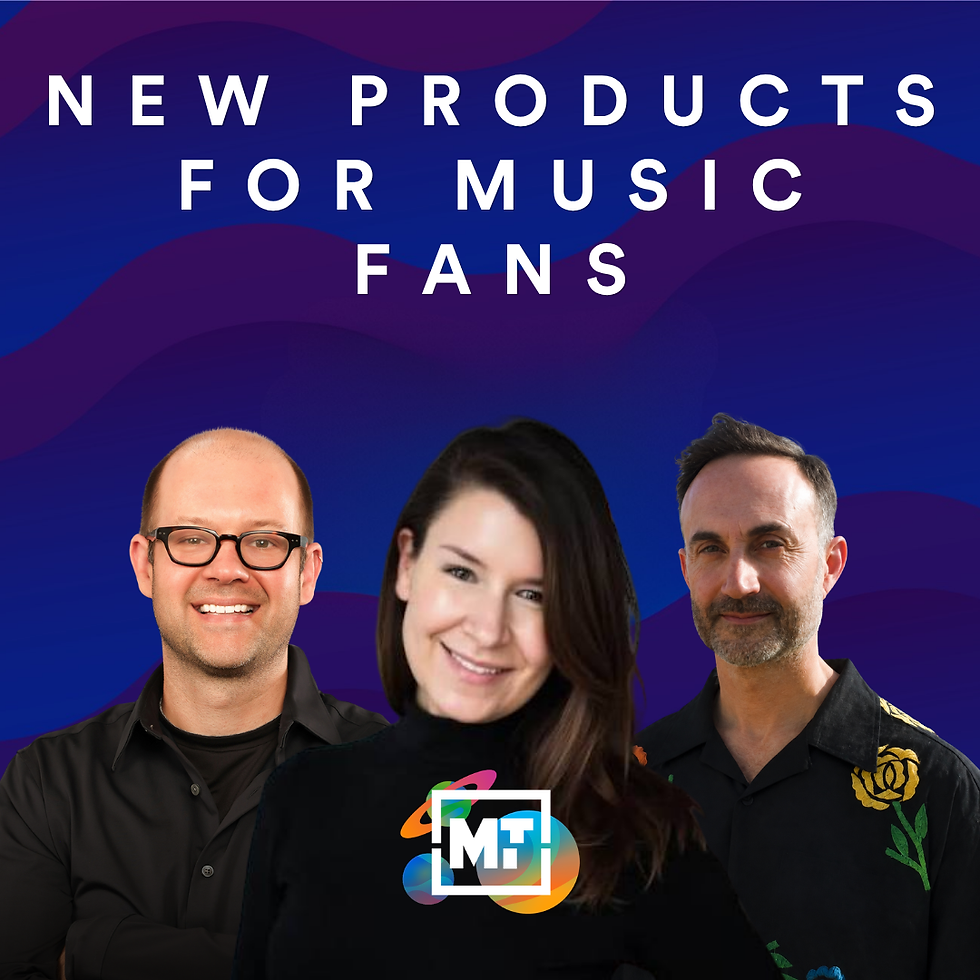
This week, we close out the Rising Tide miniseries witha recap conversation between host Dmitri Vietze and Eleanor Rust, director of marketing at Rock Paper Scissors and Music Tectonics, recorded in the Seismic Studio.
Dmitri shares why Music Tectonics chose a theme for the first time in 8 years, how a coffee shop in Portland led to the rising tide theme, and what the series taught him about why music is still a smaller industry than it could be. Then, they walk through some of the sessions in this year’s conference that put the theme to work for startups, labels, managers, and creators, including some things that are new for returning conference goers.
It’s not too late to get tickets to the conference, October 27-29 on the beach in Santa Monica (hint- there might be a discount in this episode for podcast listeners). Get your tickets here- https://www.musictectonics.com/
Listen wherever you pod your casts:

Looking for Rock Paper Scanner, the newsletter of music tech news curated by the Rock Paper Scissors PR team? Subscribe here to get it in your inbox every Friday!
Episode Transcript
Machine transcribed
[00:00:00] Eleanor: Eleanor Rust here, director of marketing at Rock Paper Scissors and Music Tectonics. I am the voice behind the Music Tectonics newsletter you get every week, and it's been really great to hear from so many of you that you're gonna come to the conference. I'll see you in Santa Monica. And that you're following along on the podcast and on our Instagram and LinkedIn accounts, even YouTube.
So many of you have joined us for the pre-conference a few weeks ago from as far away as India, China, Norway, and the UK. I've been listening to Dmitri tear through a dozen episodes on the Rising Tide theme, that same theme as our conference, " Grow the Music, Grow the Value." So I wanna give our lovely podcast listeners a chance to synthesize this miniseries and get ready for the Music Tectonics Conference.
It's really just days away now. So I've asked Dmitri to join me in the Seismic Studio to find out what he's learned. Welcome to your show, Dmitri.
[00:00:52] Dmitri: Thanks, Eleanor. It's good to be here. Always fun to chat with you about all the stuff we've been working on for the past, like, year, basically. Yeah.
[00:01:00] Eleanor: Yeah, you've really, uh, you've really taken this theme and, dug deep with, podcast guests.
It's been really cool to see, see, all the w- the ways you've explored, the value of music and how it can grow.
[00:01:10] Dmitri: Thanks.
[00:01:11] Eleanor: Yeah. All right, so up until this year, which is our eighth year as a conference, we really haven't had a theme other than music innovation and music tech. So why do we have one this year?
Why did you decide we needed the growing- the music, growing the value theme?
[00:01:27] Dmitri: Well, you know, I was thinking that, we're going through another huge transition in the music industry and, you know, every single conversation leads to AI right now. But you and I have been around long enough to know that there were other moments that felt like this.
Obviously, the pandemic was a big one when live music stopped because everything outside of your house stopped. and, you know, we saw live streaming pop up at that point. later we saw, NFTs pop up at one point, blockchain before that. The metaverse was part of that whole post-pandemic moment as well, where, oh, everything's gonna be the...
Remember when everything was gonna be the metaverse?
[00:02:05] Eleanor: Oh, yeah.
[00:02:05] Dmitri: Ev- everything was gonna be the metaverse, or concerts no longer needed. No one... I had people from major music, technology companies say, "Conventions are dead. We'll never have an IRL convention ever again. I'm never going back to NAMM. I'm never gonna sponsor NAMM again."
And I was like, "Oh, really?" And that is not exactly what happened. In fact, everybody wants this in-person stuff. and, you know, if you go back even further The whole Napster era, the downloads, the streaming, those moments were all transformative for music. And I guess if you look at all of those patterns, they feel very disruptive, not only in the traditional disruptive sense of, like, who owns what, who's getting paid, who has the most control and power, but literally disruptive to day-to-day life if you work in music or just in society as these technology disruptions happen.
And I was like, we didn't start Music Tectonics to mess things up for people. We wanted to make things better for people. We wanted to look at innovation around creativity and access and growing, you know, all the possibilities for the people that are in the musical creative world. And so when I was reflecting on this latest disruption that's happening with unlicensed music being used in AI and, even people questioning what is music, like, what is creativity?
Does it have to be human? Oh, but we've used tech before. All those conversations, I was thinking, " Let's go back to why we started Music Tectonics. Let's bring everybody together." We want the recording industry, we want the creators, the musical creators, the producers, engineers, artists, the labels, the publishers, the streaming services, and all the new music technology, whether it's on the workflow B2B side or on the B2C experiential side from streaming to making music, et cetera.
We want them all to be rowing in the same direction, so we literally came up with that theme Rising Tide, so we can all row in the same direction. And because I noticed that music was just too small as an industry. So we decided to have a theme this year because we thought it would wrap our arms around everybody and not feel like anybody's the stepchild of Music Tectonics
[00:04:11] Eleanor: So you've been exploring the theme over the last dozen episodes, what the rising tide means, how music can grow.
but I remember way back when, when this idea was growing in your mind, I remember you said that there was a specific moment when the theme came to you. Can you set the scene again?
[00:04:30] Dmitri: Yeah. So some of our listeners know that I moved to Portland a few years ago. And, you know, being in a city now, just seeing where music was out there.
Portland is actually a pretty big music city. It's not known as a music city from like, if you compare it to an Austin or a Nashville, but the local indie scene's amazing. There's lots of performers. There's lots of studios. There's lots of musical instrument and gear manufacturers here. It's just kinda like unsung.
But I was hanging out with Lee Kiebler, known as Keebz. I went to a lo-fi festival where he was DJing. He did this, Pac-Man theme song remix that went viral on Instagram, and he's involved with... He was involved with some of that metaverse VR stuff and a lot with gaming. The guy has, like, multiple old Atari consoles.
He... I went to his new home studio, and he opened up a drawer filled with Game Boys. I was like, "How did..." Because, you know, he makes music on them. He do- he hacks them. He does all sorts of stuff. But so he and I have been talking a lot about gaming and the size of the gaming market. and, you know, he was the one who I think said it to me most clearly like, "This is ridiculous how small the music industry is when you compare it to gaming."
And so he got me thinking about that. And then not too long after that, I was sitting at a coffee shop here in Portland Working on my laptop, and there was someone next to me having a conversation about releasing their record. This wasn't, you know, it wasn't like a music scene place, it was just a regular coffee shop.
And then I saw across the room somebody had a book that was like, "The 100 Best Albums You Must Own," or Desert Island Albums, something like that. And then of course the indie music was playing on the sound system. Everybody's working, meeting, falling in love, hanging out, relaxing to music. And I'm thinking, "Music is literally everywhere.
Everybody cares about it. It, shapes people's careers, their identities, their relationships. We're listening to music all the time." And so I think that one conversation with Keebs about, you know, music versus gaming, and just seeing how music was really informing people of a variety of, ages and generations, and just influencing and literally thinking, "This is the soundtrack of the world."
You know? It's not just soundtrack of a film or something, this is soundtrack of day-to-day life, and it just influences your identity so much that I wanted to focus on growing the market for everybody.
[00:06:40] Eleanor: So why is the music industry so small, Dmitri? And, uh, what do we need to do about it?
[00:06:46] Dmitri: Well, so thanks for asking that because I got a little frustrated with my rising tide theme, 'cause I kept feeling like I was asking these questions, and sometimes the answer was like, "Wrong question.
That's not true." But that, that isn't what ultimately happened, but you know, the first episode we did in this theme was with, Jimmy Stone from Alderbrook, who advises companies and advises investors and just looks at the market overall, and has a great blog. And, where he kinda analyzes all this stuff.
And he said, "Well, Dmitri, I don't think the industry's as small as you think it is." And he started laying out, depends how you count it, and he also talked about some parts of the world where we don't know how big the industry is, et cetera. But really when I pushed him to say, "Yeah, but it's smaller than it could be," and I asked him why- He said it has to do with the lack of scarcity, that now that you have all you can eat subscriptions for music, all you can listen to subscriptions for music, there's no longer this sense that you have to buy a thing.
there's just so much abundance that that's the thing that's, missing. And so I, think that's been very informative to my thinking in the rest of the series, keeping going back to that question. You know, he also pointed out that in some parts of the world, in China for example, there's these super apps where your music experience is not just listening, but you can kind of add on these additional purchases or additional subscriptions and so forth, where you get a much more robust music experience overall, not just play the playlist, sit back and listen passively, but really like getting the opportunities to connect with artists, to get tickets, to buy merch, and to have other types of online digital experiences as well that don't quite make sense yet in the United States or in, in the West, but are, possibly where things could go.
So just this idea of introducing there's these other things that aren't all you can eat, that you don't get all inclusive as well. So, yeah. What was your question?
[00:08:37] Eleanor: Well, we talked a little bit about that big picture of like why is the music industry so small, but I wanna bring it to the conference now.
I wanna dig into what those themes are gonna bring to the conference. So let's get into the schedule and what's happening. So I'd love you to look at it and let me know what sessions this year are gonna focus on growing the market for music.
[00:08:59] Dmitri: Well, we actually have a lot of partners that have come in and helped us co-curate panels and sessions that are tied to the rising tide theme.
People have really embraced this idea of, like, rowing in the same direction. So, one session that we have is called What If AI Grows the TAM? A New Licensing and Royalty Paradigm. So there's been all this discussion about how AI can undercut copyright, intellectual property, just the idea of creativity, human creativity, et cetera.
And, you know, there's a lot that we have to get right in order for it to come together. But if we do, if we get the licensing, the attribution, the compensation right, I wanna hear this conversation about what would grow revenue with AI rather than AI disrupting. 'Cause if we don't have a vision for it, we're not gonna get there.
So that panel, is with folks from Musical AI, from Kobalt, from Primary Wave, and CrossBorderWorks. So you've got a really interesting mix of folks who can talk about this question of what happens if it works out okay. So that's one of our probably grow the TAM themes.
[00:10:04] Eleanor: Mm-hmm.
[00:10:05] Dmitri: Um, another one that's kind of interesting, we're still fleshing out the panel itself, but it's called Music Is Worth More: Tech That Multiplies Revenue, Not Disrupts It.
So that'll be a similar theme, but with a kind of a different angle. I know that we've got 11 labs participating with that. As well, I wanted to have a licensed AI company talking about where the possibilities are there. That's a very, like, industry-friendly side to generative AI as well. So that'll be interesting.
Then we have a company called Beat Library that's gonna be demoing, something around recognizing catalog valuation and revenue recovery for sampling and derivative works. This is really interesting because there's these new forms of music, not exactly remixes, sped up, slowed down, all that kind of stuff.
That music's getting put out there. Sometimes it's with the permission of the rights holders, sometimes it's not. But Beat Library will give us a demo of how they can find those and then help you create and recover revenue from that too. But Eleanor, it kinda goes on and on. Yeah. Especially when you think about, like, the revenue fixes or, you know, one of the interesting things that came up in the series when I brought up the rising tide is, yeah, it's a rising tide, but is it gonna be even?
So we have a couple of interesting companies-
[00:11:18] Eleanor: Mm
[00:11:18] Dmitri: ... um, that are, we're doing panels with as well. Kosign is doing an interesting panel called Rising Tide, Uneven Boats: Closing the Royalty Collection Gap.
[00:11:27] Eleanor: Mm.
[00:11:28] Dmitri: Um, w- we'll have some managers on that panel as well, and that's really about Making sure that independent songwriters and artists are getting their share as the, the rising tide goes up, which I think is one of the things that I didn't really account for in the rising tide theme.
I knew it was gonna come up. It's why we said grow the music, grow the value, 'cause it's not just about, you know, keeping things as they are. But, you know, the- you have to have an awareness of where the money's gonna get distributed.
[00:11:53] Eleanor: Mm.
[00:11:53] Dmitri: And I'll throw out, two more that are kind of in the rising tide theme.
One is, we're working with beatBread, Symphonic, and Beatport to be, putting out a panel that's called Don't Sell Before You Know Your Options: How Artists Are Growing the Music Economy Without Signing Away Their Rights, which I think is a similar kind of theme of what I was just talking about.
Yes, you can grow it, but you don't necessarily have to sell everything and let somebody else reap all the benefits. You can do a balanced approach to that as well. And then finally, on this topic, Eleanor, I'm really excited about something we're putting together with Vocana. Rostrum the label will be there.
We've got, Daouda, who is on our podcast, is gonna be on this, session, and then some folks from Roster are also gonna be on. It's actually not a panel. It's Find the Money, a live game show about streams, payouts, and data. So it'll give us, like, a much more fun format for, know, c- coming up with this conversation about things like user-centric payouts or how artists get paid, what happens if this happens, et cetera, so we can all have a better understanding of how the money flows.
[00:12:55] Eleanor: Nice. I love when we get more interactive than just, uh, watching people talk.
[00:12:59] Dmitri: It'll be fun.
[00:13:00] Eleanor: Yeah. So we always pride ourselves on having a lot of value for startups at the conference. I'd love to know more about the sessions that bring startups into the rising tide theme.
[00:13:13] Dmitri: Yeah, I mean, one of the things that we've been doing from the beginning is I think we gather more investors at our conference than any other music industry or music tech conference at all.
So there's always a panel, from investors. We have one called Investor Confidential, where the money's moving in music tech. And so we'll have legit VCs ranging, from Patron Ventures to Creator Partners to Music, all caps. All of those are VC funds. And so startups will get a chance to understand how investors are thinking about investment in music tech startups.
And then to flip it, we'll have, something we did a couple of years ago. It's called Startup Hotbox: Labels React to Music Tech Startups. So we have labels like Loma Vista and Sub Pop and other independent labels who will listen to pitches from music tech companies and then give them immediate feedback from a label perspective.
So on the one hand, we have the panel with investors, who's gonna fund this, and then you have the, panel with some of the influential decision-makers and potentially B2B users of your music tech company that's releasing everything. So you get feedback from them as well. And then finally, I mean, there's several other sessions-
[00:14:19] Eleanor: Sure
[00:14:19] Dmitri: but I just wanna point out one more. We always do an open mic for innovators of music tech, and this is one of the most fun sessions. I've had investors come up to me or other, like, industry veterans saying, "I actually love going to the open mic," because even though it could be like idea stage startups, you get to get your finger on the pulse of like what's happening with new ideas in music tech as well.
So anybody can hop on mic during that session and just pitch what they're up to, and we see so much connection coming from that, networking and partnerships and I think even investments from the open mic session. So those are just a few of some of the things that I think startups would be into.
[00:14:54] Eleanor: Yeah. I was talking to a startup who was part of our pitch competition a while ago, and he said, so he was a finalist rather than a winner, but he said that lots of connections, before and after Music Tech Conics came from that experience, including just when we post about him.
We, we tag him in a photo on LinkedIn, right?
[00:15:12] Dmitri: Yeah.
[00:15:13] Eleanor: That being part of the network, doing things like getting up on the open mic, it can be the beginning of a beautiful relationship or many beautiful
relationships.
[00:15:20] Dmitri: You gotta, you gotta show up.
[00:15:22] Eleanor: Yeah.
[00:15:22] Dmitri: That's all you gotta do. If you just show up, like the magnets start working their magic.
Like you start getting drawn into these conversations, and it could be by the pool, by the beach, on the carousel. It could be in a session, after a session. It could be over at our UMG Studio startup event where startups can also jump on mic and pitch in front of Universal Music executives. yeah, there's so many different ways in which just coming to the conference actually puts you on stage-
[00:15:48] Eleanor: Yeah
[00:15:48] Dmitri: and actually connects you with... If you don't show up, you miss the opportunity. There's gonna be 800 people there, and you're bound to get business, find investment, connect with managers and labels, find other founders who can inspire you. Maybe they'll partner with you. Maybe they'll be the one that leads you down the path to your next big opportunity.
So you totally just gotta be there.
[00:16:08] Eleanor: Yeah. But it's not just for startups and tech companies. Let's talk about the music industry kind of as we define it traditionally. What about labels and managers, and what are they gonna love about this year's sessions?
[00:16:20] Dmitri: We've got a lot of sessions and demos and, of course, that sort of more informal marketing as well.
Even the open mic is good for this, for labels and managers as well. I think of it as come build your tech stack. You know, a longtime music industry veteran who now works for a big tech company said to me I go to the music trade conferences to meet with my big customers. I go to Music Tectonics to find out what's coming next.
And I love that because I think that is the spirit of Music Tectonics. But it can be more practical than that too. It could be, I go to Music Tectonics to build the tech stack that I'm gonna use for the next couple of years. So we have sessions like Grow the Artist, Grow the Market, the tools turning independent artists and labels into industry forces, where we'll have companies like LyricFind there with labels like Rostrum and Beggars talking through what are some of the tools they're using to help artists and labels grow releases and artist careers.
Or we've got Roblox on a panel along with some record labels called Making Music Make Sense on Roblox: 123 Million Daily Players and the Next Fan Culture Frontier. I think you'll get to learn about, like, what is the latest thing on such a big gaming platform for music? How do you promote music?
How do people discover music, et cetera? What are partnerships with labels looking like on Roblox? Or we've got sessions like What Is Direct-to-Fan in 2027? Like, what are the best practices for sidestepping some of the fragmented interactions between artists and fans that happen on platforms and go direct to the fans, sell them a direct VIP experience, sell them an exclusive piece of merch, give them access before it shows up on the streaming services.
And that's just, you know, a couple of examples of where you could build your tech stack, I think, at, Music Tectonics.
[00:18:08] Eleanor: What about creators themselves, the people making the music?
[00:18:12] Dmitri: Well, we have our, we start off with a creator fair, and we usually have tons of musical instrument demos there. we're still locking all of that in, but I know that there's gonna be an amazing 3D drum experience where drummers are gonna be able to throw their sound around the space.
[00:18:27] Eleanor: What?
[00:18:27] Dmitri: So everyone's been like, "What?" Yeah, yeah, like while you're playing, you literally can control where the sound is going.
[00:18:32] Eleanor: Wow.
[00:18:32] Dmitri: So that's, that'll be a super fun experience, and we've got some other kind of secrets in store as well. I, I guess we did mention, on the last episode about physical product that Modern Biology, the amazing artist who not only taps plant life and mushrooms, the energy that comes from those plants and mushrooms to put them into synths, you'll get a chance to try out the Pocket Scion, which is a little, sub $200 synthesizer that you connect to plants, and you can start to tweak some of the sounds.
so you can actually make music with plants.
[00:19:05] Eleanor: That's super cool.
[00:19:06] Dmitri: At Music Tectonics. That's su- super cool. And then if you widen out, when you talk about creators, So there'll be a lot of experiences at the carousel. You'll get to ride the carousel, too, where you get to demo these different apps and hardware and all that kind of stuff.
But we also, during the conference, we widen out for a conversation about what is a music creator, growing the TAM in the world of creators. You start to look at, you know, a panel that features companies like Nero or BandLab with Yamaha. Nero helps livestream creators monetize their business, so you can go and have fun with new instruments and new apps and build your, tech stack as an artist or a creator, but then you could also go to some of these panels and find out about ways to monetize your career as well.
Or if you're a software company that makes music-making creator software, we're also gonna have a panel called Should Your Software Have a Hardware Partner, a real talk on APIs, affiliates, and integrations, and we'll have Shure microphones there and FL Studio there, so you can talk to these larger companies and platforms about how you might be able to work together to grow your audience while also offering your customers more opportunities with those types of integrations as well.
[00:20:17] Eleanor: So we've been talking about all these big ideas, but what do you think people remember most about the conference?
[00:20:23] Dmitri: I mean, I've had startups who I've met after Music Tectonics who say, "I filled up a whole notebook with notes last year at Music Tectonics, and this year I came... I, it basically gave my roadmap for the year.
And this year I came back with a fresh notebook, and I need to figure out what my next roadmap is." And that just, like, just the type of thinking, that experiential component. You could be playing music. You could be meeting a social media influencer on the carousel. Next thing you know it, you could be going to a panel of investors and finding out something about opportunities in the market you didn't realize were there because they're hearing from so many startups.
But then you're standing next to the pool and you meet another founder And all of a sudden you realize that somebody on the other side of the country or the other side of the planet is having such a similar experience, and you're sharing so much about what it's like to be an entrepreneur.
The struggles, the opportunities, the joys, the excitement of it all right there under the palm trees, under the sun, listening to the ocean breeze. It's those moments in between that I think at Music Tectonics are really valuable, where you're having these experiential moments, you're gathering information, but the...
And you're networking, but then you're just, it feels like something's happening inside your brain as you go. And I feel like it's the ocean breeze, it's the location, it's the sense of play at the carousel, or the sense of relaxation in a business environment over at our beach house that is transformative.
It's just not the same thing as sitting in a windowless basement convention center panel room, or a crowded hotel banquet hall where columns are blocking your view. None of that happens at Music Tectonics. At Music Tectonics, you're greeting new people, you're greeting old friends, and the information and the ideas are just flowing.
It feels like work is getting done in such a relaxed environment. So I think, I don't know, I know that's kind of a long-winded answer, but that was the conference I wanted to go to, and that's the one we've created, and I think that's what people have been responding to most. And I'm really excited this year because last year we had three separate venues, actually four if you count Universal Music partnership as well.
We had the Carousel, which we're going back to. We had the Annenberg Beach House. We had two other venues that you go off to. This year, we're gonna stay at the Annenberg Beach House for days two and three, for October 28th and 29th.
[00:22:42] Eleanor: That's gonna be great.
[00:22:43] Dmitri: And I think people are gonna really appreciate not having to, like, reorient-
[00:22:46] Eleanor: Mm-hmm
[00:22:46] Dmitri: and so for- It also means we have more space on that third day. We're gonna have, an entire afternoon of programming there as well. So I think people just need to remember, if they've been to Tectonics before, it's changing again to offer even more programming. So make sure to stick around on that third day, 'cause there's gonna be a lot of fun, interesting stuff happening there.
[00:23:03] Eleanor: I think people are gonna be happy because everyone loves the Annenberg Beach House. It's, you know, palms, umbrellas, pool. it's the perfect place to make those connections.
[00:23:13] Dmitri: Absolutely. Yeah. So I don't know, what are some of your favorite things, Eleanor? Did we leave anything out?
[00:23:18] Eleanor: Hmm. I think you covered a lot of it.
one thing I wanna mention is we do have a lot of regulars. always welcome new folks, new startups coming into this space, new people who discover Music Tectonics through the podcast. But when people make it part of their yearly ritual, we watch them grow, right? We watch them grow their careers and grow their companies through participating in Music Tectonics.
It's like a reunion, right? Where, you know, the person you saw pitching their startup way back in 2020 is there on a panel or something like that, right? Right. You see, um-
[00:23:53] Dmitri: Yeah
[00:23:53] Eleanor: ... you reconnect, you, cheer on, uh, the people you've been working with, um, the people you maybe only see at Music Tectonics.
That's my favorite thing.
[00:24:03] Dmitri: Yeah. Yeah, absolutely. it is super cool to see our friends, this music tech network from all over the world showing up at the same time in this cool environment and things like that. I'm excited 'cause we have so many great partners on the conference as well, Eleanor.
I'm excited to see what Artist Growth is bringing. They're gonna bring a whole conversation around MCPs and how to really integrate AIs into the record label and music company flow. LyricFind is back as always. Morrison Foerster, the law firm, is doing a VIP house, MoFo house as well, so people who wanna have a different type of experience, if they've done the, pool thing all along and they wanna r- you know, rub shoulders with the VIPs of the conference, there's an opportunity there.
You know, the new streaming service of Vocana is gonna bring a bunch of artists and creators along with them. I'm really excited to see that community, thrive at Music Tectonics. And of course, we're super pumped to have Yamaha Music Innovations back. Last year, they sponsored the third day of programming.
This year, they're our partners on the Swimming, with Narwhals Music Tech Competition. And the final's gonna be happening at the end of the day on October 28th. That's always a blast as well. so really appreciate all of our partners, being a part of this, and it's been super fun talking about it with you, Eleanor.
[00:25:21] Eleanor: Yeah. Likewise. Thank you for sitting in the Seismic Studio with me and, uh, giving me this overview of how the rising tide has been, lapping against the shores of Music Tectonics. Ooh, I don't know if I wanna pursue this metaphor. But you know what? Let's go dip our feet in the rising tide in Santa Monica.
[00:25:38] Dmitri: Sounds good. See everybody there.
Let us know what you think! Find us on LinkedIn, and Instagram, or connect with podcast host Dmitri Vietze on LinkedIn.
The Music Tectonics podcast goes beneath the surface of the music industry to explore how technology is changing the way business gets done. Weekly episodes include interviews with music tech movers & shakers, deep dives into seismic shifts, and more.