How AI is Transforming the Music Business (ft Artist Growth)

AI in music is about more than generating songs. How could it transform the business behind the music?
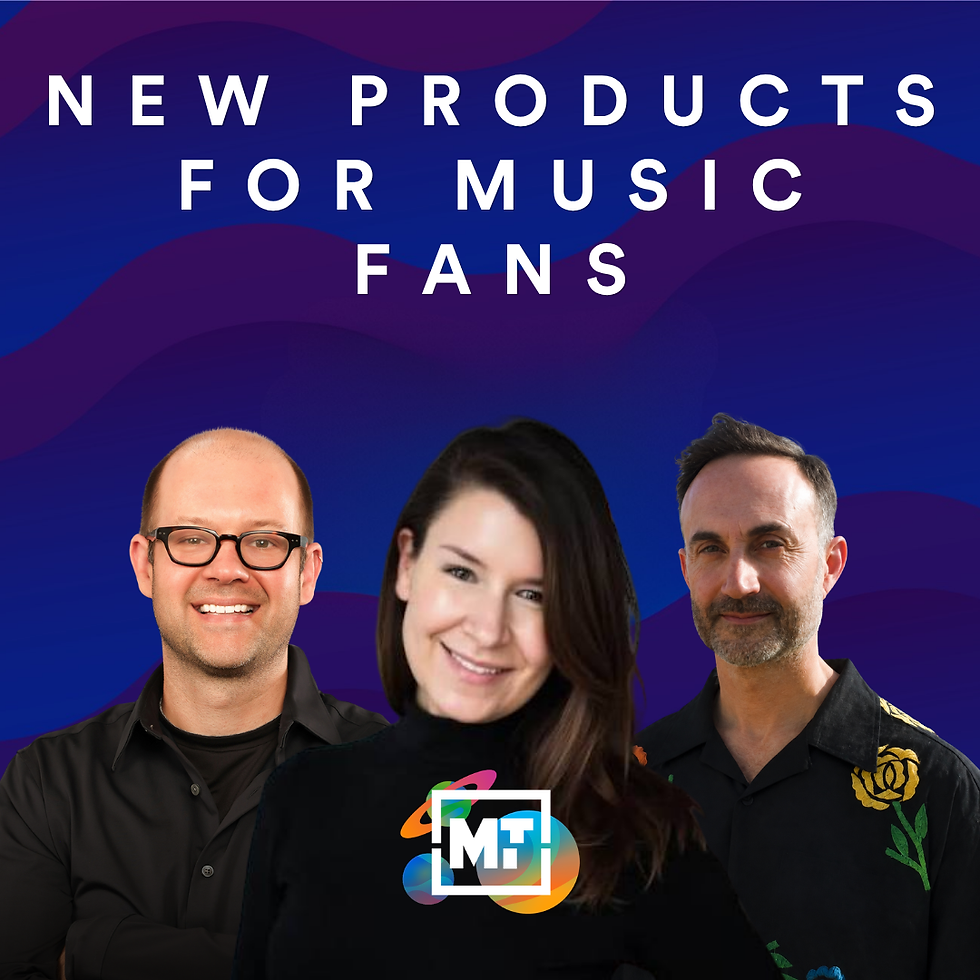
This week on the podcast, Dmitri talks with Matt Urmy, co-founder and CEO of Artist Growth, about how AI can help music companies work smarter, connect their data and systems, and spend less time on operational challenges and more time supporting artists A former touring musician, Matt built Artist Growth to solve business problems he experienced firsthand.
They explore why the music industry needs technology built around its unique needs, where AI could have the biggest impact on day-to-day operations, and how the industry can capture more of the value music creates beyond records and streams. As the conversation around AI moves beyond the hype, Matt shares a perspective on the less visible ways technology could reshape the music business.
It’s not too late to get tickets to the conference, October 27-29 on the beach in Santa Monica (hint- there might be a discount in this episode for podcast listeners). Get your tickets here- https://www.musictectonics.com/
Listen wherever you pod your casts:

Looking for Rock Paper Scanner, the newsletter of music tech news curated by the Rock Paper Scissors PR team? Subscribe here to get it in your inbox every Friday!
Episode Transcript
Machine transcribed
[00:00:00] Dmitri: Hey, I was born in Nashville and raised in New York City. Our guest was born in New York City and raised in Nashville. This is a fun role reversal or something. Maybe there's something in the universe where we tagged and we didn't even know it. Matt Urmy grew up in and around the music industry, watching sessions where his friends' parents worked as players, meeting with songwriters, and developing his own craft as a writer.
After graduating high school, he began his early years working as a singer-songwriter, playing in bands, recording his own albums, and booking his own tours, where he sold merch and albums at his shows. If you've worked a merch table as an artist, you know that is a specific experience. And during this time, Matt's team grew, and he was living the struggle that led to the founding of Artist Growth.
Matt co-founded Artist Growth to solve the exact problems he lived on the road and at the merch table, the difficulty of bringing business organization into DIY touring. What began as a tool built for artists like himself has now grown into a global platform trusted by teams across hundreds of record labels, management companies, agencies, including majors like UMG, WMG, BMG, Concord, WME, and Sony, probably some other acronyms too.
In addition to being the CEO of Artist Growth, Matt remains committed to his own artistry. His catalog spans four albums. Some of his singles landed on NPR Music's New Music Friday playlist. He's earned a spot on Rolling Stone's Artists to Watch. That ongoing creative life keeps Artist Growth grounded in the mission to ensure the music industry can apply technology in ways that are helpful to artists, not just the tech sector.
This is a preview of some of the amazing people who are coming to the Music Tectonics conference this year, so this is gonna be fun. Welcome to the podcast, Matt.
[00:01:44] Matt: Well, thanks for having me. Happy to be here.
[00:01:47] Dmitri: I'm psyched to talk to you finally. It's funny, like, a lot... I've said this occasionally, but a lot of times the deepest conversation, like, the first real conversation I have with somebody is on the podcast.
So it's, fun to, like, get curious and explore right while our listeners are doing the same thing.
[00:02:02] Matt: Yeah, I love it.
[00:02:02] Dmitri: And we'll get into... Yeah, yeah, awesome. We'll... And, and of course, the whole New York-Nashville thing, I don't even know if you knew about that, Matt, but it's pretty funny.
[00:02:08] Matt: I did not. I did not.
That is hilarious.
[00:02:11] Dmitri: Yeah, I went to the High School for Music and the Arts in New York City. but I took my first music lessons in Nashville. So-
[00:02:16] Matt: Wow
[00:02:17] Dmitri: ... so and there's lots to talk about with your company, too. We'll get into Artist Growth, but let's start out wide. there's an area that you've been exploring probably more deeply than pretty much anybody in the music industry, which has to do with both AI and the workflow of music.
How is AI transforming the business side of music, not just the creative, generative side, which gets a lot of attention?
[00:02:37] Matt: Yeah. It's wild. I think it does get a lot of attention, and right- rightfully so. there's a lot, of innovation needed in the generative space around the creative side of music.
But in the business side, it needs equal attention and, What I'm seeing is a whole bunch of businesses of all different sizes. So you have the huge global scaled-up businesses, you have a- sort of middle market businesses, and, and even some of the small upstarts and startups are all wrestling with the same question, which is like-
[00:03:04] Dmitri: Mm
[00:03:04] Matt: how can I use this tool to make everything I'm doing more efficient and make it faster and make it so I have more time to do the things that are strategic for my business, right? And, and that's different if you're a manager than if you work-- if you're a talent agent or work at a record company. But in business, there's the blocking and tackling and the busy work and all the admin stuff you have to do, and then there's the strategic side, which is, like, taking care of your clients or making sure that you're, like, really researching something and understanding it deeply.
And, And so I think people are trying to figure out how can AI take a lot of the busy work off my desk-
[00:03:41] Dmitri: Mm-hmm ...
[00:03:41] Matt: and, and streamline that, um, reliably, and then free me up to focus on the big-picture stuff.
[00:03:47] Dmitri: Yeah. It's also the pace of things have gotten incredibly crazy, too. Like, everybody's just expected to do more with less right now.
[00:03:54] Matt: Mm. Mm.
[00:03:54] Dmitri: I don't know if it's something about the economy, it's something about the speed of social media, the fact that people are starting to release records as fast as people used to write blog posts, you know? Or now tweets or whatever small... You know, like, it's just like the speed is crazy. Artists are expected to do so much across so many fragmented spaces, and then labels have to take on that role 'cause if they want their artists to remain creative in the studio or in the songwriting, lab, they have all that stuff to do.
So it makes sense that people are like, "I need more tools to figure out how to do this."
[00:04:25] Matt: Yeah, man. I mean, it's crazy the, the downward pressure on operators and artists to do, like, as you say, do more with less, is wild. It's been that way for a long time. It's been a trend that's not new, and it-
[00:04:37] Dmitri: Mm-hmm
[00:04:37] Matt: and it feels like, it feels like it's getting-- The pressure is growing, and, I think there's several reasons for that. there's the Just the general economics of the economy and like, you know, Wall Street pressuring the larger companies. You have to have-- Your margins are being scrutinized, and so, you know, in a, in an industry where everything's gone digital and it's all these little micro transactions and fractions of pennies and you're trying to scale all that up with consumption, you know, you have to really watch the operational expenses of the, of the business and keep things as lean as possible.
And then also I think just that, like the industry itself is set up in the digital world at a slight disadvantage compared to some other industries.
[00:05:17] Dmitri: Hmm.
[00:05:18] Matt: Um, and so w- another thing that I think we're gonna have to reckon with is if we're gonna create more breathing room and more margin in the industry is just how we sort of redefine what the music industry is in-
[00:05:30] Dmitri: Hmm
[00:05:30] Matt: in, in the mid-21st century. Which, you know, even though we say and like we're doing so much and we've come so far from the 20th century and the heyday as, as a lot of executives like to think of it in the '90s and early 2000s, like, as far as we've come, I do still think there is residual institutional attachment to what the music industry was, and we're s- we're still operating in that paradigm mentally and emotionally in the industry.
And I think in, in, you know, when we get to the middle of the 21st century, in 2030s, 2040s, 2050s, you know, I'm hopeful and feeling pretty confident that the music industry will have reinvented itself yet again, and will think of itself fully as transformed from what it was back in, like, the '90s.
[00:06:16] Dmitri: I think that's a really good point.
Like, we just did this series on the podcast called "Rising Tide," the same thing as our conference, where we-
[00:06:22] Matt: Mm
[00:06:22] Dmitri: ... explored different technology that can increase revenue for the industry, and it starts off by talking about all the transformations from vinyl to cassette to CD to download to streaming to what's next, and this idea that, oh, the format's gonna change again.
But I think we're actually at a no fa- phase where it's no longer about format shifts, it's about this additive stuff on top.
[00:06:43] Matt: Mm.
[00:06:43] Dmitri: So I think it's really interesting that you're saying that kind of from, like, a, a workflow perspective. We were looking at it from a kind of, like, consumer experience perspective.
But how are labels, artists, publishers, and managers using, AI in their workflows, and what are the challenges and opportunities to do that kind of workplace workflow integration in the music business?
[00:07:02] Matt: Yeah.
Well, there, there are so many, and it depends really on, like, the type of business. But, like, you know, you could think about a talent agency where you can leverage AI to look across an extremely large client roster and be able to surface, you know, pull out of that roster's database which clients are right for a specific offer, you know, that, that normally would take hours to find because you're there's so many dimensions to the question.
It's like, who doesn't have a radius clause on this market, and who plays for this amount of money versus, you know, what, And so you gotta kind of dig through this matrix of, like, okay, these-- ticket to these five artists can do this gig, you know, 'cause they're free that night, they don't have a radius clause, they play for this kind of money.
They have the right genre, they have the right fan base. whereas AI could go through a database and figure that out for you in about three seconds. And so that's an example, you know, like, so routing, accepting offers, generating offers. advancing tours is another one, like, for managers and tour managers.
Like, AI, the promise of AI around tour advancing and just production in general is like Huge, huge in my mind. And then on the label side, you know, there's, the whole, like, game of, like, taking all the metadata around a piece of recorded work and all the places in the world where that's getting tracked and the systems and, like, making sure, one, that, like, the data's normalized globally around the r- correct metadata and the correct ownership, song structure, and then being able to track in real time, as close as we can get to real time, as to, like, how these works are being used and get artists paid light years faster than they've historically been paid.
Like, that's a huge promise of AI. And I'm encouraged that, you know, we work with all these kinds of businesses, and everybody that I talk to in those businesses are actively working on these very applications that I'm talking about. Like, I'm not-
[00:08:48] Dmitri: Mm-hmm ...
[00:08:48] Matt: imagining them. There, there are people that are figuring this out as fast as they can and, you know, fingers on keyboards, building, to try to bring this to life.
And so it's exciting, and I think the promise of what it can do on the business side, sort of the back office side of the industry, is as or more exciting to me than, than what's happening on the generative side, which I think-
[00:09:06] Dmitri: Mm ...
[00:09:06] Matt: you know, on the music creative side, which is fascinating and, important, but it's, just completely different.
Like, there's a whole lot of downside to getting that wrong, I think. but on the back office side, like, there's just less downside. there's a whole lot of upside. There's a whole lot of ground to be gained if that, when that starts to materialize, and that's very exciting for an industry that's already under tremendous pressure to improve margins.
[00:09:30] Dmitri: You emit such a calm, and part of it is you're just so, well-informed about so many aspects of the music industry. The fact that you started as an artist and you've kind of grown up and built these tools over a long period of time really shows-
[00:09:42] Matt: Yeah
[00:09:42] Dmitri: ... in the conversation, and yet you're not, like, hype-y about it.
You're not, like, trying to sell any kind of, like, snake oil or anything. So I wanna get some-
[00:09:50] Matt: Mm
[00:09:50] Dmitri: ... maybe get some advice from you. If a label or a music company is just getting started making a plan for how to integrate AI into their business systems the, the way you're talking about- Mm ... what advice would you give them?
What questions should they be asking the technology companies that they're partnering with, considering working with, tapping, et cetera?
[00:10:08] Matt: Yeah, great question.
you know, and, uh, unfortunately, I think for where we are in this particular moment with AI coming into the business side of things is you do have to think, spend some time on some very unsexy things and some thinking and some conversations ar- around some very unsexy, very boring, sort of monotonous type of stuff, so like, for example, data models.
And, uh, you know, I, of all the m- music professionals, like managers, talent agents, A&R executives, C-suites at record labels, like, you start saying that term, "data model," and, like, immediately their eyes start rolling back in their head. You know, it's like, "Oh, here we go again." Like, that's not, it's not what you got into this business to talk about is data models.
But-
[00:10:50] Dmitri: What does it mean when you say data models? What are we talking about?
[00:10:52] Matt: Yeah, so we're talking about the, like, so you have a system. You have a software system. Whether it's an old school one or whether it's a, a new school, cloud-based, super bleeding edge technology, when you put information into a field or you fill out a form, right, you are entering information, data into their system, and underneath that system, I guess just a simple way to think of it is, like, a filing cabinet, right?
So, you have this invisible filing cabinet in the server, and the way that that is structured means everything when it comes to how you can use-
[00:11:30] Dmitri: Mm
[00:11:30] Matt: ... how you can use AI, right? And so, like, let's say, like, there's a lot of these tools, like, there was a service that came out several years ago called, uh, Zapier or Zapier.
[00:11:40] Dmitri: Oh, yeah.
[00:11:40] Matt: Um, you know, I'm sure people have heard of it. I don't know how to say it, but basically the promise of that system was we can link all the different tools you're using, right? And that was a big problem at the time is like, and it still is, it's like you're using these different tools, we call it a tech stack, and so all the tools in your tech stack don't talk to each other, right?
Super pain in the ass. So Zapier comes along and it's like, well, we can build these little connectors and plugins, and then you can migrate your data from this tool to that tool, and that tool to this tool for a fee. And that's great, but what you get is you get this sort of like, think of it as like taking dresser drawers and stacking them on top of each other, right?
If you do that, or filing cabinets, and they're all different sizes and they're all different shapes, and you're stacking them on top of each other and you're hooking them up with wires to send things back and forth. The problem with that is they weren't made to be stacked on top of each other, and so there's gonna be all these cracks in the pyramid of tools that you're building.
[00:12:42] Dmitri: Mm-hmm.
[00:12:43] Matt: Think of it like a house of cards. It makes it a little rickety.
[00:12:45] Dmitri: Yeah.
[00:12:46] Matt: And so, and, and you can, you can get by, you can function. But see, what AI is, is like a super current of electricity or force and energy. And so you, you bring an LLM to the party now, and you've got this rickety tech stack of these 10 things that kind of talk to each other and they weren't really meant to be jammed together, and you slam that with the energy and the power of an LLM that can move through an entire database as fast as you can blink your eyes.
it starts to f- crumble and fall apart.
[00:13:18] Dmitri: Yeah.
[00:13:19] Matt: And, and-
[00:13:19] Dmitri: I get it ...
[00:13:19] Matt: it, it, 'cause it wasn't built and designed for that kind of power. It's like a, it's like putting a Lamborghini e- engine in a Yugo, right? It's like the, the, the frame of the car is gonna just fall apart at some point because it can't handle that kind of power.
and that's what these tech stacks with these tools that aren't built and, To get back to data models, it's the model underneath the, what you click and what you see on the screen. It's the model behind that that is what the AI is blasting through. And so the first thing they should be thinking about, and again, unsexy, unfun if you-
if you love music, but the first thing you gotta think about, the fundamental thing, is the data model underneath the software that you're using, and how is it built? What's it built for? Is it built for a construction company and you're using it in music because it kinda does what you need it to do, or is it built for a music company?
and the model, the way the data is labeled, the way it's structured, what you call all those different drawers inside the filing cabinet, are they the right terms? So when an LLM who doesn't really know anything about music except what it reads on the internet, or in your software, comes and reads it, it knows what the hell it's looking at and what it's talking about.
and if you don't have the data model right, then, and you're using some sort of, like, Frankenstein tech stack, then you're gonna always struggle, because AI is gonna continually get shit wrong, and you're never gonna be able to, like, truly be like, "Yeah, this, this is on lock." Like, AI is working. It's always gonna be like-
[00:14:44] Dmitri: Hmm
[00:14:44] Matt: AI kinda works, but then it fucks things up, and it's a pain in the ass when it does that. Sorry, I don't know if I can say those words.
[00:14:49] Dmitri: You can say that. It's fine with me.
[00:14:51] Matt: Okay, okay, sorry. I alway- I forget to ask sometimes. Like-
[00:14:54] Dmitri: No
[00:14:54] Matt: ...
do I need to censor myself?
[00:14:55] Dmitri: It's the music business. Yeah. We've all heard that word before.
[00:14:58] Matt: Yeah, cool. Okay, okay.
[00:14:59] Dmitri: So, so, like-
[00:15:00] Matt: So that's data models ...
[00:15:01] Dmitri: so you did-- So is the, is the advice that you need to be aware of what your data models are, you need to understand how they're structured, or you need to, like, clean them up first?
[00:15:09] Matt: Yeah, well, you need to, yeah, you need to understand how they're structured and the tools you're using.
So you need to talk to those companies, and you need to say, like, "Explain to me how your data model is set up."
[00:15:17] Dmitri: Hmm.
[00:15:18] Matt: And, and you need to do that across all your tools. And if they won't talk to you about that or they can't talk to you about that, then you need to, like, think about different tools. And similarly, like, when you're evaluating-- If somebody like me is talking to your company, like, "We built a software product.
We're in there and we wanna sell it to you. We want you to use it. We're really excited about it and proud of what we've built." you need to be saying, you know, yes, one, tell me about your data model. Is it customized for the music industry or is it generic and are you also trying to serve, like, plumbing companies?
and then number two, there are a couple things that, they need to be able to eloquently explain to you. And for either one of these things, if the vendors you're evaluating cannot eloquently, and immediately explain to you what, their strategy is and what their implementation roadmap looks like around, data security and how that security has been augmented or fortified specifically around AI and, and not just AI, but AI being utilized by everyone on your team who is accessing that data from different directions.
If they can't talk to you about that with any kind of real thinking behind it, where it's clear to you that like, oh yeah, these guys have given it a lot of thought, then you should back away from that software vendor.
and then also if they can't eloquently speak to you about what their, MCP strategy is and what their roadmap looks like around MCPs, model context protocols with AI, and they're kinda looking at you blankly when you're talking about that or you ask about that, then that's another red flag for, for somebody in the technology game who's trying to sell you something.
[00:16:49] Dmitri: Real quick, real quickly for somebody who's just hearing the, acronym MCP-
[00:16:53] Matt: Mm.
[00:16:53] Dmitri: ... just give us two sentence of what that means.
[00:16:56] Matt: It stands for model context protocol. It's a piece of technology that sits between a software system like Artist Growth or others and,
the LLMs like Claude or ChatGPT, and it basically teaches the LLMs what your software does, how to use it, how to read the data, how to read the APIs so that it can have the context it needs to be able to do whatever tasks you're wanting the AI to do on your behalf in that piece of software.
[00:17:22] Dmitri: Okay. I'm, I'm gonna get into that in a little while, um, but I just wanted to define that for folks.
[00:17:26] Matt: Yep.
[00:17:27] Dmitri: so, we got a little bit in the weeds here about data models, about security, about, you know, tech stacks and, some of the challenges, when you're-
[00:17:34] Matt: Mm
[00:17:34] Dmitri: ... first getting into this world. What are the top few use cases of automating music business workflows with AI across labels, publishers, managers, agents, promoters?
You talked about some of them, but let's, let's talk a little bit more about, like, where you think that's really emerging right now for, for using AI to automate the workflow.
[00:17:51] Matt: Well, one, one area that's working well, relatively well, um, with us that we've been able to implement in our system that we're seeing clients benefit from that, is just the simple things of, like, making reports or making, something as simple as, like, a travel itinerary, which is a workflow that would've been done in Microsoft Word manually or in a Google Doc manually, and it takes maybe one staffer at a, at a label or a management company, like, 30 minutes to, like, format up this document that's got all the dates and all the flight times and all the check-in, check-out times and all that stuff.
and now with an MCP, Claude or ChatGPT can just go into your software system, grab that stuff, and format you that document in, like, 25 seconds. And so as-
[00:18:32] Dmitri: Amazing ...
[00:18:32] Matt: you, you get... And it's perfectly formatted exactly how you asked for it to be. And so, like, that's a real world, like, if you're doing three of those a week, like, you just got back a couple hours of your life.
and then if you extrapolate that against a roster, then it compounds. And so that's really cool. and then I think another really powerful innovation zone where this is, is like, artists are these entities, uh, in business where they're surrounded by these orbiting planets of professionals.
So you have the manager, and the tour manager, and the business manager, and the A&R executive, and the publisher, and the booking agent, and the promoter, and your publicist, and your travel agent, and, you know, then you have your family, and you have all these people are sort of orbiting around your schedule because artists' schedules are wild, and the industry is wild, especially if you're on cycle.
And so just the information flow around the various people in the orbit of the artist being able to get automated and have these real-time updates that change, like, "Oh, meet and greet changed, so now he can no longer do this at 3:00 'cause he's gotta go do this." And all that stuff that happens in real time, being able to keep that whole world sort of on the same rhythm and beat with each other is another huge promise of AI.
But again, back to security, right? If you, you're using a system that isn't designed to, like, have that many people accessing key information, some of which this guy can have, but then this other guy can't have it, you know, everybody's level of access is different, especially the bigger an artist is. And so if you have the right security, then I think AI can really start to take some of the chaos out of, like, keeping everybody on the same page about what the hell is gonna be happening tomorrow, and next week, and the week after that.
And that's really exciting because, and I've lived it, like, when you're out there on the road, and you're doing a radio show, and then you're going to the venue, and then you've got a meet and greet, and then you've got this, and it's exhausting enough if you're not constantly having to, like, re-communicate with your team who's not on the same page with you about things that are changing in real time.
And so, that is really exciting to think about AI, and this whole idea of, like, an AI assistant being able to monitor data, and it's like, "Oh, now I know I need to update the agent because this just changed on the schedule." That's super cool shit.
[00:20:50] Dmitri: Yeah. I feel like you're really explaining what you said at the very beginning of, there's a lot of interesting things to talk about with the creative side of generative AI.
but there's these important things that can be done now with workflow. But what I'm hearing as you explain it, when I think about the human impact, the impact on humans of what you're talking about, it doesn't feel like the robots are taking over to me. It feels like people might actually be more connected.
It feels like-
[00:21:14] Matt: Mm-hmm
[00:21:14] Dmitri: ... somebody who hates the grueling task of putting together a tour schedule and is like, you know, stabbing themselves in their eyes with their pencil because they're just like, "This is such a frustrating... It doesn't make any sense that you have to spend so much human labor on something that, the data's somewhere.
Why do we have to put it, make it so organized for our eyes when our time could be spent better elsewhere?" Or connecting with all these people and making sure that everybody's on the same page, getting into the same rhythm with everybody is a very human thing-
[00:21:44] Matt: Mm-hmm
[00:21:44] Dmitri: ... uh, that you could save there.
So it's really interesting. We've gotta take a quick break, but when we come back, I wanna ask about Artist Growth. We haven't really talked about your company yet, and I wanna get into that, so-
[00:21:53] Matt: Okay. Sure
[00:21:53] Dmitri: ... we'll be right back. . All right, we're back. Matt, you've given us a great kind of overview about this workflow side, these really practical things that can be automated, cleaned up with AI, some of the implications for doing that as a music company, a record label, an agent, et cetera.
But we haven't talked about your company yet. How does Artist Growth fit into everything we've been talking about?
[00:22:17] Matt: So Artist Growth, we started that company initially, like you said at the top, as a tool for artists who were doing it all themselves to get their arms around the, quote-unquote business side of being an artist.
we quickly learned, like, oh man, the, the actual business side, is using some really old tools and needs to be modernized, and so we expanded the vision a little bit. And, what we do, at the core of it, our system is about giving the artist and their team plural, their teams, a central place to house certain information about what's going on in their world, logistical stuff, so like the release schedule, the touring schedule, all the metadata associated with those things.
you know, TV appearances, publicity dates, content productions, social calendars, all that kind of stuff centralized. And then we, have a very, very deep way of, of allowing the owner of the account to grant access to all the other people in very controlled ways. and then automating out updates and notifications based on what's happening.
So it's, it's a team-wide collaboration engine that, you know, has all the things you would expect. It's got a calendar, it's got timelines, it's got project management, it's got all these other, these kinds of things and these workflow tools. But the, purpose of it is to cut down on the chaos, and have a, piece of the technology in your stack be so sophisticated at knowing and determining who can see and do what around this information, that when you plug it into the other tools you use, you end up with this really, really efficient utilization, implementation of technology.
and there's, there's a lot that I could spend an hour just answering that one question for you, but, but that's what I think it is at, the core, is like, it's a collaboration tool that is really built deeply, deeply paid attention and finely tuned for the nuances of the context around the artist's world and all the professionals in their orbit, and being able to have them collaborate together.
[00:24:16] Dmitri: Nice. Okay. That makes sense. Now, is it, on the live side, the recorded side, the marketing side? Is it all those pieces?
[00:24:23] Matt: it's all those pieces to a degree. So, you know, it's interesting, like people ask me all the time, like, "Are you trying to build like a one-stop shop for the whole music industry?"
And, uh, 'cause there's this adage, you know, like if you do everything, you don't do anything. You know?
[00:24:36] Dmitri: Yeah.
[00:24:36] Matt: It's like if everything's a priority, nothing's a priority. And so we're, we're certainly not trying to be everything. It's like, but we touch everything. So, you know, we got our start in touring, and so we built a deep, deep calendar that had a lot of touring metadata, production data, marketing data, tasks, contact, guest lists, all that kind of stuff.
Accommodations, flights, ground transport, like that's all in there, right? And then we added a release grid and, project management tools and, communication tools and some data analysis and profiles where you can like create EPKs. And so- We see, you know, a manager uses our system and they might use it mostly for touring, and then they can use, like, the profiles for certain things.
And then a label will use it, and they might mostly use it around promo and tracking content production and all their release dates in one place. But they're also tracking some touring. They're just not maybe as deep in the touring side and capabilities as an artist manager or tour manager would be.
And then our goal is to, like, plug into the other tools people use, so, like, repertoire management and digital distribution. Like, we're not building any of that. So, like, you can't use Artist Growth as, like, one tool to do it all. Like, we don't do distribution, we don't do catalog management, that kind of stuff.
So, but we wanna be interoperable with those tools and, I guess the part we try to cover all the bases on is, like, business logistics and that sort of day-to-day operational scrum of, working at a company that is doing things on behalf of artists
[00:26:09] Dmitri: Yeah, interesting. it's almost like y- you know, the artist dashboard to all sorts of things that then it really does point to you can start to plug that stuff in it somewhere else.
If you have kind of control-
[00:26:20] Matt: Mm
[00:26:20] Dmitri: ... if this is the master database of whether it's tour or recording or, you know, release schedule, whatever, you kinda do... it's funny. It's almost like your metaphor about the janky stacked file cabinets. You sort of say, "Put that to the side. let's get you something where the data really can, the integrity of the, of the system that holds everything can be in one place, really talk to each other, have some kind of like, hierarchical permissions for different people and roles to access and so forth."
So I can see where this is going. I can see why AI walked in the door and you're like, "Hmm, that looks kinda good."
[00:26:56] Matt: Yeah.
[00:26:56] Dmitri: "I think I'll have another plate of that." Artist Growth just announced an MCP server. You were talking about model context protocols a minute ago, and MCPs seem to be popping everywhere.
You've been talking about them for months. Like, I, I remember at Music Biz, you were the first person who said those words to me-
[00:27:13] Matt: Mm
[00:27:13] Dmitri: ... at the Music Biz conference several months ago. You mentioned what they do. They're this connecting force between your internal systems and these external LLMs, the, the Claudes and the ChatGPTs.
Why are they so important, and what's the next thing people need to tune into with where they're going?
[00:27:29] Matt: So I think they are--
I mean, yes, you're right. There's a m- they're having a little hype moment in the music industry, and they should. That's great. It's important. Everybody needs to know what they are.
in 2014, I was going around to all these companies, and I was talking about APIs, and I was saying like, you know, "We can do all these integrations and da, da, da." And people were just looking at me like, "What's an API?" and now you can go into any music company anywhere, and even, like, the interns are like, "API, API."
E- everybody knows what an API is, right? It's just like, Auto-Tune. Everybody knows what it is. MCPs are new now, and, like, most people ha- don't know what they are, and it's gonna be as, like, well understood as an API, before too long. And, and so yeah, it sits in between the LLMs and your software.
And the reason they're important is because, you know, so LLMs can read information. Everybody's experienced how fast they can read information and then create text and that stuff. And so if you have this MCP server that's sitting there, and it's got a set of instructions that says, "This is what this software does.
This is why this software exists. This is who uses this software and the kinds of jobs they're trying to do in it. And here's all the API endpoints, and each one of these API endpoints does this thing. And when somebody wants something from here, these are the likely things they're trying to do with it," it might take you a month to write all that out but the LLM is gonna read that in, like, one-tenth of a second, and then it's gonna understand, like, "Oh, this is what."
And it doesn't have to infer what, what is this person trying to do? They just, it just asked me to create a promo itinerary. What is a promo itinerary? Well, let me go search the internet for that and then come back and, "Oh, here's some data that looks like it might go in a promo itinerary." When you have an MCP there and you say, "Make me a promo itinerary for this artist," it goes to the MCP and it goes, "Oh, these are the 12 endpoints on this API that have to do with promo.
I'm gonna grab all of that. And look, it's a calen- there's schedule data, and it tells me to put it into a format like this." And so it, basically takes this dumb robot and makes it less dumb. and then you can do other amazing things with it, like we're gonna release another MCP soon that's not a user, like, you can have it put data into Artist Growth for you or you can have it pull data out of Artist Growth for you.
That's what we have now. We're gonna release one soon that's a developer MCP. So you've heard of vibe coding, where you don't have to be a developer and you can go in there to Claude Code and you can say like, "Hey, make me an app that, like, follows the weather." And it'll build you a pretty nice-looking app that, like, tracks weather patterns from Apple WeatherKit or whatever it plugs into.
And so you have all these people vibe coding software, and the front end of that, the user interface, it's very easy for, these AI coding tools to whip that stuff up, and it looks great. It's awesome. the challenge is the data on the back end, back to the data model, the APIs, the structure of things.
Unless you are a software engineer and you know enough to instruct the LLM on exactly how it's supposed to write that code for you, then it's just gonna do what it wants to do, and you don't have any real understanding or way to know what kind of data model the thing just built you. and it makes your apps unsecure.
It, it, it makes them break and buggy. And so what we're doing with our developer MCP is we're gonna open it up to where like, hey, you wanna use Claude Code to make your own version of Artist Growth that looks how you want it to look and is laid out how you want it to be laid out? This MCP teaches Cloud Code or Codex how to write code against our backend and our APIs.
So you don't have to worry about the data security or the data model or the APIs. It's all there for you. All you have to do is tell the LLM how you want it to look and where you want this button to go and where you, how you want your calendar to be laid out and how you wanna show streaming data, and it will do all that for you because the data's already in our system and it's already secure, and they can just write against the API.
So essentially, it's writing front-end code for you, not back-end code. That's a simple way of thinking about it. and that's only possible if you have an MCP that's really well thought out and, built for that, like, specific purpose. And that's what I think is happening with software, is we're gonna move into this era where the front end, the user experience of software, is gonna become this highly personalized thing.
Like, I don't think it's out of the realm of possibility that a company like Apple or Google will release similar tools to where you can make your Gmail or your Apple Mail look however the hell you want it to look. If you don't like the way the inbox is laid out, you can just make your own. If you don't like the way the calendar looks, you can design it however you want, but the back end, the data, is managed by them.
And so software's gonna become this extremely personalized thing where we can change it as often as we want, the way we change our clothes or the way we change our curtains in our house. But that doesn't mean we're, like, laying plumbing in the walls of our house, and we're, we're not doing the electrical systems.
We're just choosing the, fixtures and the curtains, and that's coming with software. And that's new, and that's really exciting, and MCPs make that possible.
[00:32:27] Dmitri: I get it. So Artist Growth, If you come in as a regular Artist Growth user, you'll have certain drop-downs and certain fields where you're entering data, or even APIs that you're hooking up to populate this whole dashboard of running your label or your artist career or something like that.
But then if you're like, it's not just like, "Oh, let me make it a nice slate blue," you know? Like, it's actually like, I use this function way more than Artist Growth thinks I do, so I wanna put these buttons over here on the right. And actually, I'm left-handed, so I wanna put them on the left, actually.
[00:32:58] Matt: Mm-hmm. Yeah.
[00:32:58] Dmitri: And, and, you know, I don't like drop-downs, so I'm gonna switch everything to sliders, and I can start to, you know, somehow use sliders to switch between stuff or whatever it is. Maybe they make a DAW that has a tour router that looks exactly the same, and they're just toggling between their DAW making music and their tour router.
[00:33:16] Matt: No doubt. No, no, no. This is 100%. This is 100% right.
And, and you think about it, like It's the same data inside the company. It's where is the artist, where were they last week? Where are they now? Where are they gonna be? And what's all the little bits of scheduling and travel and, demo tapes and turn-ins and all the things that get generated over the course of that time.
And the digital marketing team, it's the same data, but the digital marketing team thinks about that data very differently from the promo team or the A&R team. They relate to the data, the context of how they relate to that data is different across the different teams in an organization. And so why should you force all of them to live in the same software environment?
They should be able to have their own. And if they can, if it's so easy to make now, where it's as easy as talking into a microphone to Claude and saying, "I want it to be laid out like this," and Claude can go, "Yep, no problem." And in an hour, you have your own custom dashboard that looks nothing like the marketing team's dashboard 'cause they're focused on a different context, then that's where we're headed.
That's really ex- as somebody who's been building software or working with a team that builds software for a long time, this is very exciting. But it's gonna require adherence. All those basic building blocks have to be in place to enable that kind of innovation. If you're using basic software that doesn't have-- It's, as much as it's built for a label, it's built for, you know, a construction company or, or something else, then it's never gonna have the degree of specificity required in order to efficiently do these kinds of things.
And so that's why I think companies like Artist Growth, and there's a bunch of others in the space, that all we do is build for music and entertainment. Like, that's our whole world, and we go real deep. It's not just us. And those are the companies that I would advise operators to be really looking at, because we're the ones who are gonna be able to unlock this kind of level of, of power.
Whereas sort of the Walmarts of software, who are building for the whole world and every use case on Earth, like, they're never gonna be able to give you that, you know? And, and if you, think about What does the CEO of Airtable think about, or Monday.com, when they look at the different industries they serve and they go, "Oh, yeah, we got all these customers in music, and that's a really cute industry.
It's valued at about $100 billion a year. And we also have these customers over here in construction, and, and that industry's valued at, like, $17 trillion a year. So, we got feature requests coming in from both industries. Like, who are we gonna prioritize? The, the $100 billion industry or the $20 trillion industry?"
And, music needs, for many reasons, music needs technologists they can trust who are there to build, to make the music industry stronger, not make the technology industry stronger. and this is why I love meeting other founders, 'cause it's like, it's important work. Because if you have a world where artists can't afford to have the time to actually make art, then the human being as a civilization on this planet is in a lot of trouble, I think.
[00:36:19] Dmitri: Hmm. Hmm.
[00:36:19] Matt: Because our artists are the ones who always push us forward, and get, help us get through dark times, and help us understand new ideas and new concepts. I mean, could you imagine the '60s without rock and roll? It wouldn't have happened.
[00:36:35] Dmitri: It wouldn't be the
[00:36:35] Matt: same. It wouldn't have happened. It would not have happened, man.
[00:36:38] Dmitri: The calendar would've stopped. 1959, over.
[00:36:42] Matt: Yeah.
[00:36:42] Dmitri: Thanks. Thanks, Elvis.
[00:36:43] Matt: And, and like, but, but there was a model in place that allowed there to be enough money in the system for people to, like, go down these rabbit holes and make this kind of music that changed the world.
And, it's really hard that...
It's hard now. You know what I mean?
[00:36:58] Dmitri: Yeah. Yeah.
[00:36:58] Matt: It's like, it-- And so we gotta find a way to make the industry strong, and we're not going back to pre-digital. It's always gonna be digital. The whole global economy is moving deeper and deeper into a digital paradigm. And, and so we need technologists that are born from within the music industry, not trying to just leverage some arbitrage against it from outside because they're better at building tech than the music industry is.
That's, that's a big part of what gets me up in the morning and why I think other founders are willing to go through the suffering and pain of, that we do. because at the end of the day, we want a world full of artists that are making great art that our kids can listen to and we can listen to and get inspired
[00:37:39] Dmitri: Absolutely.
You're the perfect person to be coming to the Music Tectonics conference coming up in a couple weeks. We're working on a panel together called Context Without Compromise: The Music Executive's Guide to Safe and Effective AI Operations. And I love to hear you talking about this cultural element that drives you behind this tech, behind the MCPs and the APIs and the AI-
[00:38:00] Matt: Mm-hmm
[00:38:01] Dmitri: that is actually bringing you to it. You know, I noticed as we... you're moderating that panel with, label and publisher folks from Nettwerk, from Sub Pop, from 411 Music. I noticed their titles at these record labels, that we have a director of applied AI and technology that's gonna be on the panel.
[00:38:20] Matt: Yep.
[00:38:20] Dmitri: We have a systems director. It's not the... Those are not the titles that were probably at those record labels in the '60s.
[00:38:26] Matt: Or, or in 2024.
[00:38:29] Dmitri: Yeah. Yeah.
[00:38:30] Matt: Or 2025.
[00:38:30] Dmitri: I'm s-
[00:38:31] Matt: I mean, it's, it's, it's happening
[00:38:31] Dmitri: ... I'm, I'm seeing those, uh, that applied AI is a really interesting title that's popping onto record labels.
But I'm really excited to have you at Tectonics coming to, run that panel. You've been ideating with me about some of the stuff. It's super fun. I love that you're explaining all this, to our audience. When you widen out to this year's conference theme, since we've widened out to culture now-
[00:38:51] Matt: Mm
[00:38:51] Dmitri: our theme is Rising Tide: Grow the Music, Grow the Value. Where do you think the biggest market growth opportunities are?
[00:38:59] Matt: Oh, well, you know, I think I think two things. I think one, this idea of, and, and this is controversial and it's a long conversation, but this whole idea of the barrier to entry going to zero around making music and becoming an, a quote unquote artist or creative.
there's a lot, understandably, a lot of resistance to that movement, and it's like, "Well, wait, but what about the real artists?" And I, I really have grown a disdain for that term, real artist. I just would rather that term go away forever. But I think it's a good thing that being able to apply whatever level of creativity and imagination a human being has into some manifested form of music or other kinds of art, digital video or photographs or whatever.
I think, I think the world needs more of its population doing the act of art. and that is a way to grow our economy as an industry, as long as we are also able to keep the innovation curve for how we organize and distribute and manage the marketplace of the industry. and let-- The people will always be able to choose what inspires them the most, and so I think we can, we don't have to be so afraid of that.
So that's number one, is like this expansion of like access to being a quote unquote artist or creator is a good thing in my opinion. It needs to be embraced and it needs to be innovated around. And then number two, and we touched on this a little bit earlier, I think the whole idea of what the music industry is has to expand.
you know, it's, it's really interesting. I talk to people about how music powers downstream economies like gaming and, and film and TV and, commercials. And when was the last time you went to a sporting event that didn't play music or you saw like, a whatever on TV that didn't have music playing with it?
It's everywhere. But we, we get these like fraction of a penny little payments to use music when it's really the driving emotional force behind all of those experiences. And it's like, man, there's something wrong with that. and some people say, "Well, yeah, but you know, like we're not gonna get into the fashion industry.
Like we're, we're not gonna... Like the-- We're the music industry. We're not the fashion industry." And I'm going, "Really?" Because, you know, merch, like what's the difference between making merch and like getting involved in the fashion industry? Like maybe the fashion industry needs to be part of the music industry.
Maybe we need to bring them into the music industry a little bit more than we are now. And if you think, if you just simplify that idea to like live entertainment, you know, like live entertainment. So like Live Nation is not less of a music company because they sell beer at their shows. You know what I mean?
Like-
Yeah ... or they, or they sell, you know, whirly things or, like, cushions to sit on. Like, they're in the hospitality industry as much as they are the... But they're in the music industry. They're just leveraging hospitality economies inside of-
[00:41:56] Dmitri: Yeah
[00:41:57] Matt: ... their music domain, and we need to be thinking like that.
Like, all these downstream value that we're basically giving away, we need to bring a lot of that back in and go, "How do we program this where we set the terms? And, like, we're putting on a fashion show, and instead of getting micro licenses, we say to everybody who's participating, 'No, this is what you're gonna pay to have this music be at the show.
And it's our show, so we get to set the rates. Oh, and guess what? Every celebrity on the planet's gonna be there, so we really think you wanna participate.'" and they will participate, and they will pay.
[00:42:29] Dmitri: That's it. It's the Music Tectonics fashion show coming up.
[00:42:32] Matt: Yes. Yeah. I mean, but, but, but, you know, the star power and the creative force that exists in this industry has not and is not being leveraged the way it could be or should be to make the music industry one of the largest in the world.
and a- again, you have to stop thinking of the music industry like you did in the '90s. And there's this emotional holdover, where these people are very emotionally attached to the way it was. And even though they're iteratively and incrementally embracing the digitalization of everything, and they're happy that the new licensing and royalty models are coming down the pike, and they're happy that, you know, distribution is getting better and metadata collection at the societies is getting more streamlined, and they should be happy about all that, they still at the bedrock in their consciousness think of the music industry the way they thought about it in the '90s.
And they're just trying to swap out CDs for streams.
[00:43:25] Dmitri: Right.
[00:43:25] Matt: And it's like, it's like that's not the game anymore. It's not about the format. Like you said, forget that. It's about how do you integrate these economies, and how do you leverage the assets you have to go in and dominate? And music could dominate most economies, but we don't. Because we can't stop thinking about ourselves as we sell records. as opposed to we sell the most powerful form of expression known to humankind.
[00:43:57] Dmitri: There you have it.
[00:43:57] Matt: And we're gonna leverage that. You know what I mean?
[00:43:59] Dmitri: Yeah.
[00:43:59] Matt: Yeah. Like, it's just a little switch in how you think about it.
[00:44:01] Dmitri: Yeah.
Absolutely. I love, I love it. You're speaking my language. He was born in New York and cut his teeth in Nashville. I was born in Nashville, cut my teeth in New York. We sound like we're cut from the same cloth. Matt, this has been a blast talking to you. You are speaking the Music Tectonics language. It's gonna be so great to have you in full presence at Music Tectonics.
People will get to try out Artist Growth there. They'll get to come to your panel. but more importantly, you'll get to meet with other innovators in the industry to talk like this, to think like this, to move the needle and grow the pie for everyone. This has been a blast. Thanks so much for coming on the podcast, Matt.
[00:44:34] Matt: Oh, man. Thanks for having me. I'm excited. I'll see you in, uh, Cali in a couple weeks.
Let us know what you think! Find us on LinkedIn, and Instagram, or connect with podcast host Dmitri Vietze on LinkedIn.
The Music Tectonics podcast goes beneath the surface of the music industry to explore how technology is changing the way business gets done. Weekly episodes include interviews with music tech movers & shakers, deep dives into seismic shifts, and more.