How Do You Value Music Catalogs in 2026?

How do you actually put a price on a music catalog in 2026?
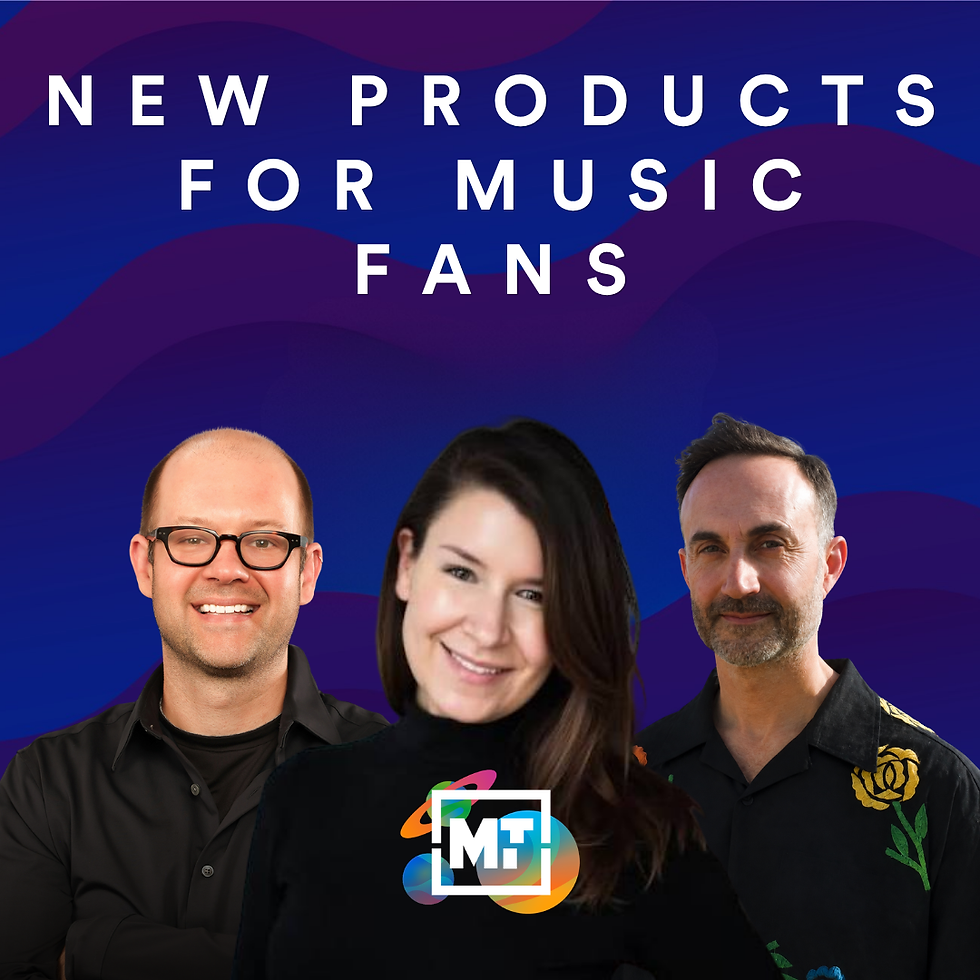
In this panel from our recent Grow the TAM event, Billboard's Elizabeth Dilts Marshall sits down with three experts who each value catalogs from a completely different angle. Rob Frech of Raine Group has advised on catalog and M&A deals for Warner Music Group, Quality Control, and Downtown. Tom Sarig spent decades managing artists like Lou Reed and Bryan Ferry before launching Antifragile Equity Partners to acquire mid tier music catalogs. And Monica Corton of Go to Eleven Entertainment works with songwriters, artists, and producers across publishing, marketing, and royalty management, helping them maximize the value of their catalogs.
The conversation covers who is actually buying music catalogs right now, why active catalog management might matter more than the multiple you pay, how sync licensing drives real catalog growth, what tools like Disco and Luminate are doing to modernize catalog data and rights management, and how AI licensing and name, image, and likeness rights are starting to change what these assets are worth.
If you work in music publishing, catalog acquisition, artist management, or music finance, this episode breaks down exactly how catalog valuation is evolving heading into 2030.
Listen wherever you pod your casts:

Looking for Rock Paper Scanner, the newsletter of music tech news curated by the Rock Paper Scissors PR team? Subscribe here to get it in your inbox every Friday!
Episode Transcript
Machine transcribed
[00:00:00] Shayli: So next up on the agenda, we have how do you value catalog in 2026, moderated by Liz Dilts Marshall, Billboard's chief financial correspondent reporting on catalog deals, music industry M&A, and the tens of billions flowing from the global investment community into the music industry. Liz is based in New York and previously covered the banking industry for Reuters.
Welcome, Liz.
[00:00:27] Liz: Thank you. Thank you so much for having me. hello, panelists, and thanks to the Rock Paper Scissors folks for, for putting this all together.
I am Elizabeth Dilts Marshall, financial journalist at Billboard, and we are here today to discuss how valuing a catalog has changed in 2026, and going down the line, because these are long-term financial assets, how it will look, valuation, uh, in four years, five years, and 10 years. As interest in investing has grown over the past two decades in music catalogs, the asset class has evolved and matured, and there are more ways to structure deals than ever before, as we've seen with catalogs like the seven-layer cake that was The Weeknd's transaction.
And there's more technical tools than ever before to help you organize and clean up catalogs and trace copyright ownership. And of course, there is the AI evolving the landscape for copyright enforcement and posing new questions about how much these things are worth right now and how much they'll be worth in the future.
I'll briefly introduce our three, experts who are here to discuss this matter with us today, and then we'll dive into the questions. And please throw your questions up in the chat, and I'll try to, to keep track of them and ask them as well. First, we have Rob Frech, managing director at boutique merchant bank Raine Group, where he has advised on companies including Gamma, Quality Control, Downtown, Warner Music Group, CD Baby, and many more through things like capital raises, mergers and acquisitions, and so on.
Raine is also, as a merchant bank, an investor in many companies, and, Rob has been a part of leading Raine to invest in Firebird Music, SoundCloud, and most recently Duety. Prior to Raine, Rob led corporate development and M&A at Gamma, and you're the pianist in the folk pop group The Morningsiders, if I have that right.
[00:02:20] Rob: That is all right. Thank you. Good to be here.
[00:02:22] Liz: Great. Tom Sarig, of Antifragile Equity Partners. Antifragile Equity Partners was launched in 2024 and is backed by distributor 2Lost. But Antifragile has really evolved, and I know, Tom, you'll tell us more about this. It's really evolved over the last decade or so from a artist management firm into a label and publishing company, and now into a fund that acquires music IP.
So Antifragile targets mid-tier music rights catalogs and before starting Antifragile, Tom, originally... W- excuse me. And Antifragile was, is also a- an indie label and there is the publishing company Sarig Songs. Before all of that-
[00:03:07] Tom: All separate companies.
[00:03:09] Liz: Separate companies. Um, before all of that, Tom was an executive at multiple record labels including MCA Universal, Arista Records, TVP Records, A&M Records, and others.
And he ran the, uh, management company Ester Creative Group for over a decade with, with artists including Lou Reed, Violent Femmes, and Kate. Thank you for joining us, Tom.
[00:03:29] Tom: Welcome.
[00:03:30] Liz: And Monica Corton, Last but not least. Monica is the founder and CEO of Go211 Entertainment and its music royalty fund.
Go211 is a woman-led music publishing artist services and marketing firm that works with songwriters, artists, and producers with a focus on female creators. but prior to Go211, Monica ran her full service music consulting company, advising clients on music publishing, copyright, licensing, master licensing, royalties, business strategies, all of it that goes into making these things worth what catalog investors pay for them.
And prior to that, Monica was an executive at the music publishing company Next Decade Entertainment. So thank you all for being here. And look, just literally today, just before we were getting on this call, we were scrambling in our newsroom here at Billboard to cover yet another catalog investment deal, the Harper View Equity Partners news that they invested and partnered with, uh, Wolf Cousins, the Max Martin, songwriting collective.
But that's just the latest of major catalog investments. Earlier this week, we covered the news of Anthem, perhaps being sold to Influence Media Partners by the Ontario Teachers' Pension Society. So there's been so much activity of late. Rob, can you set the scene for us a little bit by describing the level of interest in catalog investment right now, who's driving it, and why?
[00:05:06] Rob: Yep, happy to. the interest is very high, as you've alluded. I think that has to do with A whole host of factors. I think, um, you know, among them, one, music and particularly music rights have proven to be uncorrelated, you know, to the last few, macro economic cycles. I think, you know, that is as simple as, you know, music is rela- relatively inelastic and it's demand and people like music.
so I'd say that's number one. I would say number two, it's unusual in a related point to have a sector like music rights that has stable and, durable cash flows. but say unlike something like airplane leases, right, which are also financeable, it's very much growing. Um, and that has to do with, you know, everything to do with the technology tail ends of the last, you know, decade plus, and what's potentially also ahead of us.
I know, we'll, you know, we'll talk more about some of that. I'd say, number three, it's not just, you know, you mentioned some of the more iconic and scale deals, whether it be Anthem or The Weeknd and, you know, many, many others. But there's a whole lot of investor awareness around other pockets of opportunity, whether that be the, independent, you know, music segment as you mentioned w- we hear at Raynor Investors and Duety.
and I would say the same likewise about emerging markets. and then you alluded to it in the intro as well. I would also say, we've seen this maybe in particularly in the last, call it two to three years, whole bunch of tools and technology around the infrastructure, of managing rights, you know, beyond sort of traditional distribution and publishing admin.
things as simple as or really not so simple as, uh, you know, ingesting catalog data, let's say, right? If you're a, you're a fund and dealing with highly, highly unstructured data sets. you know, you ask the question, who's interested? likewise it runs, the gamut. It's, You know, financial, large financial sponsors themselves, in the US and Europe and Asia, you know, pretty much everywhere.
that could be, you know, large cap private equity. It can be, you know, sovereign wealth funds. and not just large cap, but also, you know, middle market and lower middle market, as well, in addition to a whole bunch of, you know, strategic interest, you know, from the usual suspects.
[00:07:25] Liz: So Tom and Monica, let's, I wanna pull you in on, on this as well and sort of get your perspective on, you know, look, uh, Rob called out my tendency as a reporter to look at the, the big headline deals, but there is so much more interest in, o- one, there's very few big headline deals, and there's a whole lot more people making music, but there is so much more interest in the broad spectrum of investment opportunities, I guess, there are in music royalties.
So talk to me about what you are seeing through your company.
[00:07:59] Tom: Yeah, there, there's a lot of, uh... And to be clear, Elizabeth, my record label and publishing company are completely unrelated entities to what I'm doing now. I had a career for the last 20, 25 years
[00:08:10] Liz: or-
You've had a
couple of careers.
[00:08:10] Tom: Yeah.
I, I was an A&R executive for major labels for the first decade, then built and ran a, a pretty big artist management company for my second decade. And then when streaming started to take off, I was a little tired of the constant travel, the flying around the world, uh, being a manager, going to Europe every other week and the commission chasing, though I love management.
And I started a, I started a little label, which was called Antifragile Music, uh, about eight, nine years ago, and just started licensing, not buying, but just... 'cause I was doing it with very little money, very little investment at the time, uh, licensing music for short-term sort of five to seven-year licenses, really artist-friendly deals that were sort of profit split deals.
and, uh, and with real marketing, uh, commitments. I've always had a staff of sort of from my management company and then carrying over into my label of sort of between 6 and 10 people, depending on how busy we were. and I started to, uh, as the, uh, as the streaming business grew and we did really well, I s- I bought some of the artists out and then ended up flipping of some of their music to Duettys of the world or, or thi- or other entities like that, a few years later.
And that led to me essentially last year getting this, music acquisition company, Antifragile Equity Partners, launched, which was really, meant to kind of take off from where my success li- lied in music. And, and, and to, uh, to answer your question, Elizabeth, There are a tremendous amount of independent artists who are not interested in signing to in- to major labels.
Really successful, independent artists who make lots of money on streaming and, and other things, um, who are not interested in signing to major labels. Perhaps they've been on labels before and now they're independent, but artists who control their own catalog who are making a lot of money. And I think that, um, as we define them sort of in the mid-tier, just roughly artists for the catalogs that we're looking to buy, making between, say, 100,000 and a million dollars a year.
And I've found that those, I have a, a unique deal flow because-
[00:09:59] Liz: 100K off their, off their streaming revenues? What... Can you qualify that a little bit more?
[00:10:02] Tom: Streaming revenues, yeah.
[00:10:04] Liz: Yeah.
[00:10:04] Tom: The, the cat- the catalog revenues, which is- Catalog revenues ... essentially mostly streaming revenues. Some of them have decent sized physical revenues as well, but the lion's share of it obviously is, is streaming.
And we're looking to, uh, to buy those catalogs because, Well, I have a- terrific deal flow of, of just contacts I've built up over the last 25-plus years of other managers, lawyers, people inside the music business, operators inside the music business that may have clients that are interested in, selling their catalogs, taking some risk off the table.
And so I've found with those catalogs, we're able to get them at slightly lower multiples than what is, like, the going rate for sort of bigger catalogs. Which is, i- in this business, I've come to find out in the short time that I've been doing it, that, uh, your purchase price is everything. Kind of the, the, the multiple that you go in with.
We're able to get these catalogs at slightly lower multiples. and then the secret sauce, so to speak, is I've had this, uh, my label staff, which is a separate company essentially, but I have a, a catalog that's kind of running its course through Too Lost. We recently switched. We had been through, Virgin Music Group of, formerly known as Ingrooves, um, and we, and, Too Lost invested into our acquisition company, and so we moved our, all of our other catalog distribution over there as well.
And we are, we have a, a team and a staff of six people between New York here and, uh, and London who are very involved with, like, sync pitching, uh, getting music into film and television and TV commercials, social media content, advertising and marketing, and a number of other sort of marketing initiatives where we look to, um, increase the revenues of these catalogs that we buy at a hopefully slightly lower multiple.
We increase the revenue by 10 to 20 p- percent or more, and that really is the difference by which we can raise the value of the catalogs over, you know, a period of four or five years.
[00:11:46] Liz: And I, I wanna dive into that because there's been so much talk over the past couple of months in particular about active management and what actually is active management.
How much does it really add to the value of the catalog? But before we do, Monica, I wanna bring you into the conversation so you can sort of share with us some of your really deep publishing expertise on this. Um, where are you seeing the demand in... H- how would you qualify the demand, that you were seeing to invest in this market?
What does it look like to you, and can you compare it to anything?
[00:12:15] Monica: Well, I'm a little bit different from what Tom's doing in that, like I'm steeped in actually being a music publisher. So when we look at catalogs, and, and also our focus is actually in the same territory financially as, Tom's. or should I be calling you Tommy?
I'm sorry.
[00:12:32] Tom: Either one.
[00:12:34] Monica: I think we... Also, didn't you do like a video company as well? There was like a music video game for a while you were doing.
[00:12:42] Tom: A music video game? No. Somebody else. I had like a branding company for a while.
[00:12:44] Monica: Okay. Um, um, but, we're focusing on, on middle-tier songwriters. So those are songwriters who have a-
[00:12:52] Liz: Yes
[00:12:52] Monica: valuation of a million to, I would say, 15 million. unfortunately through our sourcing, um, we've found that many women writers do not meet that threshold, which is, it's pretty shocking to see. You know, we've seen multiple Grammy Award-winning writers who don't meet that threshold because they've been at mostly major companies and nobody's working their catalog at all.
Like- One of the writers we're signing, God willing, uh, almost, he's a multiple Grammy Award-winning writer with so many hits, like if I mention the songs, everybody in this room would know them. And in the last three years, he's only had one sync license, and all the other income is only from performance rights and mechanical rights, and that's no way to grow a publishing catalog.
So the reason we focus on this tier is because it has the most potential to grow. All of these writers have been really successful w- as writers, but they never got any marketing support or promotional support or even creative support, some of them, and like matching them with somebody, you know, maybe that they hadn't thought of matching before.
You know, one of the things we wanna do to grow our market is match them with significant writers and artists in other countries, 'cause we don't just want our income to come from North America, we want it to come from all over the world. So for us, our strategy, I tried to match, you know, the good things about the old school part of the business, 'cause I've been doing that for over 30 years, and the good things that are happening now that maybe people aren't taking advantage of.
So one of those things is social media. Most of the really good writers don't wanna do it. They don't know how to do it. They think it's marketing, and I don't think they should do it either. So we are offering that as a, tool, where we'll be doing social media for all the clients and monetizing that for everybody.
And a lot of them are actually really excited about that because when they tried to do it, if they did do it, a lot of them got harassed by crazy people, and they, so they personally didn't wanna take the abuse on Instagram. But now they won't have to because it's gonna be part of our service of the Go To 11 channels.
And then, the other thing that I was noticing was, you know, there's all this stuff happening with branding, but nobody's branding songwriters. And I think branding songwriters is a much more interesting proposition because songwriters write with a wide array of artists and a wide array of, subject matters, and I think it'll be more interesting to brands to have the opportunity to license from that array.
So say they take four different hit songs by that writer with the writer in the commercial linking the l- lyrics to whatever the brand is, but also showing what is a songwriter? Why are songwriters important? I think one of the worst things we do in the business is not explain the role of the songwriter.
There is no recording without a great song, and you could have, like, the best artist in the world, but if it's a bad song or a mediocre song, nothing will happen to it. So you really need the marriage of a great song and a great artist to have success. And that whole development of songwriting kind of went the way when the business changed to digital and there was less income and the creative people were the first to go.
So th- that's the other tier of the old school part, is us using our creative, talents to help, you know, promote more and more diverse writing. You know, make people try s- other genres that they might never h- never have thought of. You know, a pop writer in America is perfectly able to do J-pop, K-pop, or C-pop, and those audiences are massive.
Like the market in China, if you have a good person to get your money out, is equal or more to the United States. And we've never really done that before because we couldn't get the money out or we didn't have the right connections. But now China actually wants to be part of the whole ecosystem too. So if you have somebody that has some juice with the government, y- you have those opportunities.
[00:16:59] Liz: So this is great because, uh, maybe just to contextualize your perspectives a little bit for our audience so that people can share the questions that seem most appropriate to their minds. We've got Rob, the representative of a financial entity that is super music ex- uh, that just has extremely deep music expertise that both invests in companies that invest in catalogs, like Duetti, and also helps music companies raise money and sell themselves and do those kinds of things.
So we've got the guy who has the deep music financialization background. We've got Monica, who is representing the songwriters and trying to get them to help monetize their assets and basically be the advocate for them in building their business through their music. And Tom, who is running, uh, you know, after decades in the music industry, is running a, fund that is acquiring assets across the board.
Basically under the lines of the big headline numbers and above, the guy who officiated my wedding, but everyone in between from that on. So one of the questions, I just wanna get this one addressed right off the top because, I... Look, as a reporter who covers catalog deals, anytime in a b- in a bar and I tell somebody what I do, I get this question.
So I wanna just head this off and address this query. The question was basically when people... Who's buying the catalogs? And isn't it just sort of that gross stereotype of, like, big private equity firm From Wall Street comes in and commoditizes a catalog and, you know, treats it the same way they do healthcare companies and fires people and, commoditizes it and makes a profit.
It, just to set the scene really quickly, and I'll, I'll let... And please, I welcome you all chiming in where you want to. if I were to answer that question, I would say, yes, but, yes, that's one sliver of something that is essentially a sliver of all of the financialization going on in the music industry.
but it's, it's, it's an increasingly, like, slim portion of going, what's going on. What we're seeing so much so in the last three years, and really where the billions are piling up is from, passive investors in the debt markets buying stakes in collateralizations of music catalogs. Those investors are like the Michigan Teachers Fund buying...
Well, that's in, Concord. PIMCO, institute, insurance companies buying into the debt markets, which are, as- securitizations marketed by companies as large as Concord and Universal. I'm sorry, not Universal. Concord and, and, um-
[00:19:32] Monica: UMG ...
[00:19:33] Liz: um, and Apollo. Who else has done? Help me out, Rob. Who else has done the biggest ABS deal?
Influence, obviously I already talked about. They did the $300 million one.
[00:19:43] Monica: Apollo, right?
[00:19:44] Liz: Apollo did it, helped it, them do it for also Sony.
[00:19:48] Monica: Everybody.
[00:19:48] Liz: Anyway, Harbor View Equity Partners has done a billion worth of these. Um, and then as, you know, the smaller ones like Duetti are also, you know, relying on securitizations.
So those investors are not private equity companies for the most part. and then there are these family offices. You know, Cord, one of the biggest, most active, investors right now teamed up with UMG and, and Searchlight Capital, at its root is a family office. I'm thinking of Exposure is, um, at its root, you know, which is investing at the smaller end sort of competitor with Duetti.
They're, starting as a family office as well. so there's a mix, but please chime in on what I've left out.
[00:20:27] Monica: No, I mean, I think you're right. I think it's, the thing that I find so interesting is the one thing that all these investors haven't figured out is that the administration and how you run the company is really the key to the secret sauce.
And at this point, I mean, a lot of people that we've talked to are invested in the market, they don't believe anybody grows their market. You know, everybody says they do that, but they're not seeing it. So one of our big investors, they actually made me write a case study of how I've grown catalogs. And, um-
[00:20:58] Liz: Tell us.
Do it. Yes. Present. Present, Professor Corton.
[00:21:02] Monica: Oh. I just find all the money, you know? Like, I, I know how the system works. So, for example, we are representing, the catalog of the estate of Eden Ahbez, who wrote the song Nature Boy, which has thousands of recordings. It was initially made popular by Nat King Cole, but as recently as the film Respect, they recorded a new master with Jennifer Hudson.
So I mean, David Bowie, all kinds of jazz people. There's Miles Davis, where it's like a very great copyright. And the people we are representing own the US reversionary rights, and I got them back the British reversionary rights, which they didn't know they could get back. That's another 20% of the world market.
So now when I do a sync license, instead of just getting 50% for the US, I get 70%. That makes a big difference when you're doing multiple $25,000 licenses or more. And so, you know, we did a lot of licensing. We got them their BRT rights, so now they collect all the money in every single BRT country, which is Canada, Australia, India, You know, all the former British territories, UKI or, um, and then some weird ones like Nigeria.
You know, former colonies. But the, there are a lot of countries. And if your music's streaming well in those countries, you get all that money plus the performance money. You know, it all adds up. knowing how the business works makes a big difference in being able to manage and get all the money.
And, you know, you have to have relationships not only here with music supervisors, but all over the world. you have to be, you know, in commercials and video games and any kind of new technologies. I've been looking a lot into healthcare because medical, products that license music are be- becoming a thing, and that is gonna be huge.
Like, there's a Parkinson's product that helps people, walk, that get their rhythm in walking. And when, when I saw the demo, they literally showed this guy, he had a stroke three weeks. He was walk- barely walking, like with a walker, and he'd had three weeks of the best rehab he could get. And within 45 minutes, the music rehab person had this guy walking without his walker to the beat, and that was just the first day.
So this item is kind of like a Walkman that has proprietary songs that have been licensed. And they, like they give them like the genre that they like because they find it's even stronger for helping people if they like the music, if they have memories of that music. But this is just the tip of the iceberg for medical licensing.
I think, you know, there's gonna be all kinds of things for kids with anxiety or depression or, ... You know, we've al- we know there's lots of research that people with Parkinson's can dance like no tomorrow, as if they're totally healthy. but there's-
[00:23:42] Liz: I've heard similar stuff, um- Yeah ... with, uh, pardon me for interrupting.
W- we've heard applications in wellness, also through like, memory devices and, singing to, to syncs. That's a really wonderful application for sync. I wanna just open it up to Rob and Tom as well on, uh, sync is, one of the pillars, right, of how you actually make a catalog make money once you buy it.
But what makes a song effective for different sync applications?
[00:24:08] Tom: Well, a song in my experience-
[00:24:09] Liz: And how do you make sure it's most easily placed?
[00:24:12] Tom: Well, uh, part of, uh, what makes a song great- in terms of sync potential is how big it is, how famous it is, right? So I, you know, I managed Lou Reed for the last 14 years of his life.
I managed Bryan Ferry for 10 or 11 years. Other contemporary acts like Ricky Lee Jones, Cake, and all of those acts, an electronic punk trio called Le Tigre. They were kind of feminist punk. All those acts had massive sync businesses, because either they had really well-known hits like Lou Reed with Walk on the Wild Side, or they had really, uh, something about the music that was inherently, um, rhythmic or lyrically, lyrically sticky or something like that.
Like, uh, for instance, Le Tigre, we had-- we did a million dollars a year in sync for this band just based on the sort of, uh, rebelliousness, the rhythmic rebelliousness of all their songs. Whereas with Lou Reed, we did at least a million and a half dollars business a year, basically with two songs, uh, two of his best-known songs.
because he-- the song was not only well-known, but it was also, something that kind of certain music. I've tended to work with artists that have a lot of cultural significance, and so they, they remind people of a certain, remind directors and filmmakers and TV makers, TV commercial makers of a certain period in time or some sort of authenticity, uh, sort of element.
And so those are things that make, that make a song, sort of, uh, attractive for sync or not. Monica has, has a great point, though. A lot of it is really, elbow grease and really, um, you know, a- and that's what we, I use, me and my team use all of the relationships we built over the years to know when music supervisors in Hollywood or New York or London or video game, uh, makers, ad agencies, what they're looking for, when and why, so that we can have music, for them for any, you know, for any of our, possible syncs.
We have all of our music, In like different files with different, um, in Disco Files, that service where you can put your music into these big, uh, data, centers and you can, you know, you can kind of search music by any number of touchpoints or, um, meta tags or that sort of thing.
So we're able to really solicit music very quickly. And so, so with that you can turn, you can turn around, uh, a lot of sync business for music that's not really that well known either, you know?
[00:26:19] Liz: so shout out to Disco Files. I, I definitely, uh, one of the things we did really wanna ask you all is, you know, what are the services that you're using that help you do your job better?
whether that's, you know, collecting all of the publishing royalties that are out there for your work that are just there but we haven't gotten to them yet. or organizing metadata or, you know, helping you navigate your portfolio of, of songs. So please, um, when you f- when those come to mind, highlight them for our group.
quick question on Disco Files. Does it incorporate AI to do what it does?
[00:26:51] Monica: Um, they have AIMS now part of, Disco, which is a really awesome AI searching system.
[00:26:56] Tom: Yeah.
[00:26:57] Monica: And they'll... You know, 'cause they... Basically, like when you're pitching a catalog, especially I don't really know how people do it when you have like four million songs.
But like I've ment- I've managed-
[00:27:06] Liz: To your point. To your point ...
[00:27:07] Monica: 10,000 songs like
[00:27:08] Liz: you-
You know, of songwriters coming to you because they get forgotten ...
[00:27:11] Monica: you know the top songs, but you don't necessarily know other songs that are good that just never saw the light of day. And AIMS helps you do that because it sorts out all the different characteristics of the song, genre, beats, everything.
And then when you search the brief, you know, they'll send you a brief saying, "I'm looking for a song that does X," even though half the time it's never, the brief is never what they actually use. You could search on AIMS and then AIMS will give you all the songs that fit that that you might not have known as well.
And you c- then you decide, "Oh, this one might be good." You know, you don't wanna send anything that doesn't match the brief as closely as possible 'cause you don't wanna waste their time.
[00:27:48] Liz: Rob, turning to you really quickly, what hurts a song's sync chances?
[00:27:54] Rob: Oh man, it's hard to say.
I'll give you one anecdote on sync, however. Um, in my own- with my own, you know, baby band and my side hustle, I guess big picture, I think sync can be a real catalyst for independent artists, which is not something we talk about often. We talk about syncs for big artists and big songs. But a number of years ago, we had a sync in a TV show called Difficult People.
an ad agency called 72 Sun- and Sunny, literally found one of our songs in a playlist on SoundCloud. Shout out to SoundCloud, which is another one of our, our portfolio companies here at Rain. the day after that song aired in the TV show, it went to number one on Spotify's, Viral 50 chart.
And I'll connect a few points here, and A few years later, we licensed, not sold, to be clear, our catalog to Network Music Group. which happened ... At, at the time no longer was a private equity backed, company. You know, buying catalogs.
why did we do that? We did that so that we could go and make more music, and produce more albums in the studio. So I didn't answer your question as to what, what makes a bad sync, but, uh, just some more thoughts on sync.
[00:29:02] Liz: Yeah. I'll answer my question really quickly.
[00:29:03] Rob: Sure.
[00:29:04] Liz: Just, just because it opens the avenue to talking about how to, make sure that catalogs don't leave money on the table.
a bad sync I've heard can be when you have, when you've acquired, you know, really wonderful music but you don't actually own it. Um, because there's missing documentation, there's missing letters of direction, there's missing, missing metadata. problems that, you know, wonderfully in 2026 we have countless technology tools to help with.
[00:29:34] Monica: I would say a bad sync is when you think you're locked in the film and they replace it at the last minute and you were relying on it to happen. You know, that's a bad sync.
[00:29:44] Liz: Likewise. That would be a bad sync as well. before we get to syncs, I wanted to ... And, and before we get too far away from, um, how these catalogs make money and how it also does benefit songwriters, let's talk about- Flip camps, which have also become really a pillar for certain catalog, um, music companies like Seeker, for one, comes to mind.
They will organize, songwriting camps where they've acquired, you know, a portfolio of music and they know that this beat has just got...it just has, legs. You know, people are going to want this. And maybe it isn't a famous song from Lou Reed, but you know, it, it has potential. And they organize camps with writers to see what can we get come out of this.
[00:30:28] Monica: Mm-hmm.
[00:30:28] Liz: Uh, Recognition Music Group has also had a couple of successes, notable successes in 2025 with this. can you tell me aba- basically about how that works and, you know, when it works well, like does someone actually, does a buyer potentially bake the expected revenue from a flip into their purchase price, Rob?
[00:30:50] Monica: Well, with the bigger, the bigger companies- Or
[00:30:51] Liz: Monica ...
[00:30:52] Monica: yeah, the bigger companies bring in, supervisors who say, you know, they'll, off the cuff say, "I'm always looking for a song that does this." And then they'll send everybody off to write a song, and you know, it's, it's a lot more, I think everybody likes the camps and sometimes really good songs come out of the camps.
But to me, I don't know, I've never had a whole lot of success doing that. Like, my strategy is just I start from the beginning picking really good songs, and then we just maximize what they can earn. 'Cause I think the song camp thing is a little bit like chasing a ghost sometimes.
And also-
[00:31:26] Liz: Which is
why I ask about how it actually bakes into the purchase price-
[00:31:29] Monica: Yeah
[00:31:29] Liz: ... that somebody offers for something. No, I think- 'Cause I do wonder how much,
[00:31:33] Monica: how much that is ... I don't think you bake that into the purchase price. First of all, all these investors don't bake anything that th- they can't see on a paper.
So, you know, anything that you say, "I'm gonna do this," is that they just look at what the earnings are, and they, they really are only trying to give you money for what they can prove on paper. Even if they believe you're gonna, you know, even though we proved that, they still will only make the investment.
And you know, if I had all those dollars and I was doing it, I would probably do the same thing. you know, we, we just have to get through the first fund and show everybody that we're not lying, that we actually can do this, and then, you know, it'll be a lot easier. Raising your first fund is like torture, and everybody told me that, but now I fully believe it.
you know, it takes a while to learn how to talk to financial people. There's a whole different language, you know, and that was the first thing I did. I found my financial team.
[00:32:29] Liz: Rob, what would you add to that?
[00:32:31] Rob: look, I think it's all part of a bigger picture question around active management. You know, I think that's one example. I think in my experience sometimes, investors ascribe value to it. I would say they put most things on paper, but not always all things on paper. I think, you know, you mentioned Seeker.
You know, companies or, like, Downtown, was a good example in their, publishing business. Yeah. Um, you know, people who are in the actual trenches, like creatively, tend to do very well, in this space where it's not, "Hey, we're, you know, we're buying rights, you know, passively, but we're building or creating an actual engine for IP- Yeah
you know, creation."
[00:33:07] Tom: I would totally concur with that too. I think people who do better are ... And there, there are some acquisition companies in the music space now that are acquiring catalogs that are really just financial people. And n- no disrespect to that. There's ... Th- that's a very important function.
But to have, you know, great, valuation people and, analysis of cash flows, discounted cashflow, all the things go into coming up with a valuation then an offer to buy a catalog, without having sort of a music team with, sort of the taste, the music experience, the know-how in marketing, the contacts to, grow the catalog.
U- um, you have, you really have to have both, I found.
[00:33:44] Liz: Okay.
[00:33:45] Monica: we, we do do something like that, but we actually, we find, we qualify the people that we have our writers go write with for the first time. Like, we're just ... Instead of, you know, a song camp you never know who exactly's gonna be there.
So we just try to l- you know, make sure that we think the two writers or three writers are gonna be very compatible, both musically and personally, so that it's a positive experience.
[00:34:10] Liz: Okay. So I'm getting a lot of feedback in the ch- or I'm seeing a lot of chatter in the chat that people wanna h- hear your, uh, suggestions for what tools are most useful for cleaning up their catalogs, identifying, areas where they're missing, lines of documentation, cleaning up metadata.
So what tool ... Do you all use OpenLight? Like, what tools do you use for what, and which ones might be justified for l- you know, lower, for different tiers of, value catalogs?
[00:34:45] Rob: Sure, I can, I can throw out a few. We use tools like Chapter Two or Syncopate for-
[00:34:50] Liz: Mm-hmm
[00:34:50] Rob: ... ingestion of statements. we use tools like Claude to, um, you know, it's not just the data, but understanding, you know, contracts and how they, how they work.
you know, we work with service providers, let's say, you know, Virtu or Citrin Cooperman, who provide, you know, more elbow grease in that process. I, you know, it's interesting to me, you know, we say tools, tools, tools. I actually think we're, like, in the very early innings still of, tools and their applications in, in music and IP.
you know, I've named, like, four, right? But there's still, you know, tons of p- pain ... The, the, the, the pain points in, like, analyzing and understa- understanding a catalog and, and also, you know, the rights, um, and the contractual dynamics still remains, like, very complex
[00:35:33] Monica: we use all the tools that- We use Claude also to help us get out. We, we now do a bimonthly newsletter about issues that are happening in the music industry for the lawyers and also investors so that they are more knowledgeable about what's going on in the business and what to work, watch out for. we use DISCO to-- You have to have DISCO if you wanna pitch to music supervisors.
That platform's used by every significant music su-supervisor in the world, and it's excellent. And now that it has AMES, it's even better. we're going to be purchasing Writebox, which is a royalty system. y- you know, there's also Music Maestro, which a lot of people have.
[00:36:11] Liz: Mm-hmm.
[00:36:12] Monica: I just didn't wanna do that.
Most people have Music Maestro are looking for something else. and there's a few others. but, you know, for DIY writers, they're not gonna buy a royalty system, so they have to meticulously clean up their data, I guess, in an Excel spreadsheet. And, you know, for that, you need to make sure that all your, you know, your writer, your publishing name, your, the numbers, the ISWC number for the song, which is a unique identifier that's unique.
That number is only connected to your song all over the world. But a lot of writers or DIY people don't know these things about getting, you know, an ISRC number for their master recordings and putting that data in when they register their songs around the world. So, you know, you definitely need to be registered in North America if you're an American or Canadian.
but, you know, if on streaming, your song could be earning money anywhere, so, you know, you better be at PRS in England and GEMA in Germany and, you know, all the other things. And learning about those is difficult. So at some point, if you're gathering money, you need to get an administrator or sell a piece of your catalog so somebody in publishing can help you connect all those dots
[00:37:24] Liz: Uh, quick question for you, Monica, is the GoTo 11 newsletter public?
[00:37:30] Monica: we have-
[00:37:31] Liz: Available publicly?
[00:37:32] Monica: I know, but, like, if anybody that's interested can email me. Uh, the- I'll put my email in the chat.
[00:37:38] Liz: Okay. Um, did you wanna weigh in with, um, you know, any, a- I know you mentioned
[00:37:42] Tom: a couple of them earlier. Yeah, I was, uh, in addition to what Rob mentioned, um, Syncope, we use also Luminate, which is, uh, you know, a service that costs way too much money that you, you're able to put in-
any artist and kind of look back-
[00:37:52] Liz: Thanks for paying for it. Keeping us employed ...
[00:37:54] Tom: look back, I think it's like, you know, six years or seven years, like, i- into the streaming history of an artist, 'cause it's really important, uh, when looking at catalogs that we're not buying, uh, uh, that's on the master side, that we're not, that we're not buying catalogs that are, in, in any significant decay, you know?
And in addition to that, for just the sort of, like, our A&R research to see sort of what artists are happening that might be good candidates for us, there's, um, Chartmetric, there's Vibrate. A few of these, these sort of, um, uh, A&R platforms where you can sort of, pull, stats on, on music that is interesting.
And it's not quantitative the way, uh, Luminate is, but has a lot of really good info on it.
[00:38:32] Liz: Okay. So if, I h- I hope that that answers people's questions, 'cause I di- I wasn't able to keep up with writing down all of the different companies you, you all threw out there for suggestions. But, real quick question for somebody who's essentially doing this for themselves.
what's the best tool they could afford?
[00:38:46] Monica: Disco.
[00:38:48] Liz: Okay And then call Rob if you, uh, if you, want more than that.
[00:38:52] Rob: Yeah. I'll, I'll add one other thought, which is maybe a little bit of art and science. But, you know, I'm a big fan of Spotify for Artists, and I think for catalog owners or artists who are marketing their catalog, it's very important as well to understand the fan base, right?
Particularly in ref- I guess, more, more recorded music question, right? But, like, what is ... How do your fans, how do people engage with your music, right? And, and what are also the, the opportunities, and, what are the white space that aren't currently being tapped?
[00:39:22] Monica: Yeah. You wanna know-
[00:39:23] Liz: Thank you
[00:39:23] Monica: ... the territories where your song's doing well to pitch it more for other sync.
[00:39:27] Rob: Correct. Territories, demo, gender. You know, it's basic stuff, right? But who, who your audience is, is, you know, is huge.
[00:39:35] Liz: so we're coming up on time here really, really quickly, but ... And we never even got to AI. But, um, I have a million questions I could ask you about how it's gonna change the value of music, but let me drill in on one type of right specifically.
excuse me. Name image and likeness rights are going to be critical to a lot of the voice, AI music platforms and, and tools, like what Spotify is, is announcing with or announced this year with UMG. And we're curious, around my newsroom we're very curious, if you think that this is increasing the potential value for NIL rights.
[00:40:11] Monica: Yeah. I mean, NIL rights are, are increasing for people for other things that are being licensed as well. , You know, record companies normally had a lot of those rights, but publishers didn't, and we actually can facilitate more licensing, I think, with NIL rights, which we're, obviously we're doing branding with that.
So, um-
[00:40:30] Liz: Yeah ...
[00:40:31] Monica: we think it's a big thing. And on the AI thing, I'll just say quickly, I actually am excited about it. we are working on the Independent Music, Publishers Forum is working on an independent music publishing license. and we've been working really hard on figuring, sorting out all the issues that have.
So I, you know, once we, once we start seeing licensing and figure out how we're gonna, uh, do attribution for the outputs, I think, AI, you know, it'll be good. But you c- I, I see all these articles, people, you know, pricing that into catalogs. How are you gonna do that? We don't even know exactly what we're getting paid.
We're just negotiating now. and that is gonna be a drawn-out process, because it's not easy. I mean, it is a really complicated technology, and we're trying to mitigate for that technology. You know, one of the mistakes that I think independent publishers made with digital is we didn't do that research.
We relied on the majors, and they set up these bad platforms that is, we're still trying to get them to function better. So with AI, we didn't want that mistake to happen, and we're fully invested in knowing as much as we can about it
[00:41:41] Liz: Rob, you don't wanna weigh in on the value of NIL rights?
[00:41:44] Rob: look, they're definitely increasingly valuable. Um, and I would say-
[00:41:49] Liz: But nobody knows what they're worth in the first place. It's the trouble I guess, right?
[00:41:52] Rob: Yeah. I, I think, you know, the value, the valuation approach to NIL is very different, at least now, than it is for, you know, traditional music publishing and recorded music.
you know, definitely more of an art, than a, a, a ... less math, let's say. You know, less IRR and, multiples and that type of thing. I will say we're very excited, you know, I'm very excited about, the impact that AI will have on the creation of music, you know. And, in the studio, let's say, right?
And, and, and how that unlocks more catalog, for people to buy, I guess you could say. But those are my two cents.
[00:42:25] Tom: Also, uh, with regards to AI, we, in terms of growing catalogs, we use, um, some AI tools in constructing audio visual content, video content, doing, social media-based advertising, in, in getting AI input on advertising.
So it actually does ... There's a lot of AI uses for augmenting marketing to grow catalogs
[00:42:48] Monica: Yeah, and eventually I think, you know, we'll be able to use AI to help us with registrations as well.
[00:42:54] Liz: I, I mean, you already can with some services, right? It just depends- Well ... if they're cheap enough for the masses.
[00:43:00] Monica: I, I haven't s- I haven't seen one that works yet. You know, we're, we're gonna start working on one, but, you know, you have to be careful.
At the same time, you still need to know a lot of stuff. Like, when it comes back, you need to make sure that it was right and it goes out right. And, you know, the less, confusion you have in registering your works, the better they will stay and stand straight with staying properly correct, you know?
You still have to check because systems change, you know? I've ha- I've had songs get re-registered at the Harry Fox Agency with wrong percentages, songs I collected for a really long time that somehow something happened. you know, you have to watch those registrations a lot.
[00:43:42] Liz: So maybe that'll be my last question.
How have you all, seen AI best used to increase the effectiveness and management of catalogs? and Rob, maybe I should throw this one to you first as an investor in Duetti. I know that that's a very big part of their plan.
[00:44:00] Rob: Yeah. I would say, um, for starters, just understanding the trends and the data, right?
Like, that's really the first step. I mentioned earlier, a lot of unstructured data and lots and lots of data points. So, um, again, early days, right? But for starters, that's what we've seen, most relevant.
[00:44:20] Liz: Tom, do you wanna have the last word on this?
[00:44:22] Tom: Yeah. Um, I-- it's re- for us, it's really all about, you know, finding, uh, finding the right properties to invest in and then augmenting them through, through marketing efforts.
So there are several other, AI, driven platforms that can help, create, uh, awareness and drive streams, um, beyond the ones I mentioned. And it's just a matter of sort of getting into what is your best, whether it's social media or sync, whether what is your poison as far as growing your music and really, like, looking into that particular vector.
[00:44:52] Liz: Right. Thank you all so much. I hope we answered most of the people's questions in the chat, but, um, I'll turn it back over to Shayli.
[00:44:59] Shayli: Yeah. Thank you so much. Let's give one more round of virtual round of applause to Liz, Rob, Tom, and Monica. Great panel. Um, really appreciate all of your time and your insights
Let us know what you think! Find us on LinkedIn, and Instagram, or connect with podcast host Dmitri Vietze on LinkedIn.
The Music Tectonics podcast goes beneath the surface of the music industry to explore how technology is changing the way business gets done. Weekly episodes include interviews with music tech movers & shakers, deep dives into seismic shifts, and more.