How Music Catalogs Get Valued and Sold

What is your music catalog actually worth, and how would you even find out?
This week we're on the second stop of our Rising Tide miniseries, tackling catalog valuation, one of the revenue multipliers we're covering ahead of the Music Tectonics Conference this October.
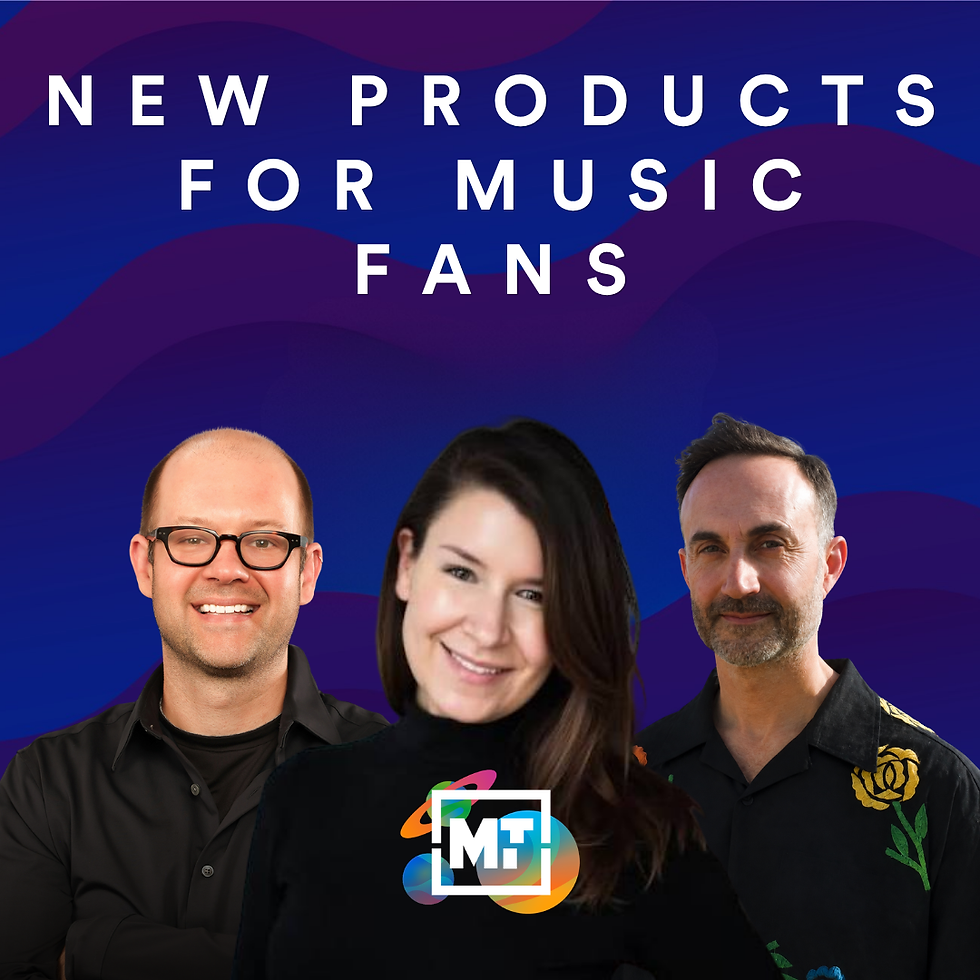
First, music lawyer and Instagram creator Ryan Schmidt breaks down how catalogs get valued, the difference between the multiplier method and discounted cash flow analysis, and why an audit can uncover money you didn't know you were owed. We also get into name, image, and likeness rights, AI licensing, and where Ryan thinks the biggest growth opportunities are for artists and songwriters. Then we bring in two companies already working in this space. Sho Mitchell from Beatlibrary walks us through what a catalog valuation tool actually looks like in practice, and Rob Steiner from Luminate shares data on the current state of the catalog acquisition market.
If you're a music tech company solving problems like these, come demo on the beach and network with the ecosystem at the Music Tectonics Conference, October 27 to 29 in Santa Monica.
Listen wherever you pod your casts:

Looking for Rock Paper Scanner, the newsletter of music tech news curated by the Rock Paper Scissors PR team? Subscribe here to get it in your inbox every Friday!
Episode Transcript
Machine transcribed
Ryan Schmidt
[00:00:00] Dmitri: On this "Rising Tide" podcast series, we've been talking about how a rising tide in music lifts all boats. We've been pushing the industry to start rowing in the same direction so we can get the value of music up to where it belongs, alongside the kind of money that's flowing through other entertainment and culture industries like gaming, sports, and social media.
And I've identified eight technology categories that I call multipliers of revenue in music. And the one I wanna talk about today, it's kind of an outlier because it's not exactly a multiplier, but maybe a benchmarker. I don't know. We'll get into that. But that category is catalog valuation. And the reason I wanna talk about it is because if you don't have a way to measure the financial value of music, it's tough to know whether the value's growing.
And there's tech involved with catalog valuation, which also goes hand in hand with the topic on our last episode, which was revenue recovery. Check it out if you haven't listened yet. That's finding what's missing is part of the puzzle and understanding the value of a song or recording catalog, whether it's a single artist or a songwriter or an entire label or publisher.
That's how you can start to grow the revenue. So to help me flesh out this idea and explain catalog valuation, I have with me a rising content creator on Instagram you've probably seen if your feed is like mine. Ryan Schmidt is an American music lawyer who represents artists, songwriters, and producers in high-stakes record deals, publishing agreements, and catalog transactions.
He's an artist turned lawyer and blends firsthand industry experience with legal training to protect creatives at pivotal moments in their careers. That's why it's fun to talk to him. As an artist, Ryan's been featured on NBC's "The Voice" and earned honors like Critic's Choice at the Starbucks Music Makers competition.
He must have been caffeinated. His firsthand experience with restrictive contracts and industry red tape inspired him to become the kind of lawyer he wished we'd had. Haven't we all asked that question? Whether helping artists sign their first contract or fighting for better terms on their next deal, Ryan's mission remains the same: to help creatives protect their art and sustainable careers on their terms.
And who better could we have to talk about this idea of catalog and its value? Welcome to "Music Tectonics," Ryan.
[00:02:11] Ryan: Thank you so much for having me.
[00:02:12] Dmitri: It's been so fun to watch your content on Instagram. I encourage everybody to check it out if they haven't, because you're so good at translating this stuff to a wider audience, to artists, and I think all of us, really.
So I'm gonna dive in with some questions. I'm psyched to have you here, Ryan.
[00:02:27] Ryan: Let's do it.
[00:02:28] Dmitri: Do you think the music industry is smaller than it should be?
[00:02:31] Ryan: Absolutely.
[00:02:33] Dmitri: Alright.
[00:02:34] Ryan: If you think about the amount of music that we consume in our lives, music is ubiquitous. Whether it's film and television that we're watching, whether it's the soundtrack to a TikTok video that we're also enjoying.
Wherever it is, listening in our car, music is everywhere and it's a common thread throughout most of our lives. And yet, when you look at the global revenue of music compared to, say, film and television or gaming, it is quite dwarfed. And I think part of the reason is that there's a lot of uses of music that don't always funnel back into the music ecosystem.
[00:03:13] Dmitri: Yeah, absolutely. yeah, there's a lot we could talk about with the why, but I think you're on the same page with this rising tide theme, which I'm excited to know. I'm curious if we talk about catalog valuation, where does that fit into the conversation about this growing the value of music?
[00:03:27] Ryan: Catalog valuation's incredibly important, one, from just this individual rights holder, but then you look at it in the aggregate, what is the value of catalogs in general across a, a label, across a publishing, across a whole collection of catalogs? Um, obviously one deal that makes headlines is good for that artist.
you multiply that by 100, now we have a picture of the strength of the music industry as a whole.
[00:03:53] Dmitri: Yeah, that makes a lot of sense. so you get involved with this as well, right?
[00:03:58] Ryan: Absolutely, yeah. I, I most commonly represent sellers in these catalog transactions.
[00:04:02] Dmitri: So when and why are people looking at the value of a catalog and what kind of catalogs are we talking about?
[00:04:08] Ryan: I mean, there's many different times when a rights holder, and that could be the artist, that could be a songwriter or a producer, could be an heir to any of those, a child of one of those who has passed, or it could be an independent label, a, a publisher, anyone that has a stake in that intellectual property.
And the reasons for wanting to get that valued can be very different. It could be wanting to value it to potentially sell it or license that revenue stream. It could be just for your own housekeeping. What money am I making, and is there any money that I'm leaving on the table? But it could also be used, very importantly in estate planning and, and future planning, especially as we look at how these rights are gonna be handled once that rights holder may pass.
[00:04:56] Dmitri: Right. Yeah. So yeah, I mean, I guess it makes sense, like at some point you might just wanna see what the value is so that you can see if there's anything missing. Because, 'cause once somebody values it, right, then they can say, "Well, this is kind of weird, actually. Why are we doing better in this region or that region?
Why are we doing with this type of song exploitation versus this type?" You know? Especially as people are, like, looking at the way that streaming pays out is kind of a little bit wonky. It feels correlated, not caused sometimes. And th- and then you say, "Oh, I remember that year we got all this sync revenue," or, "We did this kind of deal," or something.
You can start to look for the holes. Is that right?
[00:05:31] Ryan: Absolutely. And, through that process of valuing a catalog, whether that's something you do on your own or somebody that's looking to purchase your catalog is doing on their side, it forces you to, one, gather all the data, all the, revenue that you've received in X, Y, Z places.
And lo and behold, oh, you never registered that song with your performing rights organization. So that piece of your catalog is just leaking money. And so you can also use catalog valuation as a way to be a stopgap, make sure that you aren't leaving any value on the table
[00:06:06] Dmitri: that really helps. I'm glad you said that because I was almost like, is it...
I, I kind of think it's weird that I put catalog valuation as a revenue multiplier, but in a way you're saying by auditing where you are, you actually find leaks and holes or missed opportunities, and then as soon as you address those, it does increase revenue. It increases revenue for your catalog, and it increases revenue for the industry.
[00:06:28] Ryan: Oh, absolutely, 'cause think about it. Any single revenue source that you have as a rights holder is something that could potentially be sold or licensed to somebody else. Um, so if you are a artist, your recording royalties from your label, so that's in sales and streams. That could be, um, your performance royalties from BMI and ASCAP, your mechanicals from MLC, your neighboring rights and, non-interactive streams from SoundExchange.
Any number of those that wasn't set up correctly is one piece of a, total pie that is missing, and once you plug that back in, now you've got history. And catalog valuers, in order to get a accurate snapshot of what that looks like, they need years of data. Usually three to five is, like, on the minimum side of things.
But y- you know, if, if you weren't registering that and now you just registered it, it's not even going to be able to be forecasted as part of that overall value.
[00:07:28] Dmitri: Right. Right. So how does one go about understanding the value of a catalog? What inputs go into it, and how do you measure them?
[00:07:36] Ryan: There's a few different ways, and certainly, there's a c- constant disagreement between what a seller thinks a catalog is worth and what a buyer might think that a catalog is worth.
But generally, there's two different valuation methods. The first is just the straight, multiplier method. You find your last 12 months of earnings, and you multiply it by some multiple. Or you get an average of what the last five years are, say, and then you apply a multiple to that. And there isn't a set, "Okay, catalogs are now selling at 5X multiple, 10X multiple, 15X multiple, 20X multiple."
it comes down to each and every catalog stands on their own. A catalog that's doing really, really well and has a long history and has some annual value that will continue to grow that asset is gonna have a much higher multiple than a brand-new artist, newer song, maybe not the same type of visibility.
So that's just the straight multiple, and that's the one that I think most people are- most familiar with. The other one is the discounted cash, analysis. Basically, we look at the forecast of what this thing is doing. Is it growing? Is it declining? And in the catalog world, that's called decay. Is it going down?
So ideally, you are staying neutral or you're growing so that the forecast can say, "This is what this is worth now, and in five, 10 years from now, it's gonna be here." If it's going down, then that's going to negatively affect what that multiple's gonna be because the buyer understands that year after year that that value is actually gonna be less
[00:09:19] Dmitri: In some ways, is a big slope a good thing because it's like, "Oh, this is on the up and up.
It's worth more," or does somebody say, "Oh, well, that means there's gonna be a crash at some point"? Like, is, stability actually more important than, than growth?
[00:09:32] Ryan: Yeah, you don't wanna see massive spikes. you wanna see-- I mean, certainly if it was going up, it's going up, and then there's a history of five years it's just at this, you know, shooting to the moon, that's great.
But more often than not, you'll see some big swings and some s- big spikes, especially ar- along music that's cyclical, like holiday music might, will have a huge bump, you know, during the holidays. but you don't wanna see anything that's rises and falls as fast as it comes, you know?
[00:10:00] Dmitri: Yeah.
[00:10:00] Ryan: Because you wanna, you wanna see something that year after year maybe is growing, at a pretty modest rate.
But these big swings, you're absolutely right. If it can swing up really high really fast, it usually crashes, uh, that much faster. That's what we've seen in the kind of TikTok era of music.
[00:10:16] Dmitri: Yeah.
[00:10:16] Ryan: Some of these songs are so big and so popular immediately, and they don't have the same staying power as a song that came out 10 years ago.
[00:10:25] Dmitri: Right. So we're sort of talking about you're looking back at the history and you're looking at what the patterns are to see if there's stability or growth, mild growth, not maybe huge growth, only if it's been growing consistently 'cause you kind of want the baseline to be growing with all that so that when it comes back down, it still stays higher than it was before.
but you also mentioned that you're sort of looking at it as like a stopgap to say, "Well, wait a second, we haven't registered here," or, "We haven't exploited this type of revenue stream," or et cetera. So when you're evaluating a catalog for somebody who's thinking about selling possibly, is it good or bad when you find a catalog where not all the revenue streams are being collected?
'Cause I could see where if you could say, "Well, actually, that's a good thing because your catalog's more valuable than we thought it was when we first looked at it." but how do you think about that aspect of those, like, holes in, in revenue?
[00:11:11] Ryan: It's, it's both good and bad. It's, it's really good for...
It's good assuming that there hasn't been, a loss of those revenue. And there's usually something called a black box where you don't make a claim on your royalties for a long enough period, and it gets put in this box, and then it gets redistributed to other members. And hopefully, you haven't waited so long that that money is just lost to the ether.
But if you are able to register and reclaim things, usually within a, a three-year limit of when that was actually earned, then that can be a really good thing. you just say, "Oh, I didn't even know that I had X amount of money just sitting there in SoundExchange." It usually isn't going to help you in that particular deal though, because, it can hurt you.
S- because you don't have that revenue history, they might say, "No, but we want it," knowing that they're going to capture it or, you know, start collecting after the fact. But you don't get the benefit of the income history that it would've bumped it up.
[00:12:11] Dmitri: Right. Gotcha. But I suppose you could start collecting it, so that's a good thing.
[00:12:16] Ryan: Absolutely.
[00:12:17] Dmitri: Yeah. So as someone who's looked at the value of catalogs, how do you think about growing the music market overall? what's your perspective on the prospects and where we're going?
[00:12:28] Ryan: Yeah, I mean, one thing, we can't look at catalogs without, you know, considering what has to happen for those sales to go through in the first place.
there's this process called diligence, which every sophisticated buyer is gonna wanna make sure that they actually get the rights that they're going to, they think they're purchasing. And that includes all the royalty statements, and that has to be really, really clean, but it also includes any contracts that you, the seller, have with anybody who was a part of that.
ch- your chain of title agreements, like your contracts with your producer and your songwriters and all that. And any number of those, "Oh, I didn't get a contract with my producer who made this beat," can affect, "Okay, that song is off the table unless we can't get those contracts fixed." So, to increase the overall value of, of music in the catalog world, you know, you also have to just have really good, like, business practices and deal hygiene.
Like, you just gotta make sure that you get all your ducks in a row for all your songs, because that puts you in the best position to actually sell in the first place. But outside of the catalog market, I really do think that, you know, we're, we're hearing the word super fan a lot, and we're seeing a lot of, a lot of tools come about to help connect people with super fan experiences.
And I do generally think that that is where this is all heading, and for the better, because I think that, for years, especially with the streaming age and social media age It created, a lot of really quick hits, but maybe things that didn't have really deep, connection between the artist and the fan.
And I think super fan experiences, especially these, like, physical one-of-a-kind products that are being released or these bundles or these in-person meet and greet opportunities, I think that that is what we're craving so much, is a way to connect with the artist and support the artist that we love so much.
[00:14:28] Dmitri: It's really interesting how you put it. We're over here talking about catalogs and you're talking about these IRL experiences. So much catalog is talked about, this is an existing song, this is an existing recording. How do we exploit it? And what you're saying is if we really wanna look at the growth of the music market overall, we need to think about what those actual fan experiences are with the music.
Doesn't necessarily need to be new or old, but really just connected.
[00:14:51] Ryan: Because all of that does increase the value of the catalog itself.
[00:14:56] Dmitri: Hmm.
[00:14:57] Ryan: somebody who is invested in the artist is going to continue to show up and consume that music year after year. Think about the albums that you listened to as a teenager that had a tremendous impact on your life.
I listen to that music over and over again, and when that band has come through town, I'm gonna support that band because I had a real, like visceral connection with them. That's a very different experience than, "I just really like this trending song on TikTok right now. I don't know who the artist is, but I gave it a stream and I, I liked it, you know, one time."
So I think there's a, connection there between these strongest catalogs also have the strongest business built around it, which includes the servicing your fans, having them live, interactions and, um, you know, catalogs. it's also the reason why a lot of these newer catalog deals for these bigger mega stars is also including name, image, and likeness.
It's not just the music. It's not just publishing or masters, it's also NIL. So that's why, you know, somebody that buys Whitney Houston's catalog can now make a biopic and can now do all these other things that All together raise the value of the catalog.
[00:16:11] Dmitri: Yeah. Oh, I love how you tied that all together.
that's super intriguing. We've talked a lot about NIL on the podcast. but I, I think you're the first one on the podcast to really tie together this conversation about catalog, and raising the value of catalog through what the fan experience is, the engagement with the artist, and then now to talk about NIL, name, image, likeness, as a connector in a lot of ways.
because that's sort of like the brand positioning of the artist in a lot of ways. Like, even when their music isn't involved, it's the, it's the cultural context. it's the aura as well, where all of a sudden that becomes a right in a sense or a revenue opportunity in itself. We also had, Sam Hendel from Chord Music Partners, the big song acquisition, catalog, company that partners with UMG, talk about this idea of lifetime value of the music fan, which I think you were getting to as well, which I think is super interesting.
Like, people always want that youthful demographic for any type of... Well, not any product, but a lot of different types of products. But in music, it becomes especially important because they end up being a customer of that artist or that song or that album or that catalog for decades, right? It's like-
[00:17:23] Ryan: Absolutely
[00:17:23] Dmitri: their music form, their, like, music discovery habits actually could solidify, and that might be the last time you can get them to become a, a, a fan or some-something like that. So, Ryan, bringing us back to catalog valuation, what services and tools does somebody like you use to find out the value of a catalog?
[00:17:43] Ryan: So there's a million different tools. I mean, oftentimes on the seller side of things, when we are approaching a, a buyer, we are simply gathering all the relevant documents. We are gathering the, the royalty statements from BMI, ASCAP, SoundExchange, from Universal, from Warner, whoever is the payer, and we're, creating a data room for them to then put that into their own...
Sometimes it's proprietary, sometimes it's, it's these, these other tools that, you know, you've, you've discussed. But it, it differs from time to time and, uh, you know, o- one of the things that is, is always fun and interesting is to see just no two distributors are the same. You know? You, you look at a, statement from DistroKid and you look at a statement from TuneCore or Muser or something like that, they might not all say the same things or show it in exactly the way that, a catalog buyer wants to see.
[00:18:42] Dmitri: Mm.
[00:18:42] Ryan: So certainly on the, on the tech side, I'm not as familiar with, with those tools to actually get that value, but I know that on the, other side of things, actually getting those statements together to be able to run those valuations, it's incredibly important. So make sure that you actually have your logins to all your different portals.
make sure that you've set up your royalty portal with Universal, Warner, Sony. Um, I can't tell you how many times, artists or songwriters haven't even taken that step. They're like, "Hey, that label isn't paying me." I'm like, "Well, are you in their system?" Like, "Have you ever set that up?" And then lo and behold, "Well, here it is, and then here's my statements and here's my money," and things start flowing.
[00:19:19] Dmitri: Yeah, that's, that's really important piece of the puzzle, you know? it's like if you don't have your login and you can't access all this data, it's very tough to even look at the data to find out what's going on. So there's some basics, right? There's like the DSP for artist portals.
There's the distribution, there's the record label connections and, and all that. And obviously you've got your, PROs, your MLCs, your SoundExchange, all, all that kind of stuff. You gotta actually get the data from somewhere. 'cause it doesn't come to you in one place. And, uh-
[00:19:46] Ryan: No
[00:19:47] Dmitri: ... we, we'll be hearing about some tools i- later in the podcast and at the Music Tectonics conference that help people aggregate that and, look at that kind of data, et cetera.
You're setting a really good context for understanding why it's important to get it all together and organize it and look at it. You know, I mentioned that, um, that Sam Hendel conversation, and it was part of a, roundtable I was doing online, and I invited a really amazing, important independent record label to show up.
Uh, and they basically told me point blank, "I'm not interested in the financialization of music as an asset. We put out great music, and if we make money off of it, great." How, how do true music labels, managers, and artists feel about the conversation we're having about catalog value?
[00:20:30] Ryan: It can be a really tricky thing to to talk about, and especially, awkward for independent labels, independent artists who may have found commercial success but don't make art and music primarily because it is just a monetizable asset.
I think that, for those people who will make music even if every single platform was gone tomorrow and nobody ever listened, the people that are just drawn to like, "I need to do this for my own soul," they have a really hard time with the way that the music industry has created music as more or less a commodity.
So for that, I think the way to navigate it is to make music that resonates with you. Generally, that music is also, if it really resonates with you and it's really important to you, is also probably the best music that you could present out in the world and just so happens to be the music that also tends to succeed.
It's when you are trying to estimate what you think somebody might wanna hear or what might be commercially successful is when you more often miss the mark.
[00:21:37] Dmitri: Yeah, so it's almost like there's a moment in the creative process or in the creative brain or that section of your soul that shouldn't have anything to do with what is the value of this song going to be, because you literally are not gonna make an authentic song, and if you don't like it, probably nobody else is gonna like it either.
[00:21:55] Ryan: So true.
[00:21:56] Dmitri: So but there's this kinda like financialization of songs as an asset. Those don't sound like music or creative terms, but I think, you know, in the long term, is there another way to help artists or even these cool indie labels think about this process of growing the value of c- catalogs?
If, I mean, is there a-- Is it only sort of like, "Oh, screw you with business, I'm a punk rocker. This, I don't do music for that reason," or, "I'm a Wall Street guy. I figured out how to get an extra 2% from big insurance companies by turning songs into an asset"? What, what's the best way for artists to sort of think about catalog value and songs as an asset that bridges that?
[00:22:35] Ryan: Totally, and I don't think just because you've got, Just because your music is an asset doesn't mean that you have to ever sell it to anybody or you ever have to license it or, go in business with a label or a publisher. One thing I think about, uh, music and the financialization side of it is it's also a legacy for your family, right?
[00:22:54] Dmitri: Mm-hmm.
[00:22:54] Ryan: It is something that, that you get to pass down generation to generation and your family becomes stewards of your own legacy, both the art and the commerce of it.
[00:23:06] Dmitri: Yeah. that's a great way to think about it. It's, it's sort of like a long-term view on where this could go beyond your lifetime, right?
Um, and it could be artistic and it could also be very helpful to your heirs as well. And actually, you know, I've had a conversation with, with an heir to a songwriter that, culturally did really well. Financially, it's just their heir is starting to see some stuff from that, where they said, "Well, once, once w- this next generation saw where the missing pieces were in the revenue, they actually could get more creative about, well, how could we leverage this or exploit this more new generation?"
So you might be saying, "Well, wow, how could this p- play out with TikTok and Instagram?" Which feels like, oh, you're just looking for a buck. But you could also be saying, "There's a whole generation of people who've never heard this music because they were big on the radio, and the radio is not what this generation's paying attention to."
And so you get creative, like, well, how do we make this relevant right now, this song or this recording, or things like that. So there's some interesting things I think you can do on the creative side as well.
[00:24:08] Ryan: Oh, 100%. I was just thinking about, I can't remember the, name of the artist, but it was that song that you were hearing everywhere on TikTok and Instagram for a second.
Um, like, She Can Buy Me Flowers or something like that.
[00:24:19] Dmitri: Oh, yeah.
[00:24:19] Ryan: From some, some '50s, and it was a B side. And it was, wasn't anything that, that had major commercial success when it was first released. But it, it became a trending sound on TikTok and it was everywhere. And then, you know, 60 years later it's trending and it's charting and it's doing all s- sorts of things.
So songs have a completely different, life of their own and, and, and timeline now than it used to be. You get a song that's on the radio and it might fall off, and that m- kinda might be the end of it. Streaming and social media also gave a second life to a lot of these songs.
[00:24:56] Dmitri: Yeah. That relates to what I wanna ask you next, which is when we look at growing the TAM and rising the tide, where do you think the biggest opportunities are here?
[00:25:06] Ryan: I think some of the biggest opportunities One, the super fan platforms and direct to fan and even artists realizing that they have more, agency and ability to create their own platforms. You know? we see so many, "Well, why does this platform need to take X percent from me? Why not...
You can create your website and you can connect it to Stripe or Shopify or whatever, and now you have, minus your transaction fees, you own that entire customer, funnel.
[00:25:40] Dmitri: Yeah.
[00:25:40] Ryan: So that, one thing. other opportunities, I mean, I'm seeing this from, from both sides. I think that there will be opportunities to license to AI derivatives and remixes.
I know that's a really hot button issue right now. I think a lot of the headlines we're seeing is specifically geared towards what the major labels and publishers are, the types of deals that they're entering. But I've seen it in my own practice where we have identified what would otherwise been copyright infringement, somebody that took, um, a AI and they made this new remix and whatever.
And I've had clients that have chosen to, instead of sue them or take that song down, to instead partner with that song and use it as another asset in their catalog to license to that, to that song. So there is, when the rights holder consents to that use, there are opportunities if that song actually is generating revenue to find new revenue streams, because that was a work that you otherwise didn't need to pay any money to create and now it's generating money for your catalog.
[00:26:49] Dmitri: Yeah. That's, that's the positive version of what could happen with AI.
[00:26:53] Ryan: And there's, and there's plenty of the negatives too.
[00:26:55] Dmitri: Yeah. Yeah. But I mean, it does require artists to opt in. It also... It's interesting because, you know, some of these, uh, generative AI companies might do these equity deals with major and large labels and, master side or, or publishing side rights holders.
But then if artists don't opt in on, say, the NIL part of it that you were talking about, it's like you can't use my name to prompt a song even if I didn't stop the label from, or the publisher from licensing my recordings or songs. There's a whole conversation. And then there's also, you know, artists that, have new music that doesn't end up in those contracts, but they still carry the fans with them if they follow the Taylor Swift model where they do own their masters and their publishing, then they have control of sort of what happens with AI.
Doesn't mean they don't wanna use it. It might just mean they wanna have a very specific license with specific use cases and then can generate revenue. I think that's where we'll be looking, you know, three to five years from now. I hope at least. not because I necessarily wanna cut labels out of anything.
It's not my business what deals the artists and the labels have with each other. But more just the idea that this could be an optimizer instead of a, disruptor. But, you know, you did mention NIL earlier. Are there any revenue streams that you were thinking about that could be added as part of a, a growth opportunity for the music industry?
[00:28:14] Ryan: Yeah. I mean, I think, I think NIL... I mean, first, I think the laws behind NIL are really lagging behind technology right now.
[00:28:24] Dmitri: Mm-hmm.
[00:28:24] Ryan: There is no federal right of publicity, so the laws that protect and establish NIL rights are all state laws. So, you have a patchwork of different states, and every single state has a different protection, and about half the states have zero protection in NIL.
They're either contractual rights or they're, they're state law rights. So first, we really need federal AI likeness protections that actually establish federal NIL, and that's what the No Fakes Act is trying to do, and hopefully that gets passed, because that would mean that everybody has very specific, NIL rights that mirror your intellectual property rights of copyright.
So that, the, that's the you know, in order to have the rights to enforce, there needs to be good law behind it to actually give you the right to do something if somebody violates those rights. But the way that, um, those rights can be granted, there's any number of things: your name, your image, your likeness.
Your name, um, using it in connection with a endorsement, a sponsorship, you know. Beyoncé and, uh, Levi's jeans, you know, for an example. You know, that was a very specific, branding opportunity that used the name that has incredible value. The image, the voice, these are all things that can be traditional.
you know, what's y- your photograph and you on an ad or you doing a voiceover for a commercial, or it can be something that now with the help of technology and AI, can be something that you simply license to somebody to be able to generate their own works. Hopefully all drafted, contracted with approval and all that good stuff.
[00:30:01] Dmitri: Yeah. I always wondered how much Snoop Dogg got for his voice to be used in m- directional, navigational maps on Waze or whatever it wa- was as well, but, uh, I have no idea. One more question on this, and then, then I'll ask you my last question. But before we get there, is sync a huge upcoming growth area?
You mentioned social media, and a lot of that is video. but do you think that's a growth area?
[00:30:24] Ryan: It's hard to say if I think sync has been a massive, a massive industry for so long. And in a lot of ways, sync payouts are going down across the board in different parts of the world because, traditional media and traditional libraries, they're seeing music as more, expendable.
You know, it's something that the value of the catalog of a music library, there's just so much music that they could choose from. So the individual value of one song in that catalog has gone down and, um, it's been more and more competitive because as streaming rates, you know, artists are getting paid less on, on streaming and, it's harder to tour and it's more expensive to tour and all these other, other things So sync has kind of been seen as this thing that's like, this is the last bastion of hope for artists and for songwriters.
And man, if you land a sync and you get into that world, then you'll be doing really well. And it's certainly true. There's certainly plenty of, of artist, producer, songwriters that get in that world and do tremendously well. But I think the competition is so much more now because that's seen as this place where you can still, get paid well.
Uh, it used to be that you would get paid your licensing fee, and then you get your backend performance royalties. And more and more now we're seeing opportunities where that first upfront fee is not so much happening and you're just getting the backend. So it's harder. I mean, I think it's, I think it's growing because there's more content, more content than ever, so there's more need for sync.
But I think some of the competition, the economics around it have made it so while it is growing, it may have diminishing returns for some rights holders.
[00:32:06] Dmitri: Yeah. Right. So, so overall, the value of sync is still going up, but the individual transactions are a little tighter, a little tougher, which doesn't incentivize some of the bigger artists to keep getting engaged with that.
And you have a lot of production music out there that's kind of filling some of the long tail needs that are in the growth area for sync.
[00:32:27] Ryan: Yeah. And it, it also comes down to the fact that there are artists out there who want to, who will take that opportunity on the exposure, you know, and won't, necessarily require that upfront fee because they think it's really cool to be in X trailer for whatever or in X video game.
And while that is very cool, you also, also think about the downstream effects of that on all your other fellow musicians. You know, there was some-- they were and probably should have paid $5,000 for that use, and that's somebody else not getting paid for that work.
[00:33:03] Dmitri: Yeah. All right. Well, you've been really helpful in explaining this whole world of valuing catalogs, how you do it, how to think about it, and then helping us widen out a bit, helping us focus in on where some potential growth areas are.
Let's round it out. When you think about growing the market, which way do you think we're headed and why?
[00:33:22] Ryan: I do think that we are, growing. I think that we are in a place where because of how ubiquitous music is, there's infinite opportunities to grow. I also am of the belief that 10.99 for all of the history of recorded music is probably too low, and I think that these subscription services that we listen to and we use every single day, probably have a greater value than what we are paying.
And it certainly isn't just here in America, but different countries have different rates. And I think that that's a huge growth opportunity when we get closer to what the real value of music truly is.
[00:34:03] Dmitri: Yeah. Ryenschmidt.esq on Instagram. Very great content there. I'll continue following you there.
This has been super valuable. Thanks so much for joining Music Tectonics.
[00:34:14] Ryan: Thank you so much.
Sho Mitchell
[00:00:00] Dmitri: I'm here with the founder of Beat Library, Sho Mitchell. Hey, Sho. How are you?
[00:00:05] Sho: I'm good, Dmitri. How you doing?
[00:00:07] Dmitri: I'm doing great. So we've been having this conversation about catalog valuation, and I'm really interested in what you do at Beat Library. Tell us, what is Beat Library and how does it fit into this topic?
[00:00:17] Sho: Ah, thank you. Thank you, Dmitri. Catalog valuation, well, Beat Library, we help music companies understand what's actually happening inside and around their catalog, not only what's appearing in existing financial reports. We scan the audio assets itself for cases and different use cases around samples, transformations, reuploads, remixes, and other use- usage signals
[00:00:42] Dmitri: Oh, really interesting.
So it's not just the regular streams or syncs or things like that, it's, it's like new uses of music that people might not be looking for.
[00:00:52] Sho: Yeah, exactly, right? So we're really focused on picking up, data that is not currently showing up in existing financial reports. And so we're really focused on creating new revenue opportunities.
We feel like every catalog has a gap in it. Uh, we call it the catalog delta, and that is the gap between what existing financial reports are reporting and what our evidence-backed audits produce from our scans.
[00:01:23] Dmitri: Oh, this is interesting. We're gonna have to get into this. Now, when you talk to clients, why are they typically interested in catalog valuation?
What, brings them to have that conversation and, and that kind of research from you?
[00:01:34] Sho: Again, going back to the point where every catalog has a gap in it where it's revenue opportunities that aren't being collected or monetized, typically a buyer or seller is coming to us because they have a decision to make and they are thinking about making a purchase.
So just kinda think about if you were gonna buy a home, you would definitely wanna inspect that home before purchasing it, 'cause the buyer would discover new revenue opportunities that the seller may not recognize or be aware of, or the seller may wanna be able to, uh, do due diligence and make sure that they have no, vulnerabilities in their catalog that can come back to haunt them.
[00:02:12] Dmitri: Totally makes sense. Totally makes sense. So walk us through how your catalog valuation tool works.
[00:02:16] Sho: Well, it's very simple. we take a music catalog, and some metadata, and we pretty much embed and scan that catalog across DSP platforms, YouTube, just the overall internet. Um, we're capturing and looking for samples, again, remixes, any kind of transformations, reup- reuploads.
Uh, streaming fraud is, really big. We review that data and we cross-reference it along with different ownership and licensing information. and then we really wanna go after the real strong cases that are backed by our evidence that our audits produce, giving the buyer or the seller, a little bit more, , ammunition, when going into negotiations.
So in our audits, we've had some pretty good success. I can, you know, go over anything that you need in regards-
[00:03:05] Dmitri: Yeah
[00:03:05] Sho: ... to, you know, case studies.
[00:03:07] Dmitri: I think it would be really helpful to get specific. I think sometimes, you know, when, when we describe companies in sort of i- in the abstract, you can sort of imagine it, but if you have a case study or, you know, some examples of like what kinds of things have happened when you've done these reviews, I'd love to hear about it.
[00:03:23] Sho: Yeah. without going into individuals and company names, I can definitely give you a, case study. We had one producer audit. We started with approximately 85 tracks that was in his library, and from, , one of our audits, we found connections to, , over 300 different released songs off of that original 85 tracks that we scanned.
, We also noticed and picked up s- over 7.3 million YouTube views that that creator was unaware of, and also over 5 million DSP streams that the producer was not collecting on. So from our audit and the next steps that we proposed, we estimated, uh, around $15,000 that was able for recovery immediately and approximately another $40,000 in possible year income once these revenues can be claimed.
But the overall big gist of it was that the roughly catalog valuation that our scan added to his, his catalog was over $500,000 that he was leaving on the table, right? So at, at some point when he-- That's, that's real money that, you know, he was unaware of and that was generating revenue that should have went to him, but for some reason, he didn't have visibility on it and he couldn't receive it.
, Another audit that we've done was with a, sample platform client of ours. They just wanted to kind of get some insight on where their samples were ending up. And we, we took a s-small sample batch and we grabbed 20 samples from this particular client and we discovered off those 20 samples, 94 different commercial released songs were out there in the world off of those 20 original samples, accumulating to nearly a million streams.
And based on our estimate, if that pattern held across the larger catalog, we suggested, you know, potential financial opportunities north of two and a half million dollars, being that, you know, we discovered this use case under that small sliver of catalog. And our team, we're doing audits every day, so we're seeing this gap in every audit that we run and every catalog that we run, which is why I feel really confident to feel like every catalog has some type of gap in it and it's about how big is that.
Uh, again, the catalog delta exists in every catalog and it's our job just to measure it and present that information to the client so that way they can make the best decisions when make purchasing or selling their catalogs.
[00:05:58] Dmitri: what I find interesting about Beat Library, Sho, is that, you're looking at some particular use cases of how music is getting reused, possibly without permission or without attribution, or without the metadata to show who the original rights holder are of it.
That seems to apply to a lot of new, like, current use cases. Things like samples, things like remixes, things like s- sped up and slowed down. I could see... That seems like you're looking for some really interesting cases just because of how Beat Library works.
[00:06:28] Sho: Yeah. I think we're really focused on, on unique...
We really understand producers and creators and unique workflows. Also, we really focus on different usage signals, and then we're connecting those signals to ownership and license data, so we're able to create a unique picture that didn't exist, before the time we're in now, thanks to technology. So we're able to do some really cool things with data, and again, everything's always been disorganized and in different places.
So to be able to have just one place to kinda centralize and, and make decisions that can, you know, create more revenue for you is important to us.
[00:07:05] Dmitri: Nice. So this isn't the only thing Beat Library does. We're focused on catalog valuation in this episode. Tell us about the rest of, how Beat Library works.
[00:07:12] Sho: Yeah. so we're doing some really cool stuff, you know, around just helping, creators protect and monetize their assets. So on our platform, our B2C side supports discovery and licensing for human-made, producers and beats, clear providence, and also safe, transparent collaborations. So we're really focused on really getting integrated in producers' workflows, and to kinda help them, again, protect their assets and also make them, able to monetize and make more and earn more money.
we're also doing some pretty cool stuff in the, AI space, where we're, we're working with some different, uh, partners in regards to, uh, MCPs and different integrations. So kinda think like Claude Code for your catalog, where we're really, uh, inserting a AI agent, a agentic layer on top of your catalog, giving a producer unique insights that never existed before, on top of their catalog.
So just catalog intelligence and enhancements to, again, help creators, be able to monetize and protect their assets and, create more opportunities around their music and their catalogs.
[00:08:18] Dmitri: Perfect. Well, Sho Mitchell with Beat Library, thanks for coming on the podcast. I know we're gonna see you at Music Tectonics in Santa Monica.
People get a chance to get a demo of what Beat Library does. It's beatlibrary.io, and, uh, thanks so much for coming on the podcast.
[00:08:31] Sho: Yes, no worries. Yes, looking forward to Music Tectonic. Uh, looking forward to seeing you, and, thank you, Dmitri. Always a pleasure.
Rob Steiner
[00:00:00] Dmitri: I'm here with Rob Steiner, media analyst at Luminate Intelligence. Now that we've talked about catalog valuation, I thought it would be interesting to find out about what Luminate does and how it fits into this whole picture, because there's a lot of people in the industry that I've talked to who use Luminate to get the data they need for this.
So Rob, welcome to the podcast.
[00:00:19] Rob: Hi, thanks for having me.
[00:00:21] Dmitri: Glad you could be here. Now tell us, what is Luminate and how does it fit in with valuing catalogs?
[00:00:26] Rob: Yeah. So Luminate is a data company that focuses specifically on the entertainment industry.
we are probably best known for looking at music consumption data. For one thing, our data powers the Billboard charts. Um, we also work with pretty much every music company you can imagine to offer them insights on everything from streaming data to consumer surveys. but we also work well within the film and TV industries as well, doing pretty much the same thing, basically just offering a more specific look at consumer habits, through data.
[00:01:02] Dmitri: Gotcha. And how does that relate to valuing catalogs?
[00:01:05] Rob: Yeah. It ends up playing a pretty big role, in short. I wanna disclose that, like, I, you know, this is a very complex process of, you know, evaluating catalogs. Luminate is just one part of a very large village of people who make these calls.
Granted, it is a pretty major part of that process. Basically, our data gives the people who value these catalogs, the people buying and selling these catalogs, it gives them a really clear view of what is going on with the music, pretty much. you know, it's twofold. On one hand, it's through the consumption data that we provide.
Obviously, just seeing stream counts and the split between premium streams versus ad-supported streams, seeing the share of each individual songs within an artist's catalog. All of that plays into it. It's a pretty huge part of deciding, like, what an artist or a large publishing catalog is worth. The other component, too, is that our fan surveys, our consumer surveys, also offer another, more, you know, qualitative view of what the average consumer might enjoy, or, you know, like, how do rock fans differ in their consumption or buying habits than pop fans or hip-hop fans?
We are able to look at that. We can even look at individual artist level for a good number of artists as well. So in a nutshell, that is what we bring to the table.
[00:02:30] Dmitri: Got it. Now, you did a recent report on music rights and catalog acquisitions. What did you find out about the state of catalog value and the acquisition market?
[00:02:39] Rob: Yeah. So I ended up doing that report basically because the market has been really blowing up in the last several years. I would say around, you know, 2021 onward, probably even earlier than that We've just seen a huge number of, you know, massive catalog deals, a lot of new players, especially in, like, private equity coming into the fold.
It's been big business for a number of reasons. for one, you know, with the growth of streaming, you know, not only just in, like, big markets like the US, but now we're also seeing streaming grow in, uh, other global markets. That's basically made music into a pretty secure asset or pretty reliable asset, 'cause now, you know, when you stream, it creates smaller but constant royalties, like constantly generating royalties versus, like, when you buy an album, it's purchased, it's done.
Now it's more of like a steady stream that bigger companies can afford to, you know, buy into and wait as they trickle in. so that's kinda what's caused a lot of interest in it. also just in general, the music market has proven pretty resistant to, like, larger macroeconomic trends, which I think ends up being pretty appealing to investors looking for a safe and reliable asset.
yeah, and basically another aspect of this too is artists, you know, iconic, legendary artists who are aging and wanna retire and maybe, you know, pass off their brand, their legacy to somebody who can carry it on, It would interest them to maybe, you know, sell their catalog for seven, eight, nine figures, you know?
Um-
[00:04:17] Dmitri: Yeah
[00:04:17] Rob: ... so I think all of those factors have resulted in a pretty, you know, pretty booming market right now. And currently, you know, since I've written the report, we've also started to see this year kind of a shift from, like, the big, you know, buy, buy, buy phase to more of, like, a consolidation phase now, where we're seeing, you know, with examples being, like, Primary Wave buying Kobalt or BMG merging with Concord.
as well as we have, players from, like, more of the private equity non-music space basically now cashing out and selling the catalogs they acquired in the last several years, just because it seems like now is the best time to, to strike and buy out. So we're starting to see that happen, but at, you know, granted, it's still big business at the end of the day.
We're still probably gonna continue to see massive deals, maybe just not at the same clip as several years ago.
[00:05:06] Dmitri: Well, let's say that we have a listener who has a catalog that they've not really done any valuation work around. What data are they gonna look at in Luminate, and how are they gonna get what they need from Luminate for their own specific catalog?
[00:05:20] Rob: Yeah. So basically, like, what our data provides, like I said before, is a real, like, zoomed-in lens of what is going on with an artist catalog. you know, you can look down to the individual song. And all of these factors end up playing a hand in, like, what catalog valuators would end up, you know, analyzing on their end and determining, like, the price of a given artist catalog.
you know, some of the things we look li- at obviously is, like, just raw streams, like how many streams are they getting. And with that too, like, you're able to see sort of long-term trends. Like, you know, every song, album that's released kinda has a natural decay curve, where, you know, upon, like, initial release, there's a huge spike, maybe that sustains for, you know, the first week or two, and then that'll generally, you know, flatten out.
But sometimes, you know, a song might go viral on TikTok, so then it gets a second life and gets another spike. All of that plays into, you know, what is kinda seen as the long-term value of a song because, again, if it keeps spiking, that might be more appealing to one that, like, just kinda has been flat for the last several years.
So that's one aspect. Another one is, paid versus ad-supported streams. and you know, this is talking about subscriptions basically. Like, streams from, like, freemium accounts on, like, Spotify, you know, free with ads, versus like a paid you know, a specifically paid subscription. Those offer different payoffs, so that ends up being important too, where if an artist has, like, you know, millions and millions of streams, but, like, the 80% of them are ad-supported, that might end up being less appealing to, you know, someone in with more premium than ad-supported streams.
and another big one is also, like, the individual share of songs within a catalog. By that, I mean basically, like, you know, if you have an artist who might be a household name, has good branding, you know, has a reliable listenership, but, like, if they're known for more, like, one or two big hits, and, like, we can actually see with our data where, like, one song might just be bringing in, like, 50% of their total streams for the past year.
you know, that's not to say that, like, they should be counted out, but, like, the end of the day, an artist who maybe has, like, more of a evenly split uh, streams across their whole catalog, that ends up being more appealing. I think a great example is Slipknot, who recently sold their catalog, I believe, last year for, I forget the exact number, but, you know, 100 million plus, I believe.
you know, we looked at the, at the numbers after that deal was announced and, you know, yes, they're like metal legends, but obviously they're not like a household name like Queen or something, you know? but at the same time, we looked at their share and sure enough, their top five songs only brought in about 30% of their total streams for 2025.
Which means, like, their whole back catalog is also very well listened to by their fans. That ends up being, you know, a huge plus for, buyers or investors because that means basically there are more songs they can utilize and bring in more value. So that is just the, literally the tip of the iceberg, but, like, that is some of, like, the biggest things I would say you get from looking at our data.
[00:08:37] Dmitri: Awesome. This has been really valuable, I think, for us to just kinda listen through what role the data that Luminate tracks can play in valuing catalogs, 'cause there's a lot of data out there, and you guys are kind of one of the, the main go-to sources for the master record of what's happening, with songs out there.
What else should our listeners know about Luminate before we wrap up?
[00:08:59] Rob: I would say that, uh, if you basically want, like, as probably a comprehensive of a lens into an artist's performance from the data perspective, like, we're your guys. Um, you know, it's... And the team I'm on, the intelligence team, we release monthly reports that kinda do deeper dives that get a little more niche and granular than the larger, like, mid-year, near-end reports that, uh, Luminate also publishes.
So if that's of any interest, you know, I'm actually gonna be doing a follow-up report on music rights pretty soon. you know, I would say follow Luminate Insights and everything else that we do.
[00:09:40] Dmitri: Amazing. Rob, thanks so much for joining us.
[00:09:42] Rob: Yeah, of course. Thanks for having me.
Let us know what you think! Find us on LinkedIn, and Instagram, or connect with podcast host Dmitri Vietze on LinkedIn.
The Music Tectonics podcast goes beneath the surface of the music industry to explore how technology is changing the way business gets done. Weekly episodes include interviews with music tech movers & shakers, deep dives into seismic shifts, and more.