New Forms of Licensing: How Businesses, Apps, and Games Pay for Music

What happens when businesses, apps, and games use music without really paying for it?
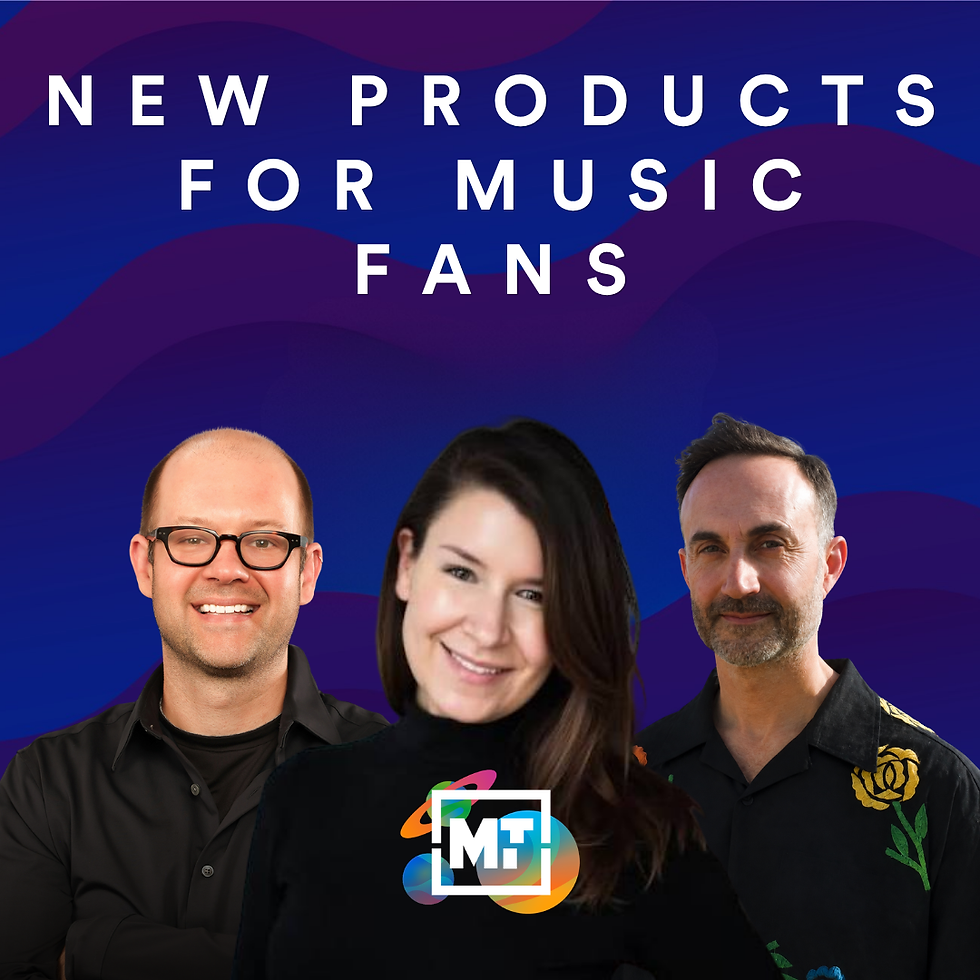
This week we're on the third revenue multiplier of our Rising Tide miniseries: new forms of licensing hiding in plain sight.
First, Soundtrack CEO Ola Sars breaks down the 40 billion dollar market for background music in businesses, and why more than 80% of companies playing music today are doing it the wrong way. Only 5% of US businesses are fully compliant on public performance licensing, and that gap is costing the industry billions.
Next, we have Lauren Pufpaf of Feed Media Group explain how personalized, intelligent music licensing is opening up categories most of the industry has not even noticed, including a 5 billion dollar opportunity in AI video platforms.
Finally, Tomas Jenneborg of Reactional Music reveals that the gaming industry spends 25 to 30 billion dollars a year on user acquisition ads, and music is getting none of it.
Listen wherever you pod your casts:

Looking for Rock Paper Scanner, the newsletter of music tech news curated by the Rock Paper Scissors PR team? Subscribe here to get it in your inbox every Friday!
Episode Transcript
Machine transcribed
Ola Sars
[00:00:00] Dmitri: Our guest this week is Soundtrack CEO Ola Sars. Soundtrack's the world's largest music streaming platform built specifically for businesses, serving more than 120,000 restaurants, hotels, cafes, retailers, and venues across globe with a catalog of over 150 million fully licensed tracks. The company solves a surprisingly widespread industry problem.
Almost 90% of businesses still play music illegally using consumer streaming services, which is depriving artists and rights holders of commercial licensing revenue while exposing themselves to legal risk. Ola is the Swedish serial music tech entrepreneur behind Beats Music and Spotify for Business.
Over the past 20 years, Sars has quietly helped shape the evolution of music streaming. He founded the award-winning Pacemaker, one of the world's first pocket-sized DJ digital systems. He built the software platform that became the foundation of Beats Music, where he was co-founder and COO before Apple's $3 billion acquisition.
Ola partnered with the Spotify founders to launch Spotify's commercial music business, which he now runs independently as Soundtrack. Sars and Soundtrack now lead what he believes is streaming's next major frontier, the $40 billion music for business market. This is the type of thinking the music industry needs more of.
Where else is music used or needed that just needs the right pricing and monetization model? Ola is the perfect founder to help us understand where there's potential revenue streams for the music business. As we continue through the eight revenue multipliers that I've outlined in previous Rising Tide episodes, we get to licensing as its own category.
Let's get creative and smart about what new licensing revenue the industry should be expanding. Welcome to Music Tectonics, Ola.
[00:01:42] Ola: Thank you for having me, Dmitri.
[00:01:44] Dmitri: I'm excited. I've been following what you've been doing, and I really think it speaks very directly to this topic of Rising Tide, grow the value, grow the music, grow the TAM.
I think you're really clever in figuring out exactly, like, how this serves both sides, the businesses, the music industry, and certainly all the rights holders, including artists, labels, and publishers. But let's get to this whole music for business venues, retails conversation. Let's get it out of the way.
How do you know it's a $40 billion market size?
[00:02:16] Ola: Well, it's pretty easy. It's just a quantification of the total opportunity. So it's, um, you look at the number of addressable business locations 'cause our service kind of counts business locations. So if you're a juice bar with 10 locations in LA, for example, that's a potential 10-location deal for us.
So, and usually that example, every juice bar has its unique subscription. So that's, you know, 10 subscriptions, times 12 months. And in our world, we're selling business subscriptions, not very similar to how you're selling subscriptions in the consumer DSP side, so no rocket science there, but obviously licensed for commercial use, to a price point that we think is tasteful.
Together with the labels and publishers and the music industry, we've partnered around the price point that we think is good for this, which is roughly 35 bucks on a global ARPU in between our different tiers. I can speak to it in more detail down the line in our conversation. But so you just multiply and, and roughly it's, 100-- We worked with Nielsen back in the days that now have changed names a couple times since then, but like a really robust research effort quantifying 128 million potential addressable locations on a global basis.
and 90% of those businesses, and this is the great part about this, already play music, referred to as background music, um, music to, you know, improve the customer experience. So we don't have to tell businesses to play music, and that music is good for business. They already realize that that is the fact.
So roughly, if we kind of bring it down to a simplified $30 per month, thir- $360 per year per subscription, that adds up to 41.4 billion in addressable retail value per year
[00:04:11] Dmitri: Got it. So we're looking at the potential of 128 million business locations everywhere, so that would be the addressable market. 90% of them are al- already playing music, so you don't have to convince them to do that.
You just have to convince them to pay the right amount for it or use the right service for it. And if you multiply those numbers with your kind of conservative annual subscription numbers, that's where you get $41 billion.
[00:04:35] Ola: Correct.
[00:04:36] Dmitri: Got it. So, um, how different is that for what people are paying right now to use music in public business spaces?
[00:04:44] Ola: Well, here's the interesting part, right? So I came in my career from the consumer markets, before, and, um, both at, Beats Music and then working with Spotify guys, you know, we realized that on those platforms that are, you know, only licensed for personal usage, like, you can't use Spotify, Apple Music, or any of the consumer services in, a commercial context in your business.
It's not licensed for that, and it's a violation of copyright. but we saw the reality of, looking at the customer base, that there was, you know, hundreds of thousands or, and then in the millions of users that actually were businesses. So that's where the idea came from when w- I was on the consumer side.
I said, "We need to build out a product and a licensing solution for these businesses so they can use the power of music and music streaming to, you know, help their brands grow." So that's where it came from, the insight. So answering your question, all of the, the 90% of these 128 million that are playing music, more than 80% of them are using consumer services illicitly today.
You know, basically opening cinemas with Netflix accounts, which I use as an analogy. And, you know, Hollywood wouldn't permit that, of course. That's never happened.
[00:06:01] Dmitri: Hmm. Hmm.
[00:06:01] Ola: But we in the music industry seem to just, you know, let it happen. So for me, it's, There's this one part of the opportunity which is just fixing the problem of people misusing consumer services and, correctly monetizing those subscriptions so that music creators and rights holders get fairly compensated for their art when a business is using it, the music to sell more coffee.
And then, the other part of, the opportunity comes actually from the 20% of the businesses roughly who are using a licensed background music service, 'cause we're not the first background music service in the world. We did not invent background music. That's been around since before I was born. but that market is a pure legacy market and both on the licensing and on the product side is mainly a kind of legacy managed service, uh, market and we're going to be the digital disruptor in that marketplace.
So compliance, as the main driver on 80% of the opportunity, digital disruption and like cutting-edge technology on 20% and, you know, in between of course also the consumer users want to upgrade to Soundtrack 'cause it's a better service for a business use case.
[00:07:12] Dmitri: Well, j- one more clarifying thing and then I wanna widen out to all the potential opportunities with new forms of license ' cause to me that's what this is.
This is sort of like saying, "Hey, if we're looking at the total addressable market of music consumption, music listening, music enjoyment, music getting attached to other experiences, how can we grow the revenue?" So I wanna go broad, but before we do, I wanna get one more detail out of the way, which is even the ones that are not in compliance according to like the PRO license side of the rights, they're still paying for the subscriptions to Spotify or Pandora or they're even, maybe they're using radio, which I guess is a whole different thing where the ads are in there, but music rights holders aren't really getting paid much for the use of radio in the United States.
but they are paying like a Spotify or a P- Pandora subscription. why is that different than using something like Soundtrack to increase the revenue? Like, do you see what I'm saying?
[00:08:02] Ola: Like- Well, first of all, their, these services are not licensed for commercial use.
[00:08:06] Dmitri: Mm-hmm.
[00:08:06] Ola: So once again, my example, nobody would use Netflix to open a cinema.
[00:08:11] Dmitri: Right.
[00:08:11] Ola: So, um, Spotify nor Apple have license with the labels nor the publishers for the use case of in business or background music. So that's the first statement. People still use it because nobody knows it's not licensed. It's in the terms and conditions and there has not been an alternative. So I obviously want a great streaming service when I go to work just as I do when I'm using it privately.
So I'm filling that gap right now. So that's, really the big opportunity right there, the fact that people want, a streaming service but there has not been a licensed streaming service for business. We're solving that problem. Will it happen overnight? No, it's going to take time.
[00:08:52] Dmitri: I guess what I'm saying is how much more money flows to rights holders if they switch to a service like Soundtrack rather than just using a personal account?
[00:09:03] Ola: Sure, and that's, one really important thing why I, you know, decided to pursue this, this adventure with s- you know, trying to fix the broken background music market, if you may, is that I come from this simple notion that in the music industry, whatever you do needs to be synergetic, uh, like you referred to.
It needs to help, the DSP in this case, or the business that you're building combination with the rights holders, in combination with the artist and the songwriter, the music creator, and hopefully also in combination with the buyer, meaning in my context, the business owner.
So, the synergy here is obviously for the industry that business subscriptions, the ones that we serve, are significantly higher priced, than consumer services. Currently, the global ARPU for Spotify and the Q turnings, I think, was like five bucks. our global ARPU is roughly $36. So obviously, if you're charging more per subscription, and you have a streaming model in place, that equals that there will flow through significantly more royalties to music rights holders and music creators every time you upgrade from five bucks to 36 bucks
[00:10:15] Dmitri: Got it.
Makes a ton of sense. So you're making it easy for them to be licensed, giving them a great experience, and as a result, they're paying more than they would with a personal account, and that money that increased revenue will flow through to rights holders, and that's where some of the growth of the revenue to the industry comes from.
[00:10:31] Ola: Yeah. And that's, you know, what the industry is looking for today, which you know is these incremental opportunities, and one of them is obviously how do we increase value on a subscription basis. That's, you know, the super fan discussion. This is a clear evidence that you can charge $35 plus for a subscription for business.
There you go.
[00:10:51] Dmitri: Perfect segue. I love that, Ola. Uh, thanks for explaining a little bit of the intricacies of the business model and how it affects this larger story of growing the market for, for music. And I do wanna tap your expertise beyond what we've just discussed. That's why you're here on the "Rising Tide" series.
If we look at new forms of licensing as a growth area for the music industry, what are the new areas that could generate new revenue? Are there a few that you think, are especially worth looking at?
[00:11:18] Ola: Sure. I'm obviously, you know, 365 days completely focused on, trying to build, uh, the DSP business that I'm building right now and building the world-leading DSP for businesses.
So I can probably do that until I retire, and that's, that's obviously my one, two, three, in ranking of the biggest opportunity, uh, subjective in the matter. But if you ask me to leave kind of that context, I do think in the realms where I move, I think there's a couple of other really interesting opportunities.
One is sync, in general, which is nothing new, for you or EA or anyone else on this podcast, I assume. But I do think the sync market is extremely inefficient as well and has not been digitized and is clunky and you know, the clunkiness of, the model to access commercial catalog for sync usage on a global market basis is so tough that it has opened the door for other providers, you know, like Epidemic Sound and, and those guys.
So I think there's an opportunity of creating a scalable platform for sync licensing on a global scale that caters to the modern business owner's use of music online and in social and so forth. That has not been solved for, yet. Massive opportunity, in my humble opinion. so and then I would say my, third or my second oppor- you know, opportunity outside what I'm doing is, uh, within what in the US is referred to as general licensing and is kind of, I would say, not the dirty secret, but one of the secrets in the music industry of what is general licensing.
And I, and I just learned what general licensing is now working, trying to build soundtrack and Spotify business general licensing refers to, the revenue streams that the PROs collect. So ASCAP, BMI, SESAC, GMR in the US for everything outside of digital, meaning public performances for live, public performance for background, which is a different rights class than, than I represent on the DSPs, you know, the, the public performance on top of it.
public performance for DJ and, all, all of kind of the public performance revenues that these PROs generate, not only in the US, that's obviously a global market where we have PROs in, in every other developed economy in the world. So it's, you know, estimated to $4 to $5 billion on an annual value, and it's highly dysfunctional, very poor penetration rates and, and room for improvements for sure.
So in summary, two major kind of bets, I would say, digitizing sync and improving general licensing
[00:13:54] Dmitri: let's dig into them just a little bit. And I know you're, you, you've already said, "Hey, I'm very focused on what we do right now," but I think because of your exposure to what you're doing, you're seeing these parallels in areas that I think you can go deeper than I could go or some of the other folks listening to the podcast.
So let's talk about sync first. so sync's obviously the synchronization of music, sound, audio to video, to motion picture, basically, and it could be what we thought of as television or film. It could also be social video as well. That's, that requires synchronization too. And I think you're right. It has...
I, I mean, every time I look at, like, what's the revenue overall for the music industry? You look at sync and it's like this little slice of the pie.
[00:14:35] Ola: Yeah.
[00:14:35] Dmitri: And you're like, I hear it everywhere. People talk about it all the time. Composers, songwriters, publishers, artists are always like, "I gotta get a sync deal.
I'm working on a sync deal. I'm pitching for this."
[00:14:44] Ola: Mm-hmm.
[00:14:44] Dmitri: "Um, I need to meet this music supervisor," because I think rather than getting paid fractions of pennies for, you know, 1,000 streams, they wanna get 1,000 bucks, or 5,000 or 10,000, or in the old days of the you know, the Apple commercials-
[00:14:57] Ola: Yeah
[00:14:57] Dmitri: ... where somebody was like, "I got, you know, six, six or seven figures for the use of my song in one thing, and it broke my career, in a good way."
And, um-
[00:15:04] Ola: Yeah
[00:15:05] Dmitri: ... and so, but it's such a small slice of the revenue. So it's... I agree. It's gotta be broken. And video is eating the world, right? Like, it's like y- we almost can't read anymore because we're watching so much video, and there's so much opportunity-
[00:15:18] Ola: Yeah
[00:15:18] Dmitri: ... for music and sound to provide the emotional timbre of whatever else is happening on screen, you know?
why is sync so difficult to monetize? and what are the sync categories? Like, I mentioned film, TV, commercials, social video. Am I thinking about it the right way?
[00:15:36] Ola: 100%. And, um, I mean, I'm no expert in sync. but I think it comes back to this general problem and, you know, challenge that we have in our industries. We're really bad at collaborating and creating kind of scalable models in between, uh, the different rights holders and the different rights classes.
And it just comes down to this, which is right in line with your kind of focus here, the thesis about, you know, baking a bigger pie versus cutting the pie. I talk about it all the time. I try to contribute to the industry by baking a bigger pie, creating new opportunities for revenues, right? So rather than thinking about cutting it, meaning, "All right, I'll, try to negotiate a, a little bit of a bigger slice of what already exists," which is the default mode of most people on the label and the publishing side 'cause they're not trained in the art of thinking growing market.
They're thinking about capturing market share. And I think this is a sentiment that goes through the industry, which is hindering the industry to grow, on all levels. so I think sync is a good example. Background where I come from is, is another good example, but, let's stick to sync, is the fact that nobody can really agree on the rules of engagement and what would the pricing be for, you know, online fast access sync for SMBs.
It's just like everyone's trying to cut a better deal just for their specific label or their specific publishers, and they don't really care about the market. So I think this is, um, the overarching theme of why it's such an inefficient market and why markets that look as a very logical opportunity to grow never really bloom out because people are protecting their pie, a piece of the pie.
[00:17:25] Dmitri: Yeah. That makes a ton of sense. Yeah. What I've seen with sync is it's very different from, like, a Spotify or a Soundtrack or, you know, a Deezer, where you're, You pretty much feel like you have access to all the music you'd wanna have access to, where it's sort of like, wow, the celestial jukebox is actually really valuable to have everything there.
Which is different than TV and film, where, you know, you have to subscribe to Netflix for one group, and you have to subscribe to Hulu or Apple or YouTube or whatever. There's all these different, segmented catalogs. The same thing ha- happens in sync, where when somebody creates a sync platform with any kind of, like, pre-cleared licensing for sync, you don't have everything at your fingertips.
[00:18:06] Ola: No.
[00:18:06] Dmitri: So even if we've switched from one by one pitching catalogs, you know, to use in a TV commercial or in a film, you can't just access everything. And so there's this friction that gets created of not having that full access. There's no fluidity in the business exchange, which is I, I think why I'm curious to talk to you, even though you're focused on a different revenue stream and a different license, to think about, like, well, how do you remove that friction?
What's the value of that friction? Your mindset about growing the pie rather than how we slice the pie is what's creating so much potential for Soundtrack and for the business you're in. How do we translate that to sync is sort of what I'm trying to imagine.
[00:18:44] Ola: Well, I think the... I'm not saying I'm having a better situation in kind of trying to digitize background music 'cause also, even though I've spent three and a half years negotiating 13,200 deals, you know, to provide these 150 million tracks, which was obviously, not a trivial task, um, I would say a nightmare, still every day I had to deal with pie cutters that when I go in and say, "Hey, let's try to work together and move the market," because that's what's really gonna contribute to, you know, the next earnings call or, you know, maybe in four, quarters the earnings call.
But the teams and the organizational structures at the major rights holders are structured towards pie cutters, and the job of these teams are, you know, slicing a little bit of a bigger pie and pushing these pieces so they never really get to the strategic point of growing the pie, and I think that's truly a structural problem in the music industry, and there's no organization powerful enough to over-bridge this and get people working together towards a bigger, more juicy pie and a more, you know, better monetized market and better market penetration.
That goes for me and background, and that goes for sync, I guess.
[00:20:01] Dmitri: I think after five or six episodes of just asking people questions about this rising tide, rowing in the same direction, you have finally helped me nail the problem, Ola. I think it's really powerful what you're saying, and, you know, I think this is the response, is like how do we strategically look at a much bigger picture than our individual fights or our individual, shares of market?
and being able to speak to how if we can row in the same direction, if we can think a little bit bigger than our own individual revenue streams or bank accounts, that it actually can remove friction for everybody, and everybody gets this revenue growth. And it's really about that how do we use technology and digital and processes and human relationships and contracts, like the nightmare of contracts and negotiating you had to do to get to where you are, to help everybody grow.
There's still gonna be the battle about share of market, right? but, and people should negotiate to some extent once we get there, but we're kind of locking up in these little bitty fights that's making everybody outside of music say, "Do I really wanna participate in this?" Like, should we use cheap, you know, background, production music instead of commercial popular music?
[00:21:11] Ola: Exactly.
[00:21:12] Dmitri: And then we lose the opportunity.
[00:21:13] Ola: And that, that's the consequence, and you see that in sync as a great example, where the inability to create something easy for the buyer, the demand is obviously there. I mean, this industry we're in is amazing 'cause demand has never been the problem.
Like demand is bigger and broader than ever before. and now we're in a situation where, where supply is just exploding as well. So supply and demand is not the problem. It's the monetization and the synchronization around the monetization models that's the problem. So I think here's where I've been trying to help out by building distribution platforms and, you know, what is referred to as maybe DSPs today.
Then I think... But still, there are centralized organizations like the RIAA or IFPI or, or, you know, SESAC or whatever. but it never seems to be the case that they're powerful enough to actually implement kind of cross-industry models. it- it's always the bigger publishers and the bigger labels that kind of fight it out until a model is set.
[00:22:20] Dmitri: yeah, I think this is super valuable and, and you've really highlighted the place where th- the focus is needed to really change things on a macro scale. I, I wanna go back to your comment about general licensing. Honestly, I never heard the term before. I'm not in, in the space deep enough to understand it.
But you're saying there's kind of a,licensing of public performance that's different than the one that you're dealing with in Soundtrack. You mentioned live, use of music in public spaces. So I'm picturing like, you know, there are rights around and royalties around licensing the use of performing a song.
[00:22:54] Ola: Yes.
Right
[00:22:54] Dmitri: The songwriters need to get paid somehow every time it's performed, or in a DJ setting, which would be a little bit different than what you're doing, right? Because you're not licensing Soundtrack's, catalog to DJs for use. There's other companies that do that. But I'm hearing you say that those are kinda parallel places where we could grow the market by being more efficient.
[00:23:13] Ola: Yeah. Let me take a step back to... And by the way, you're not the only one who, hasn't, you know, figured this out. So I think there's, like, 10 people in the world, I think. and I finally got there. jokes aside, so breaking it down for the listener, let's take the example of Soundtrack, just for the sake of simplicity.
I'm building the subscription service for background music, and in order to provide a subscription service, which is Soundtrack, Spotify Business, whatever we call it, I need to license from the publishers the mechanical rights for the publishing. So I need the similar license as Apple Music or Spotify needs for the consumer, but licensed for commercial use.
On top of that, I need to go to the labels, and I have to license the master, the recorded side of the service, just like Spotify and Apple Music need to. So there's two layers of licensing in the actual music service that needs to be placed in order to provide the music out from my service from, you know, my backend.
On top of that, not just in the US but in every other market, you also need to license the performance, which is what you referred to, the music coming out of the speaker, the actual performance of the music. And in the context of a music service, a background music service in the US, you need to license the performance from the four major PROs, so ASCAP, BMI, SESAC, and GMR Either you can get SoundTrack and license that directly with respective PRO, or use a CD, by the way, which is also okay and licensed directly.
Or you can buy them bundled in SoundTrack on top of the publishing rights, the label rights, and the PRO rights for the public performance for background. So when you buy SoundTrack, it's a one-stop shop for all the licensing required for a background music service in the US. But if you use radio or if you use a CD or a service that doesn't have that, you have to go to every PRO and license it.
so that moves us up to kind-- It's a different rights class than the master for the recorded side of the service and the publishing and the mechanicals for the publishing. It's a different rights class that needs to be... So then that rights class referred to as public performance also translates into live.
So live venues and so forth need to pay the PROs for when they have an artist for the public performance of the live event. And it also goes to DJ, and it goes to karaoke, and it goes to... What am I missing? there's a last, uh, music quiz. So there's a performance. It's a rights class.
You need to get it.
[00:25:58] Dmitri: Wait,
what, what, what's the last one?
[00:26:00] Ola: Music quiz.
[00:26:01] Dmitri: Oh, okay. Gotcha.
[00:26:03] Ola: So, sorry, and jukebox as well. Sorry. So there's, So all of those, uh, have to-- like, that's referred to as general licensing, and it's managed by the PROs. And, I think, that there is room for improvement in the application of, general licensing in the US and, on a global market.
[00:26:22] Dmitri: Right. So I could see where somebody would make a parallel business model to what you've done for those other categories somehow. I know, like, on the live side, I've heard of companies that have put out a listening tool to help you know what's been performed in your space, although I don't know if that's on the recorded side.
I mean, the advantage of something like SoundTrack is you already know what's been played because it's from your service versus a separate third-party device that's, like, listening to find out what else is going on there. Probably a little harder to do with live music because each version of the performance is gonna be different, or even DJ music where there's remix, but now we've got AI to solve those problems.
So I'm sure in theory it, it could be done, but really the issue is, like, how do you remove the challenge of subscribing across all PROs, licensing across all PROs without overpaying and without underpaying, and just have more efficiency because they're more directly tied in.
[00:27:16] Ola: And also, if I'm running a bar and I'm paying for live, or DJ, I like to think that when I'm paying the PRO, that they're actually redistributing that to the actual music creator, to the right person.
[00:27:30] Dmitri: Right.
[00:27:31] Ola: So-
[00:27:31] Dmitri: Yeah ...
[00:27:32] Ola: uh, you know, don't get me started. But I think this is a multi-billion dollar market already. The penetration rates or the compliance rates, if you may, are extremely poor. and so it's one of those, once again, growing the pie opportunities. Imagine if we could fix this by actual simplifying it for the buyer and m- actually making it digital.
So I think that's, a juicy opportunity for the future
[00:27:58] Dmitri: Sounds like on the general license side, the public performance piece that's separate from, we've already calculated the beginning of this episode, did some, rough math about the, the millions of businesses that could be using this.
somebody could do the same calculation for how many public venues there are for live DJ, karaoke, jukebox, music quiz, something I've never even thought about as having a license. So I don't know how ubiquitous music quiz is.
[00:28:22] Ola: Uh, I mean, it's, it's, I know it sounds silly, but it's, pretty popular right now.
In Eur- Europe at least. Like, the, people love to have that music quiz on a Thursday, fill out the bar, and people are just having a great time.
[00:28:33] Dmitri: It sounds like a blast. I mean, it's like, you know, it's the trivia, it's the dartboard of music, you know? It's, it's, you go to the bar and you do something.
[00:28:40] Ola: And, you know, jukebox as well, that we kind of wrote off, like from something from the past.
[00:28:45] Dmitri: Decades
ago, yeah.
[00:28:46] Ola: It's amazing.
[00:28:47] Dmitri: Yeah.
[00:28:47] Ola: Like, ima- it's so much fun.
[00:28:48] Dmitri: Yeah, yeah, yeah. It's kinda like being a DJ without having to be a DJ with your friends while you're drinking.
[00:28:53] Ola: Yeah. I am, Like, I'm the worst person in the world if you come in a bar and I got a j- like, access to the jukebox.
Like, you're not getting... I'll pay premium for that next track.
[00:29:04] Dmitri: I love that. A little bit of gambling in there as well. Um-
[00:29:08] Ola: Uh, dynamic pricing.
[00:29:09] Dmitri: Yeah, yeah, dynamic pricing. There you go. Yeah. Man, I love the way you're thinking about this. well, so we could do similar math to what you did for soundtrack on those venues, those use cases.
How many karaoke bars? How many live performance spaces? What's our rough guess of how many of them are in compliance with paying for those licenses versus where the opportunity would be if somebody would come in and do what you've done by removing friction for those particular use cases? So, and you already mentioned it's probably in the billions.
We don't know how many billions, but it's probably in the billions of... I mean, it's already a multi-billion dollar industry. The question is, could it double, triple, be tenfold, right?
[00:29:47] Ola: Yeah. And it's back to growing the pie. I mean, just as an example I'm happy to share, we did work in the US on, our side, background music, looking at the actual compliance rate on the public performance rights.
You remember that, layer that is represented by the PROs. Only 5% of US businesses are fully compliant on a public performance for background, which is the biggest use case. Hmm.
[00:30:11] Dmitri: Yeah. I wonder how we would figure out what the opportunity is with sync. We were talking about sync, but how much money is left on the table there because it's so fragmented and so difficult and so fraught with challenges?
[00:30:27] Ola: Uh, I don't have the answer to that, but, like, I would start by looking at, the opportunity that, that the industry created for the likes of, Epidemic and, um, all the other providers and look at how big their businesses are, and they're pretty big.
[00:30:41] Dmitri: Yeah. And say, "Hey, what if we had more commercial pop music in there?"
[00:30:44] Ola: What if that was, you know, the Universal, Warner, Sony, Merlin catalog?
[00:30:49] Dmitri: Yeah. Yeah, I mean, there were companies that have tried to get pre-cleared licenses of pop commercial music for the use in social, et cetera, and I think it's just always been challenging
[00:31:03] Ola: Uh, yeah, no, I don't-- Once again, I don't wanna get into something that I don't know in detail.
but yes, they're peop- I mean, it's not hard to figure this out. I'm not, you know, once again, digitizing background music. You don't have to be a rocket scientist to understand that that's-- it's the execution that where it becomes hard. I think, uh, the, the similar prerequisites are here in sync as well.
It's just been impossible to get these, like anyone to agree on anything 'cause they're thinking about, "We want that specific deal," and the sync teams are like, "I'm gonna fly business class to LA and close that Nike deal," and that's what they're trained to do. I'm not saying that in like in a ne- like that's their job, and I would do the same thing.
It's just like there's no overarching approach to fix the bigger problem to grow the market. But it's pretty clear that the demand is there 'cause every influencer and every brand doing a little, "We got cheesecake this week, at Ola's Cafe. I would love to use a Fleetwood Mac track, please." But that's literally impossible.
[00:32:03] Dmitri: Yeah. Yeah. You know, let's flip it on a positive note. Have you heard of any other tech companies that are trying to accomplish some of these fixing of reduction of this friction of growing the market? Are there companies that are like the soundtrack for fitness or the soundtrack for medical use, soundtrack for remix or DJs, the soundtrack for holograms or name, image, and likeness?
Like, are there any, any other, uh, B2B layers that you're, you, you have hope about that you see helping to optimize those new licensing areas?
[00:32:32] Ola: Well, I can go back to, karaoke, um, if... I mean, it's not what you're asking, but that's one where there are ambitious... there's a Finnish company called Singa that truly is trying to do what we're doing, but for karaoke and truly digitizing the karaoke market and fixing the actual usage and the actual remuneration backend.
so that's one example. I don't have any other kind of really that I've, that I would say I think they're fixing the problem, unfortunately. In sync, I've looked at many of them to learn, but it's what you said, it's just been too hard and they haven't really gotten to any scale 'cause it's just such a challenge to get the licensing stuff going.
on, in the, on the fitness side, there's... I mean, there's so many companies. I started looking at them to learn as well, but I don't wanna call anyone out because I haven't really found anyone that I think really has created a scalable global model. it f- feels like the industry got all fired up about, you know, Peloton and, and being able to extract amazing amounts of money from companies that have, you know, raised, unhealthy amounts of money, and then that was the model then nobody else could pay.
So, so I think they kind of created their own problem there. They kind of destroyed the, the monetization model for themselves. Um, so I don't-- Sorry, Dmitri, I don't... Like I, I thought about it a couple times, but, you know, once again, I'm just, I'm just an operator that's focusing on my thing.
[00:34:03] Dmitri: Oh, sure. You're just an operator focused on your own thing, but you have the knowledge and, and it can be applied in parallel places.
But we'll keep in touch with you to find out if you've come a- if you've come across anything else, you're like, "Oh, here's the soundtrack of," like I said, "holograms." Make us all Obi-Wan Kenobi from, from Star Wars.
[00:34:19] Ola: I think jukebox, I, you know, I've been looking at jukebox. It's such a, like, clear use case, right?
I just don't think anyone's done it in a, like, good way. I think potentially we could.
[00:34:32] Dmitri: Yeah. Like, make it scalable, um, in, in a low friction
way.
[00:34:36] Ola: I mean real scale.
[00:34:37] Dmitri: Yeah.
[00:34:37] Ola: I'm talking about global, self-service-enabled growth.
[00:34:40] Dmitri: Yeah. Yeah, I mean, I could see where there are probably a lot of places that don't have a jukebox because it's not efficient or a jukebox system.
But if you could package it all together and turn it into a revenue opportunity as well as a thing to attract people, to get people buying more product, et cetera, it's kind of a no-brainer really. It's a great point. I was just here on social media, I was watching an influencer talking about how radio is coming back.
Like, they're gonna have human DJs. That's gonna be coming back, and I think jukebox fits that parallel. Like, we got things right in the analog era, and we've broken the ability to keep those experiences in the digital era because of some of these friction areas around licensing and payment and incentivizing rights holders and incentivizing bars and venues to keep that connection with music.
It's almost like we've given it away to social media or to gaming or to going outside, which is also still, still a pretty good thing to do.
[00:35:32] Ola: Yeah.
[00:35:33] Dmitri:
[00:35:33] Ola: No, I agree, and it's... it goes back to this, uh, the challenge we have as an industry that, like, I mean, once again, I'm biased, but it's not like the rights holders actually created the streaming revolution.
It was, you know, a couple of, stubborn entrepreneurs that, you know, hit their heads through the door and kind of fixed the problem that they couldn't fix. So, and I don't think they get enough credit for that, to be honest, the entrepreneurs who did it, so- Once again, I think, growing the pie has been allocated to someone else rather than the people who are, like, entrenched in the current, like, industry.
[00:36:07] Dmitri: I think that's a really, really great point for this rising tide theme because so much in the music industry has been seen as tech is disruptive. And, you know, there are some tech companies that have been disruptive in the sense of sort of performing a form of arbitrage, and it takes a real careful look to understand how to create value on both sides in such a way that, sure, it might be disruptive to current bad practices, which I think is a positive thing, but is not necessarily disruptive to artists and their teams figuring out how to make a living or even go beyond making a living, really be incentivized to continue to be creative and creating music that really transforms culture and transforms the world.
But you've got a point there that there's oftentimes entrepreneurs who are able to solve problems from the other side of the market, from the fan and consumer side, that then they need a partner or they need, how many did you say? 32,000 partners to agree that, yes, this is the way we unlock the opportunity.
[00:37:07] Ola: 13,200 licensing deals live on our platform, and we're just a small, like, DSP in comparison. But I do think, yeah, no, this-- and this is by no means, you know, I'm on a podcast, I don't have the solution to it, and I'm not saying it's, like, i-it's the only industry in the world where we have, like, silos and, of course, specific interests if you're competing against each other.
But it could be productive for these bigger players to actually sit down together and, and discuss, like, how do we grow the market? And it doesn't have to mean, you know, lawsuits, and it doesn't have to mean, you know, the, w-when it's gone wrong. It can be before that, and it can be positive enforcement. It can be the carrot, from the music industry to the broader, kind of markets to provide them with, music seamlessly so they can use it.
'Cause the demand is there. We're just making it really hard to buy our product.
[00:38:00] Dmitri: Amazing. Ola, I think this has been so valuable. I think you've really turned the corner for us in this entire series, this entire conversation, to get into the mind of somebody who's trying to solve something both for your clients, for your partners, and for the music industry, and really culture as a whole.
The way you are thinking about even things outside of your direct purview, the jukeboxes and the music quizzes makes me know that you're in it for the right reasons. Like, you really care about music, and you're solving a business problem that is way bigger than just your business. So this has been-
[00:38:32] Ola: I think I wanna, I just wanna, I wanna comment on, because, like, the, there's always this scrutinization to my fellow Swedes at Spotify and, and everyone's complaining about the remuneration and so forth.
But just look at it, like they've-- It's not just them, it's all the DSPs together, including what we did over at, Beats and Apple. But the market's on a path to being bigger than ever in terms of retail value, and it's just growing, and we're, like, 20, 25% into consumer penetration. So there's another 75% growing market there.
and the, the, the complaint usually translates to there's, like, I gotta make a living as a songwriter or as a musician. And yes, you, this is, if this-- let's drive on that opportunity. But in order to serve all of this, all of these new music creators, which is, you know... Remember when, people are referring to, "I made this and this from a CD," the number of music creators were, like, just a small portion of today.
So if we're gonna have to feed, you know, 10X or 20X of music creators, we gotta grow the market 20X. so you have to think about it holistically and say, like, "Sure, it's hard to make a living on streaming. It, it wasn't super easy to get a, you know, multimillion dollar CD contract or record deal, you know, 30 years ago either, by the way.
But it all translates to me to simply like, we gotta grow the market to serve all of these wonderful creative people. We cannot cut the pie more than we're doing today differently.
[00:40:02] Dmitri: Yeah. Amazing. Ola, this has been super valuable. Thank you so much for taking the time and sharing your thoughts. I feel like I got a really crystal clear sense of where we need to go with the conversation.
You say we're on a podcast, you don't have all the solutions, but I think you've planted some amazing seeds here that I think are gonna inspire a lot of founders to build some amazing stuff, and hopefully some rights holders to be a little bit more open about how we can work together to grow the pie for everybody.
[00:40:27] Ola: Thank you.
Lauren Pufpaf
[00:00:00] Dmitri: Hey, folks. I am here with Lauren Pufpaf, the president, COO, and co-founder of Feed Media Group. Hey, Lauren, how are you doing?
[00:00:09] Lauren: Hey, so good to see you. Thanks for having me.
[00:00:12] Dmitri: It's great. Yeah, it's great to see you too. So let's dive in. What is Feed FM and how does it relate to our topic of new licensing revenue for the music industry?
[00:00:20] Lauren: Yeah. So Feed FM in its simplest version, is really here to help companies put licensed music into digital products and experiences. So apps, games, AR, VR, you name it. And historically, a lot of our work has really been around the licensing and the infrastructure, like the delivery. How do you get the music?
How do you curate it? How do you stream it? How do you pay out rights holders? And that is still the foundation, but we are really focused right now on what we're calling music intelligence, which is this idea that the applications themselves that we support are becoming much smarter and much more personalized, more adaptive.
So fitness app, for instance, may know what workout you're doing and what your target heart rate is. A kid's smartwatch app may know how old you are, what activity you're engaged, in. A wellness app will likely know what kind of outcome you're trying to create for yourself physically or mentally.
And music needs to be just as intelligent to be able to support that. So understanding context, rights, listener preferences, et cetera. that's what we're really focused on right now is how to make the music smarter.
[00:01:26] Dmitri: That is so cool because I knew you guys from a lot of the fitness-related work you did and partnerships.
It sounds like not only have you expanded verticals, but also that you're thinking about this personalized element, which, totally relates to what you've done all along, but I love kind of seeing that transformation into something that's probably a, bigger market. I'm, I'm really curious, uh... Well, go ahead.
[00:01:46] Lauren: I, I pro- was gonna underscore your point. It is a much bigger market, yes.
[00:01:50] Dmitri: Yeah. Well, we'll get into some of that a little bit, but how did you get into this?
[00:01:54] Lauren: Well, so I am very passionate about music. I've been a DJ for many decades. found my co-founders through an investor, and we all came at this problem from a different place.
So Jeff Yasuda, you know, had a l- long-term, relationship in the rights holder space and understood how licensing worked. Eric Lambrecht, our CTO, knew how to build media delivery at scale, and I was coming from more of a go-to-market brand growth perspective. But we just kept seeing the same problem, which was brands really understood the value of music and what it could mean for engagement, but just couldn't figure out how to use it.
Like, how do I actually get it into this digital environment? What do you mean? What's the use case? How, why does that cost more if I do it that way? And so it just, you know, solving that initial problem of infrastructure plus licensing was really what sort of brought us together.
[00:02:45] Dmitri: And I thought you were a DJ.
[00:02:46] Lauren: Yes. House, house music.
[00:02:49] Dmitri: Yes. All right. The curation, I think, has always been a part of the DNA at Feed as well.
[00:02:54] Lauren: absolutely. I mean, particularly-- So we're delivering at scale to end users, but through a brand, through an app, through another business, and so leveraging, obviously now AI, but you know, previously machine learning and algorithms But having always that human curation layer on top of it is really important because there's still context that the machines just don't get.
[00:03:16] Dmitri: Yeah. I could see a lot of tech companies or apps or even fitness studios thinking, "Hey, I've got Spotify," or, "I can build something a little bit like Spotify." My question is: why do they need Feed?
[00:03:30] Lauren: Well, so obviously music's really valuable to products, but it's still surprisingly difficult to use as well.
So there's kind of three layers, I would say, of challenges there. there's the obvious licensing complexity, so licensing rights, territories. The amount of time we spend explaining global copyright or the lack thereof is, would shock you. But, you know, there's the, licensing complexity, there's the delivery.
So, okay, you wanna build a mini Spotify. Do you really? Do you wanna build the infrastructure to handle that? Do you understand how reporting works, et cetera? but then now the new problem emerging as well is the software, the applications are getting smarter and faster and more adaptive to the user experience.
[00:04:10] Dmitri: Mm-hmm.
[00:04:11] Lauren: So how do you plug music into that? That infrastructure and that intelligence hasn't really existed. You need the metadata and it needs to be more than just genre, artist. You know, like you have to get much deeper into subgenre and a lot more subjective metadata if you really wanna serve music properly.
So that's one piece of it. And then, you know, the, it again, coming back to the context of it. So what is the user doing? What are they trying to do? Understanding that so that you can serve the right music. You know, one thing that we weren't thinking of, frankly, a decade ago when we started, was just the value of this data that we're sitting on.
So 10 years-
[00:04:51] Dmitri: Mm
[00:04:51] Lauren: ... of engagement data with that contextual understanding of what someone was doing inside a licensed product experience is really the foundation for what we're building moving forward.
[00:05:03] Dmitri: I love it. I, I think about, like, the old days of journalism and radio and DJs sort of being, like, the top layer of discovery.
But in this moment, you're right, like, where there's all this personalization, people expect technology to do even more for them, to know them better. They've gotten used to ads getting served up to them that are starting to feel relevant. It used to be like, "Oh man, I'm getting served all this stuff," and then you're like, "Wait, I actually did buy something from Instagram?
Oh my gosh, I can't believe it."
[00:05:29] Lauren: Yeah.
[00:05:29] Dmitri: But then, like, inside of every experience, like, once you've built all your playlists and you've socialized your playlist with your friends, then it's like, "Well, how am I gonna find the next thing?" And then you hear music inside another experience, another type of experience that needs music.
Music augments gaming or fitness or, you know, anything else, and then you're like, "Well, how does it know what I actually need without me having to use my thumbs to type something in or follow things or all that kind of stuff?" So I could see where that really gets interesting with the personalization.
[00:05:58] Lauren: That's the opportunity, I think. So for the industry to make licensed music intelligent enough, safe enough, and easy enough to integrate that it becomes a valuable part of thousands of different products across all of these different categories
[00:06:13] Dmitri: I love doing these conversations because I don't always know the answers.
I don't know what I'm gonna hear.
[00:06:18] Lauren: Yeah.
[00:06:18] Dmitri: And this next question, I've already learned so much that I might have changed, just in our conversation now, that I might have changed this question, but I still wanna ask it. Again, I knew you guys were doing a bunch in fitness, and I wanna flesh out where the licensing opportunities are to grow music.
so we can talk about a variety of verticals that you guys are working on now that you're slicing things in a different way than I expected. But I'm curious, I've always wondered about fitness. There's the post-Peloton era where all of... I mean, I go all the way back to the Starbucks era, where all of a sudden Starbucks-
[00:06:47] Lauren: Yeah
[00:06:47] Dmitri: was pushing music in a way. I was like, "Holy cow, people are doing new things with Starbucks-"
[00:06:51] Lauren: Yeah
[00:06:52] Dmitri: ... listening and, and, and so forth. They had a whole music strategy. And then when Peloton ca- came along during the pandemic, and all of a sudden there was this thriving new use of music that everybody was obsessed with.
I always wanted to ask, how big is the fitness market for music?
[00:07:06] Lauren: So, it's, that answer has changed in the last five years. So, you know, there was a-
[00:07:10] Dmitri: Mm
[00:07:11] Lauren: ... massive explosion around COVID era, and then there's been a big correction. What we're seeing now is that it's starting to grow again, which is good news.
there is now... We're seeing new entrants again, I would say for-
[00:07:25] Dmitri: Yeah
[00:07:25] Lauren: ... for the last, I'd say like '24, '25 was pretty quiet as there was that sort of correction and stabilization. But it's, in the US alone, it's about a $500 million market for fitness music. that's not incorporating, by the way, brick and mortar.
That's not studios and gyms. That's just digital. So it's-
[00:07:44] Dmitri: Hmm
[00:07:45] Lauren: ... you know, it's a, it's a absolutely a good size market. We are tend... Because we have spent a lot of time on the market and, know it quite well, we've now sort of extrapolated all that understanding around, again, contextual personalization, what that looks like, and extending it out into other branded music services.
So there's a, a huge influx we've found, not vertical specific, but a a number of different types of subscription businesses who want to be able to offer a white label music service and upcharge-
[00:08:16] Dmitri: Hmm
[00:08:17] Lauren: ... their subscription, like added-
[00:08:18] Dmitri: Hmm
[00:08:18] Lauren: ... as premium. And so that's not a vertical per se, but branded music services is another almost billion-dollar market-
[00:08:26] Dmitri: Hmm
[00:08:26] Lauren: globally as well. So- sort of mixing metaphors there.
[00:08:29] Dmitri: Right.
[00:08:30] Lauren: It's not vertical per se, but the way we've been thinking about it in, in terms of the business is actually looking much more horizontally. So because it's so much easier to make an app than it ever was, you know, we've seen this real increase in inbound for pre-launch apps, essentially people, you know, people coming in the door.
Thanks Cloud Code for making that so much easier.
[00:08:52] Dmitri: Yeah.
[00:08:52] Lauren: Um, so much easier to get a, an app live, not easier to get licensed music into it, right?
[00:08:58] Dmitri: Yeah.
[00:08:58] Lauren: And so that's where we're sort of looking horizontally at this massive market for digital experiences, personalization, adaptive. If you include AI video platforms, which you should 'cause they need music and not all of them want it to be production or royalty-free That alone is a $5 billion market.
[00:09:16] Dmitri: Mm-hmm.
[00:09:17] Lauren: So there's a lot of opportunity here. I think what our sort of mantra is more catalog times more use cases times more customers is the win for everybody. Like, that's, that's really where it grows.
[00:09:29] Dmitri: I love how you're slicing it differently than I was. You know?
[00:09:32] Lauren: Yeah.
[00:09:32] Dmitri: I'm like, "Oh, we, talked to Soundtrack about the background music.
we'll talk to Reactional Music about some video gaming related things," and you're sort of s- kind of slicing a whole different direction of sort of like it doesn't... The vertical is not the only trend to look towards. Like, you know, the, the Peloton thing told us a story about fitness that opened up some stuff.
Some, some yoga related things told us something about fitness-
[00:09:55] Lauren: Yeah
[00:09:55] Dmitri: ... and wellness and mindfulness and, and that. But you're really saying it's actually this explosion of all types of apps that create a whole other layer, including AI video, and just apps that when you add music, the experience gets better.
so yeah. Yeah. That's,
that's super cool.
[00:10:11] Lauren: Visual UGC. They're, you know, it's, it's easier than ever to create a, niche social community, and we're finding that people are really flocking to those. They're sort of-
[00:10:18] Dmitri: Yeah ...
[00:10:18] Lauren: looking for more passion-defined, sub-communities, so. But the expectation is, "Okay, I'm gonna create, you know, Instagram for dog lovers, and also I want an Instagram-like music experience."
That's a different scenario for getting
to license.
Wow.
[00:10:32] Dmitri: Wow. Yeah, that's so interesting. Are there any other little micro verticals or chunks that get into the, the 500 million to billion dollar plus range that the music industry should be paying attention to that you haven't already mentioned?
[00:10:44] Lauren: Um, there's so...
I, I, you know, that's a very long, uh, answer because what we are finding is there is a very long tail.
[00:10:50] Dmitri: Yeah.
[00:10:50] Lauren: So there is so much creativity. It's, again, barrier to entry is much lower. So there are, so many sub-verticals that our challenge or our opportunity as a business-
[00:11:00] Dmitri: Yeah
[00:11:01] Lauren: ... is figuring what to focus on.
[00:11:02] Dmitri: Yeah.
[00:11:02] Lauren: Honestly.
[00:11:02] Dmitri: Right. Well, if there's a long list, that's good for the rising tide.
[00:11:06] Lauren: Right.
[00:11:06] Dmitri: It's good for growing the TAM and growing the value. Lauren, this has been so fun to dive in with you. Thank you so much for taking the time. I'm excited to see what you guys do next, and what other verticals you uncover or horizontals, however you wanna call it.
Doesn't matter how you slice it. Let's just grow the TAM. Thanks, Lauren.
[00:11:20] Lauren: Same. Thank you.
Tomas Jenneborg
[00:00:00] Dmitri: Okay. I am here with Tomas Jenneborg, CEO of Reactional Music in Stockholm. Hey, Tomas. How are you?
[00:00:07] Tomas: Hi, Dmitri. Thanks for having me.
[00:00:09] Dmitri: Yeah, great to have you. I'm really excited to talk to you. I've been following Reactional Music, and, this will be a fun, quick hit on what you're up to.
So what is Reactional Music, and how does it relate to the topic of new licensing revenue for the music industry?
[00:00:22] Tomas: Yeah. I mean, let's start with the problem. So the game industry uses these user acquisition ads called UA, and these are the ads that people, you know, these are the ads you normally see when you're in a platform, social media or YouTube or whatever, and you get interrupted for 30 seconds or so, and in the end you get this download button.
And it could be videos, could be mini games, et cetera. And the gaming industry spends roughly 25 to 30 billion a year on these kind of ads.
[00:00:50] Dmitri: Wow.
[00:00:51] Tomas: These are huge numbers.
[00:00:52] Dmitri: Yeah.
[00:00:53] Tomas: And the kicker here is that the music industry is getting none of it today. So that's it. That's what we're trying to solve here. So we're trying to help the game industry with the clearance part, the commercial terms that actually fit the UA model, and what really makes us stand out, that we have a music engine that syncs the gameplay to the song in real time.
So we're letting game publishers to use hit music at scale with different games and ads. In practice, this means that you have one ad, and you can do several versions of that ad with different kind of songs and just test them against each other. So, you know, that's what we do, and we're currently working with some of the largest game publishers in the world on the gaming side.
And on the music side, we're in a process of clearing entire catalogs, but also clearing individual tracks between 200 million up to 3 billion streams, and, uh, we also look at the RIAA database for gold and platinum hits.
[00:01:50] Dmitri: Wow. So this is not gaming as a whole. It's very specific. It's specifically about using music inside of these ads.
That is... Do I have that right?
[00:01:59] Tomas: Yeah, that's correct. So-
[00:02:01] Dmitri: Wow ...
[00:02:01] Tomas: they're called playables or videos.
[00:02:03] Dmitri: Got you. Oh, I understand. Okay. Got it. that's so interesting. Why did you guys select that specific aspect of gaming rather than, say, just licensing music into gaming overall?
[00:02:15] Tomas: Yeah. That's a, that's a fair question.
I mean, I ran into Jesper Nordin, one of the founders, uh, year ago or so when, when I started, at Reactional, and he really told me about the company and all that, and, I mean, it's a great team. But they were really focusing on in-game music in the beginning- Problem with that is that it's pretty long lead times, and we're focused on new games and music-oriented games, et cetera.
And we were just testing different ways on how to make this faster and, you know, m- make this work in a m- more efficient way. And we did this test with UA because we thought like, "Okay, maybe marketing teams are normally quite quick on new ideas. They like to test new things." And then, uh, we did this test in UA w- with a medium-sized game publisher that are, you know, pretty big.
It was a card game, and we tested it, UA with a song called Return of the Mack, and the results were incredible. And then if you just look at the macro data that's shared, like this is a huge market with, they're spending over 30 billion right now. We just thought like, "Okay, this makes total sense." We got data.
We got, you know, the macro trend is saying that, the music industry is missing out here because they're not really monetizing anything on this. So we just saw an opportunity and just went for it.
[00:03:30] Dmitri: Well, that's really cool. So yeah, it's interesting. We've had a lot of different types of startups and founders on the podcast, and sometimes you think you're going down one path, and you find kinda the side path is the place to go.
How did you get into this, Tomas?
[00:03:43] Tomas: Yeah, as, as mentioned earlier , I ran into Jesper and Odin here in Stockholm, and, he told me about the team and, you know, and what they were doing, and I just looked at the tech. I, I just thought, I just found it was great team. I just wanted to help out. the only thing that they hadn't managed to scale up the business and found a model that, that was, you know, fast enough or, you know, big enough to, to make this work.
And yeah, I, I just liked the opportunity and the team. we have great people. we have Kelly Sumner, which is the chairman and main investor. He was ex-CEO of Take-Two and Red Octane, and lots of the Beastep team of people are from Spotify, EA, Activision. So I just thought it was a great opportunity to, be part of.
[00:04:27] Dmitri: Yeah. We had Ola Sars from Soundtrack, here on this episode, that told... He told us that background music in stores, retail, commercial spaces, public basically, is a $40 billion market. It's part of painting this, picture of how do we grow the market for music. You mentioned that on these ads, they're spending $30 billion.
Gaming companies s- spending, uh, $30 billion on these user acquisition strategy. How big is the gaming market for music?
[00:04:54] Tomas: Just on that part, by based on our own numbers, we believe that the music industry is missing out on 1.5, 2 billion a year right now as is. And, um, yeah, I mean, we can really confirm that based on the current game publishers that we're working with.
I mean, the current game publishers that we have right now have combined budgets of roughly 600 million, and they're sharing all the data on how everything performs. So yeah, we're, quite certain of that the music industry is actually missing out on billions here rather than millions.
[00:05:26] Dmitri: And when I think about, the gaming market for music, I think about in-game as well. How big is that possibility for music, for the music industry to be generating revenue from gaming, not just this user acquisition, funnel that you found?
[00:05:41] Tomas: Yeah. So I mean, we actually see UA as a Trojan horse into gaming because if it performs really well on the ad part, you probably want to have the music in the game as well.
[00:05:50] Dmitri: Brilliant.
Yeah.
[00:05:51] Tomas: And we're actually doing projects on that for next year for in-game. But if you look at that market as a whole, I mean, in-game, purchases in games is over 70 billion, and while you don't have any good data on the music part, it's pretty low. But if you see the potential, it's probably another 10% on top of that.
So let's say seven to start with.
[00:06:12] Dmitri: Yeah. What about the larger market of in-game music? I mean, it's not just about purchasing things within the game too, but there must be a potential for music to grow with it in gaming as well.
[00:06:25] Tomas: Yeah, of course. Since you have in-game purchases, that is a market of over 70 billion a year in games, and music hasn't really found a good way yet, but we believe that music could easily be 10% on top of that.
So just to do quick math, we're thinking about 7 billion, and we're actually doing a project on that next year with one pretty big game, that we're testing in-game music, as a purchase, and that could be combined with a visual, like let's say you buy a skin together with a song or something.
So it doesn't have to be just a track. It can be combined with different kinds of stuff.
[00:07:00] Dmitri: Is there possible sync licensing opportunities that the music industry has not tapped yet as well?
[00:07:05] Tomas: Well, I mean, the traditional sync model already exists within the music industry, where you actually have one hero song with one game, et cetera, or you also have game production music.
So I would say that what's really untapped is the one we're doing right now with UA, because again, you have a $30 billion market, and music has none of it. I mean, for me, it's actually the first time I hear of that... I mean- These are actually ads, and music hasn't been able to monetize that.
That for me is super strange as an outsider for a few months ago. So I was just looking at that and I didn't really understand it. How, come that we have a $30 billion market with ads and music has none of it? Because we already know that music performs. we understand if you actually have good music on the ads, the ads will perform better.
It's a no-brainer. So for me, that's kind of, you know, easy 1.5, 2 billion to the industry that, that hasn't been moved, and that's why we're doing this. And then in the actual in-game as well, which is longer lead times because it takes longer just to have it in the live ops. But for sure, over time that'll probably be between 5 to 10 billion.
[00:08:14] Dmitri: Yeah. I, I love it because you're tying the use of music to something that actually generates revenue for the gaming industry, rather than it feeling like an expense for the gaming industry. Like, "Oh, we're gonna have to pay more for music inside the games," you're actually saying, "Well, actually, this will help your ads convert even more, and that'll help your business overall."
So it's a very clever way to sort of-
[00:08:36] Tomas: We, we- ...
[00:08:36] Dmitri: find,
find some convergence.
[00:08:38] Tomas: Yeah. We, we say that music is a performance engine. So-
[00:08:41] Dmitri: I love that
[00:08:41] Tomas: ... we, we, we already had the data that shows that music actually drives install uplifts, and it also keeps the retention, and these are important metrics to the gaming industry.
And if there's an industry that actually looks at metrics, it's the gaming industry. So we, we kind of sell performance. We don't sell music to them.
[00:08:58] Dmitri: Wow, that's brilliant. Love that. T- we, we all, we all need to take a, take a note from what Reactional's doing here. Let me ask you one more question before we wrap up.
Why has music in gaming been such a tough problem to solve?
[00:09:10] Tomas: Well, we help the companies with three parts, and I think that kind of gives the answer. So one is the tech part, where, you know, in the, in UA for instance, you want to test different things all the time. You want to test different songs. So if you have one ad, and I'm gonna do five variations, that volume kinda grows up because the gaming companies test roughly 200 to 400 ads per month, and take that times five, you can't do any manual coding.
So that's why you need kind of good technical tool, and that hasn't existed before, and that's what we are providing.
[00:09:42] Dmitri: Hmm.
[00:09:42] Tomas: The second part, which is a pain point, is the clearance. You know, there's so many stakeholders out there, and it's a mess just to understand where to start. So we're helping with that as well.
We see ourselves as a one-stop for, for the gaming industry. And the third part, which is equally important, are the commercial terms. You know, as I told you, the, the gaming industry have huge budgets, but they pay dollar per dollar as long as it's performing, and the music industry s- doesn't really work like that.
they have this kind of traditional sync fees that you pay in advance, and you, you don't really know if the song is gonna perform. And what we're saying is like, "We'll take care of that," and that we give access to several songs to game publishers, and they can just test that, and we will know that one of the songs will actually perform and, and pay back the rest.
[00:10:28] Dmitri: Amazing. What a clever business. I hope you guys are super successful here. A, it is just cool to see the opportunity to see more music into, you know, games and in these, uh, user acquisition model for gaming as well, but also it helps contribute to the overall industry for music, which I think will lead to more creativity and great things happening with music.
Tomas, thank you so much for joining me on Music Tectonics.
[00:10:52] Tomas: Thank you. Thanks for having me.
Let us know what you think! Find us on LinkedIn, and Instagram, or connect with podcast host Dmitri Vietze on LinkedIn.
The Music Tectonics podcast goes beneath the surface of the music industry to explore how technology is changing the way business gets done. Weekly episodes include interviews with music tech movers & shakers, deep dives into seismic shifts, and more.